Explore our library, where insights, press articles, and events are organized by tags, making it easy to find relevant topics.
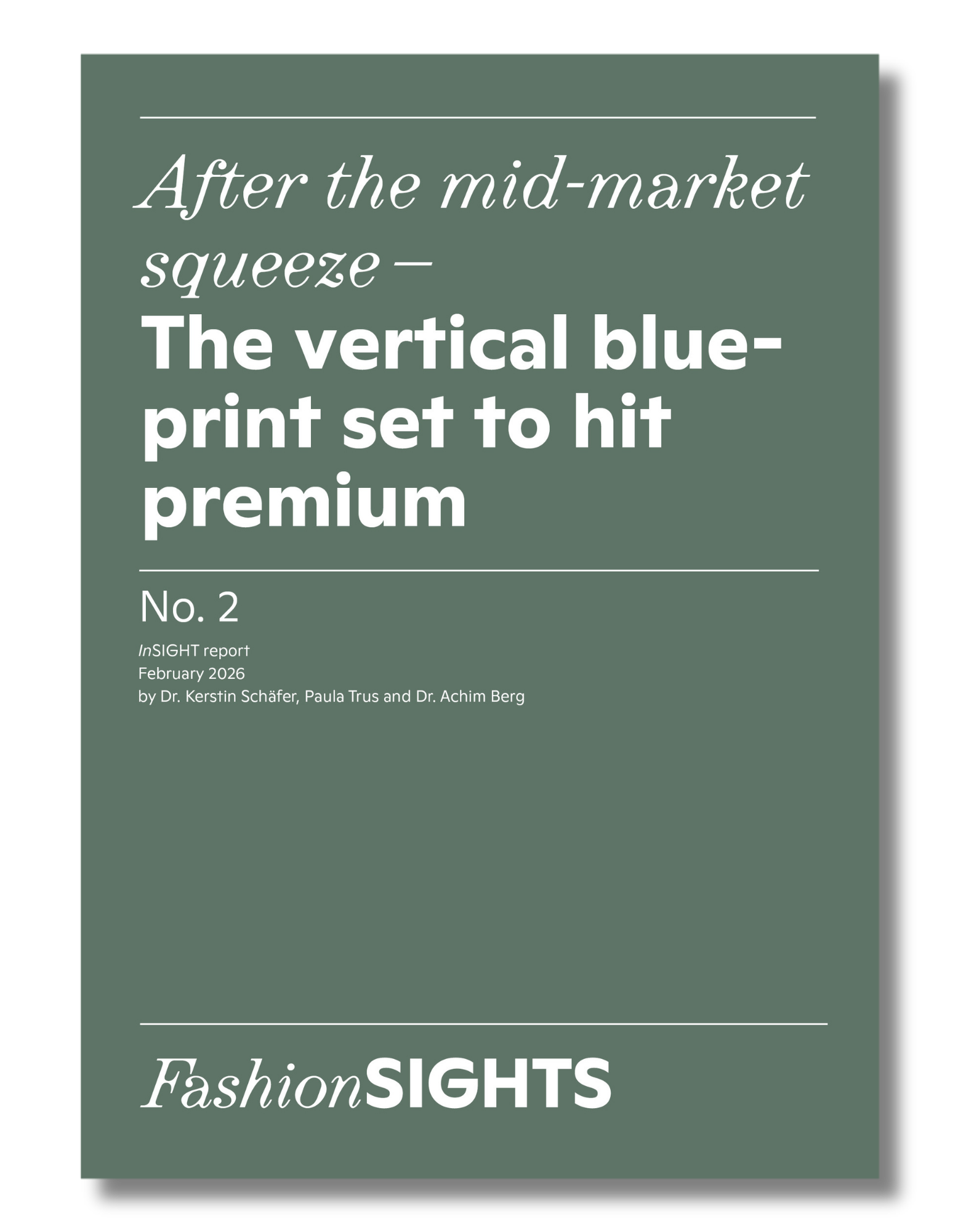
white paper February 2026 InSIGHT report No 2
No corner of the industry has been contorted quite as dramatically as fashion’s mid-market and its reinvention is now reshaping the rest of the ladder. What used to be the industry’s stable center – the “aspirational mainstream” between mass and premium – has turned into the most disrupted, scrutinized, and polarized part of fashion. Fast-fashion and value players scaled up from below with speed, price, quality and vertical control, while premium brands moved down with more accessible price points, heavy discounting, and outlet expansion. Together, they eroded mid-market’s price–value advantage and blurred its purpose.
The forces that hollowed out the middle–polarization, verticalization, consolidation, and the squeeze on subscale models–are now moving up the value ladder. What we observe in the mid-market today is the playbook that will increasingly shape the premium segment going forward.
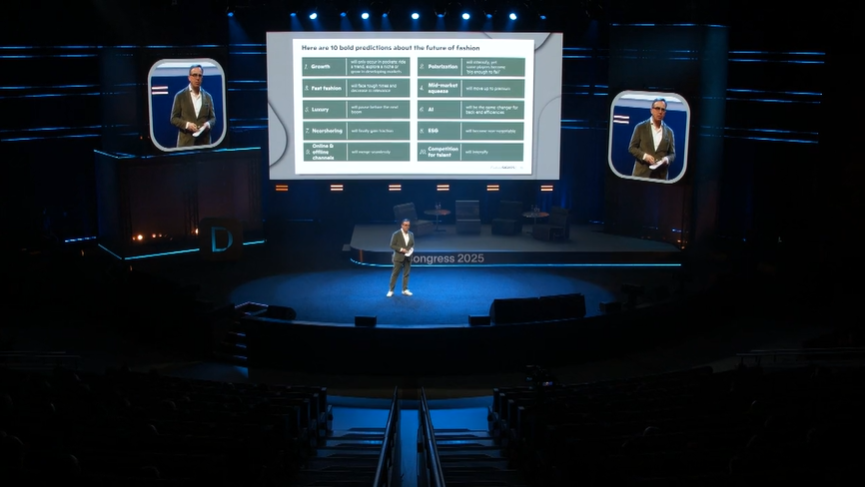
event March 2025 Svensk Handel's D-Congress
Achim Berg presents a keynote at Svensk Handel's D-Congress in Gothenburg, Sweden. The congress is a leading retail event in Northern Europe, bringing together over 3,000 innovators and decision-makers to shape the industry's future.
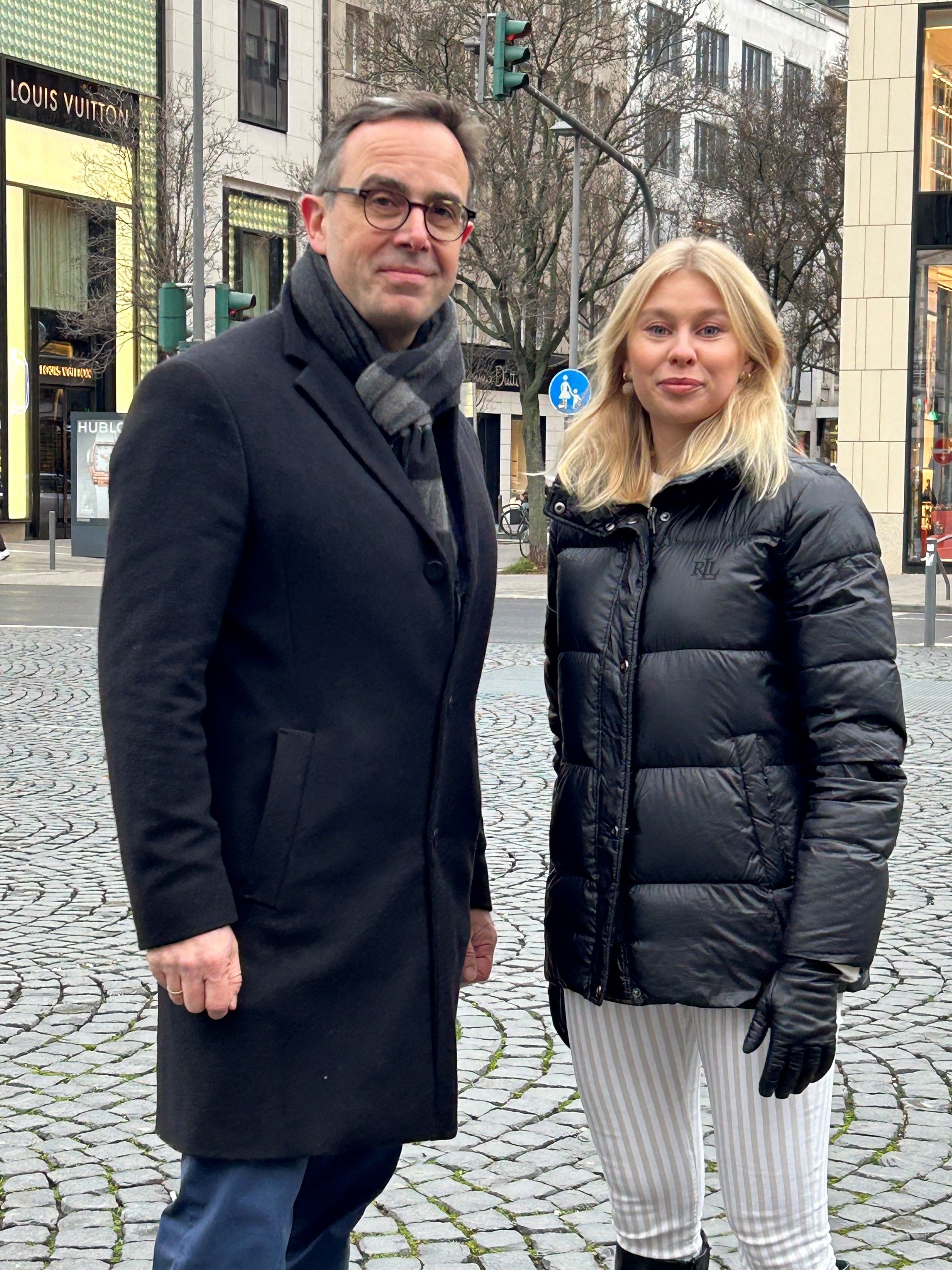
press December 2024 Fashion industry faces cautious consumers during Christmas s...
tagesschau24 Update Wirtschaft by Anne-Catherine BeckAchim discusses on German television how this year’s Christmas business is unfolding for the fashion and luxury industry.
He points out that while city centers may seem less busy, people are still shopping, especially now during the holiday season – but there is a noticeable reluctance to spend. Affordable luxury in particular is struggling as aspirational consumers cut back, while high net worth individuals continue to spend at the top end of the segment. There are fewer tourists from SoutheastAsia as they shift their spending to Japan given favorable exchange rates; although Americans and Middle Eastern customers are increasingly present inEurope. In addition, online and secondhand sales are growing and taking sharefrom brick-and-mortar stores. Achim attributes the industry’s challenges to a stagnant market in Europe, economic uncertainty, and an increasinglycompetitive landscape. This has led to a wave of consolidation, as evidenced by the recent acquisitions such as the Zalando-About You or MyTheresa-Net-a-Porterdeals.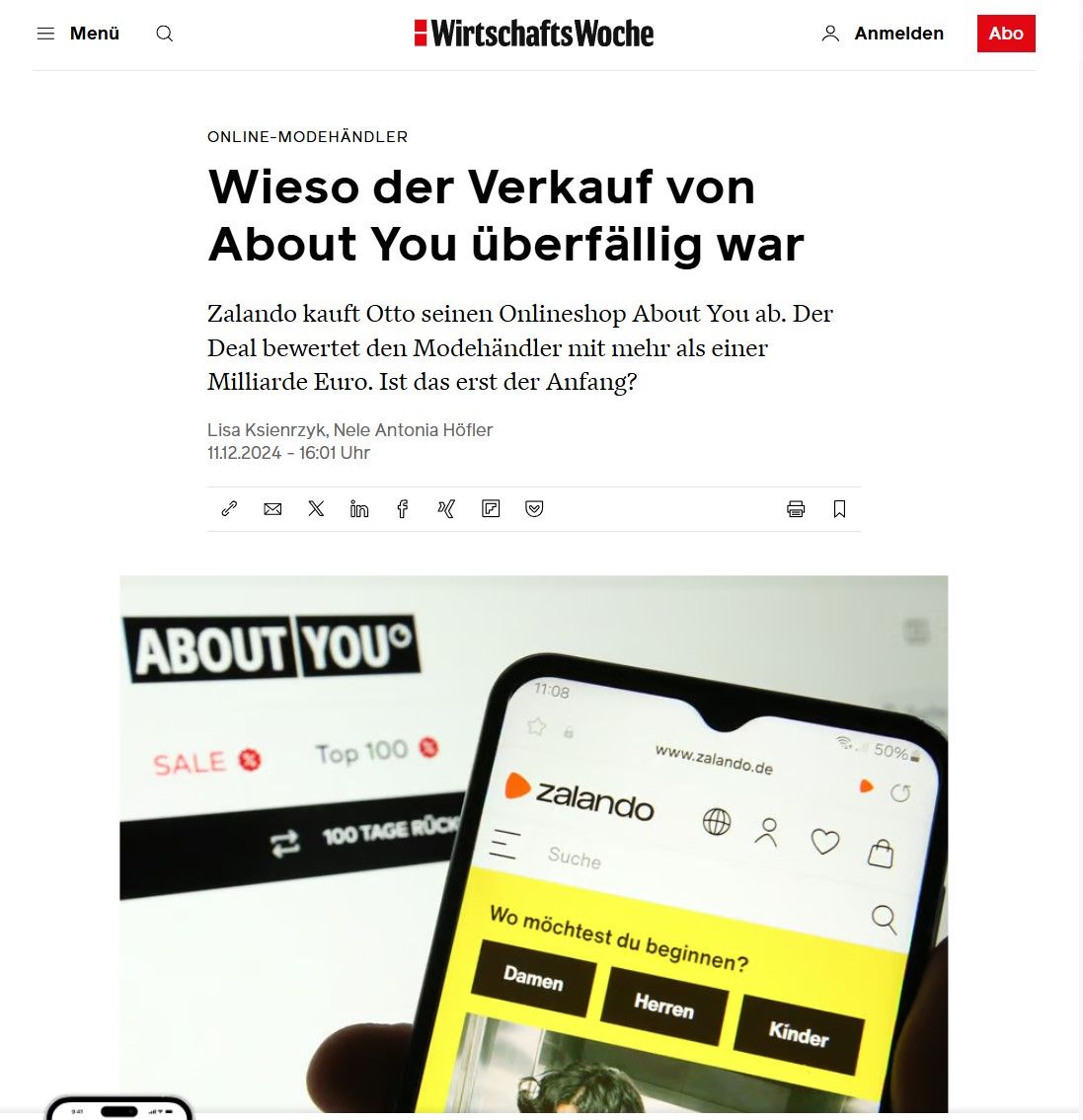
press December 2024 What's behind the merger of Zalando and About You
WirtschaftsWoche by Lisa Ksienrzyk and Nele Antonia HöflerAchim shares his views on the Zalando-About You merger and the ongoing consolidation of online marketplaces in the fashion industry. Zalando announced plans to acquire the fashion retailer About You from the Otto Group for € 1.13billion, thereby strengthening its market position while About You will continue to exist as an independent brand. The acquisition also includes the technology platform Scayle, which will be strategically integrated into Zalandoin the future. Experts see the deal as a necessary step to streamline the market and fend off competition from large Chinese players such as Shein and Temu.
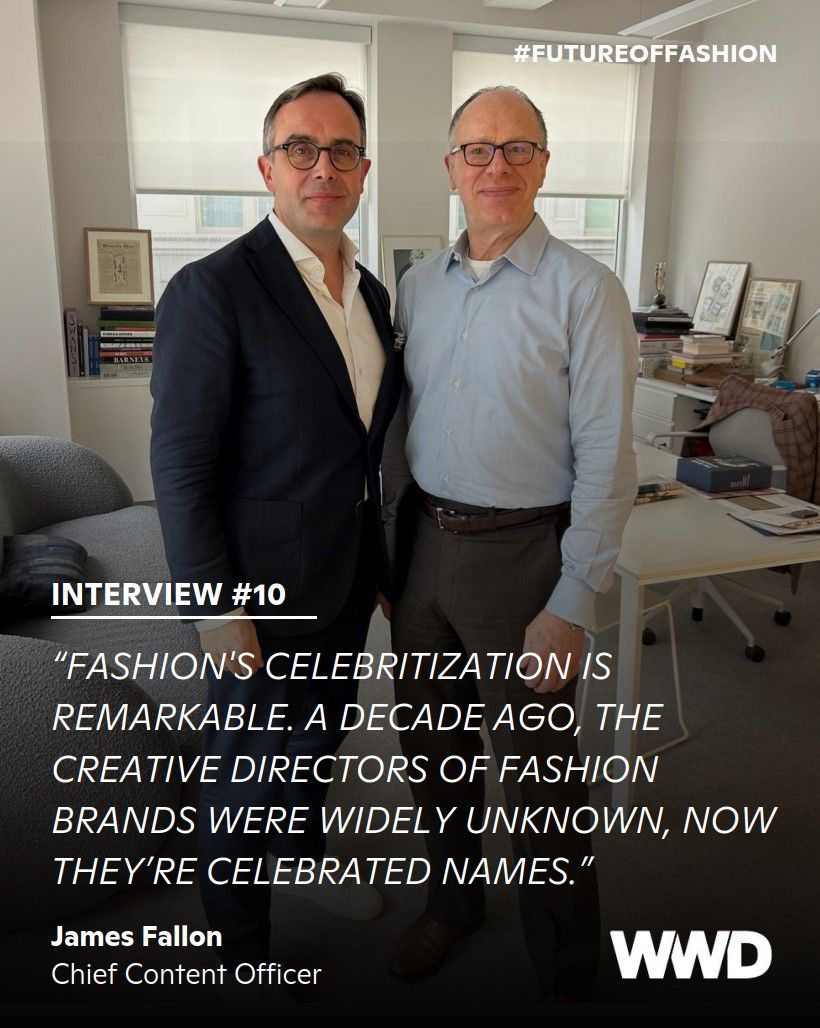
linkedin Interview #10 - James Fallon; Chief Content Officer, WWD
The CELEBRATIZATION of #Fashion and Why the US is a Graveyard for European Brands ... … was at the heart of my recent conversation with James Fallon Editorial Director of WWD and Chief Content Officer of Fairchild Media Group, in his office on 5th Avenue. James is a legend in the fashion media industry, with an impressive 45-year career at Fairchild Media. He oversees editorial content across iconic brands like WWD Beauty Inc, Sourcing Journal, Footwear News, and Fairchild Live Media. Having spent 20 years as Fairchild’s London bureau chief before relocating to New York in 2001, James has developed a deep understanding of both the European and U.S. markets, making his perspective on their intersections and contrasts invaluable.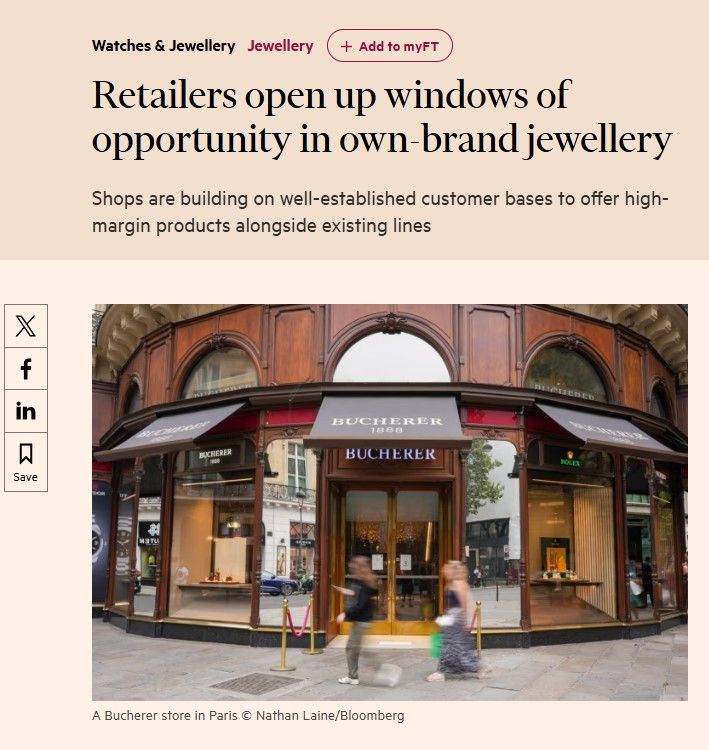
press December 2024 Retailers open up windows of opportunity in own-brand jewell...
Financial Times by Milena LazazzeraAchim provides his perspective on the opportunities and challenges of the growing own-branded jewellery business. There is arising trend of retailers expanding into jewellery, leveraging market knowledge and customer access todevelop high-margin, unique own-branded offerings. The strategy aligns with broader industry shifts as retailers diversify portfolios and introducein-house lines to cater to consumer demand for exclusivity and fill product gaps. While this move can drive growth and strengthen partnerships, expertscaution that market conditions and potential risks of cannibalizing salesrequire careful curation and strategic execution.
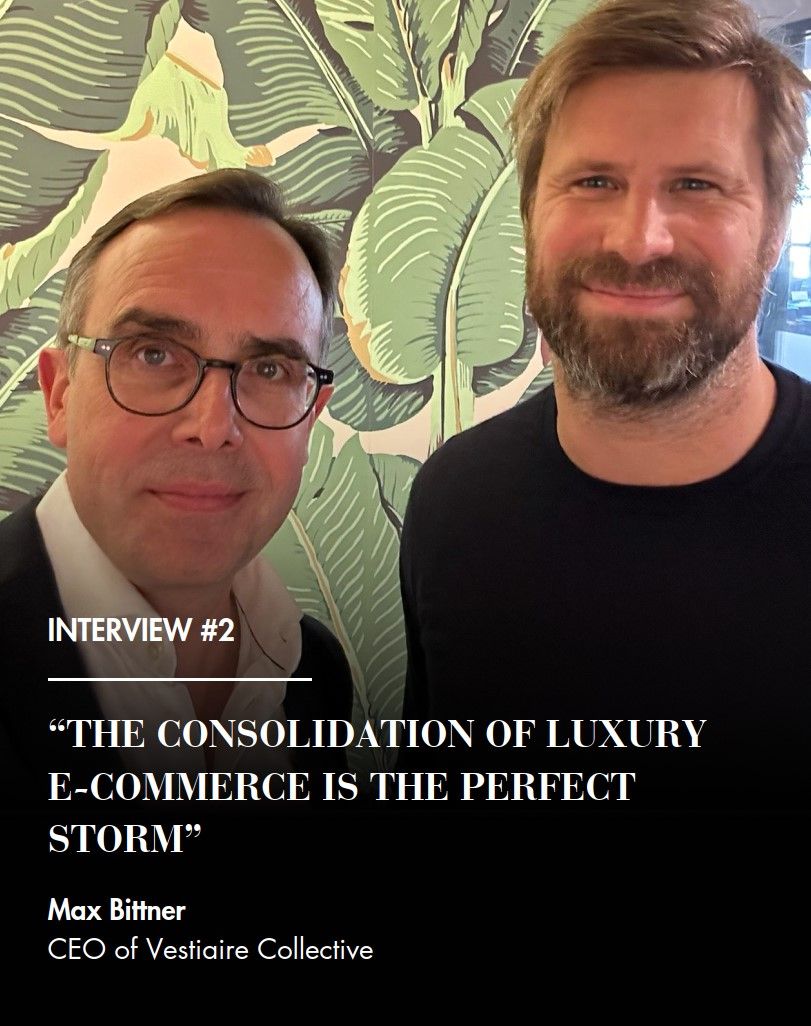
linkedin Interview #2 - Max Bittner; CEO, Vestiaire Collective
#Luxury E-commerce’s Perfect Storm and the Future of #Resale These were the key themes of my recent conversation with Maximilian Bittner during our meeting in hashtag#NewYorkCity. Max began his career at McKinsey & Company before founding and leading Lazada Group in Singapore. In 2019, he joined Vestiaire Collective as an investor, CEO, and Chairman, recognizing a massive scalability opportunity in the luxury resale market.
press October 2024 Luxury online retail – Mytheresa is now facing these challen...
WirtschaftsWoche by Nele Antonia HöflerIn an article in WirtschaftsWoche, Achim comments on the challenges that online luxury retailers like MyTheresa are currently facing and how they can overcome them.
MyTheresa has announced plans to acquire rival Yoox Net-a-Porter in a bid to become the leader in online luxury e-tailing. However, the company faces several challenges as demand for luxury goods has weakened due to uncertain consumer sentiment and rising prices of luxury goods. In addition, luxury brands are increasingly turning to direct sales and moving away from multi-brandplatforms. Growth alone is no longer sufficient for luxury online players; instead investors are now demanding profitability. MyTheresa plans to overcome these hurdles through synergies, a curated offering and the integration of YNAP's platform and customer data.
event May 2025 The Future of Retail Summit, Milan
Achim Berg joins the opening panel at the first edition of "The Future of Retail" Summit, hosted by FASHION Magazine in Milan on May 5th. The summit gathers leading voices from across the fashion industry from Italy and beyond to explore the evolving dynamics and future of fashion retail. In the discussion, Achim addresses the complex challenges and emerging opportunities that are currently reshaping the industry landscape.
press October 2024 What's next for luxury e-commerce
glossy.com by Jill ManoffAchim discusses his perspective on the future of luxury e-commerce with Glossy's Jill Manoff.
Luxury brands are increasingly by passing multi-brand e-tailers, offering direct-to-consumer sales with full product ranges, exclusive perks, and enhanced omnichannel experiences. Many once highly valued e-commerce platform shave struggled to achieve profitable growth in a high-interest rate environment, while others, such as Mytheresa, have thrived by focusing their differentiation strategy on curation rather than low prices, and by building customer loyalty through exclusive services and events. Although luxurye-commerce is projected to grow by 20 to 30 percent, physical retail will remain essential for luxury brands.
linkedin February 2025 Interview #19 - Michael Werner; Editor-in-Large, Textilwirts...
Where is German fashion heading? That was the central theme of my recent conversation with Michael Werner, Editor-at-Large at TextilWirtschaft in our Wiesbaden offices. With over 30 years of experience in the industry, Michael has been a keen observer of the German fashion market. He spent more than a decade leading the editorial team at TextilWirtschaft the leading trade publication for the DACH fashion market, and continues to shape the industry dialogue in his current role as Editor-at-Large. Few have analyzed and narrated the sector’s evolution as extensively as he has.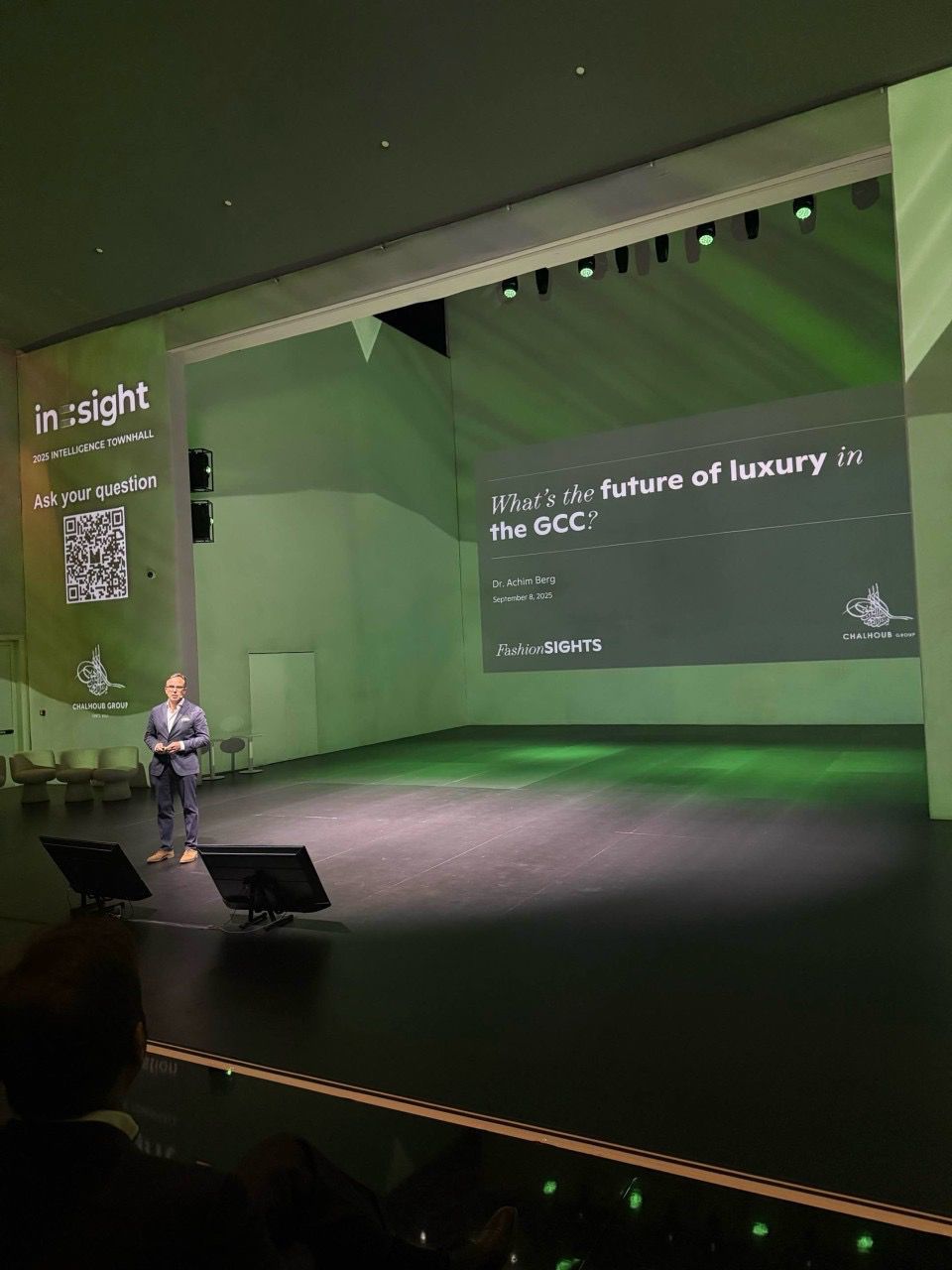
event September 2025 Chalhoub Group in:sight summit
Back in Dubai for the Chalhoub Group’s in:sight summit, Achim had the pleasure of discussing the future of luxury in the GCC. The region’s economy is experiencing steady growth, fueled by robust GDP, low inflation, and rising consumer confidence. Furthermore, non-oil sectors are building momentum and the economic decoupling is gaining traction. The beauty sector continues to outperform, and while Dubai maintains its position as the region’s luxury hub, Saudi Arabia requires new models to unlock its full potential. Across the GCC, consumers are becoming true luxury connoisseurs who are globally minded and trend-savvy.
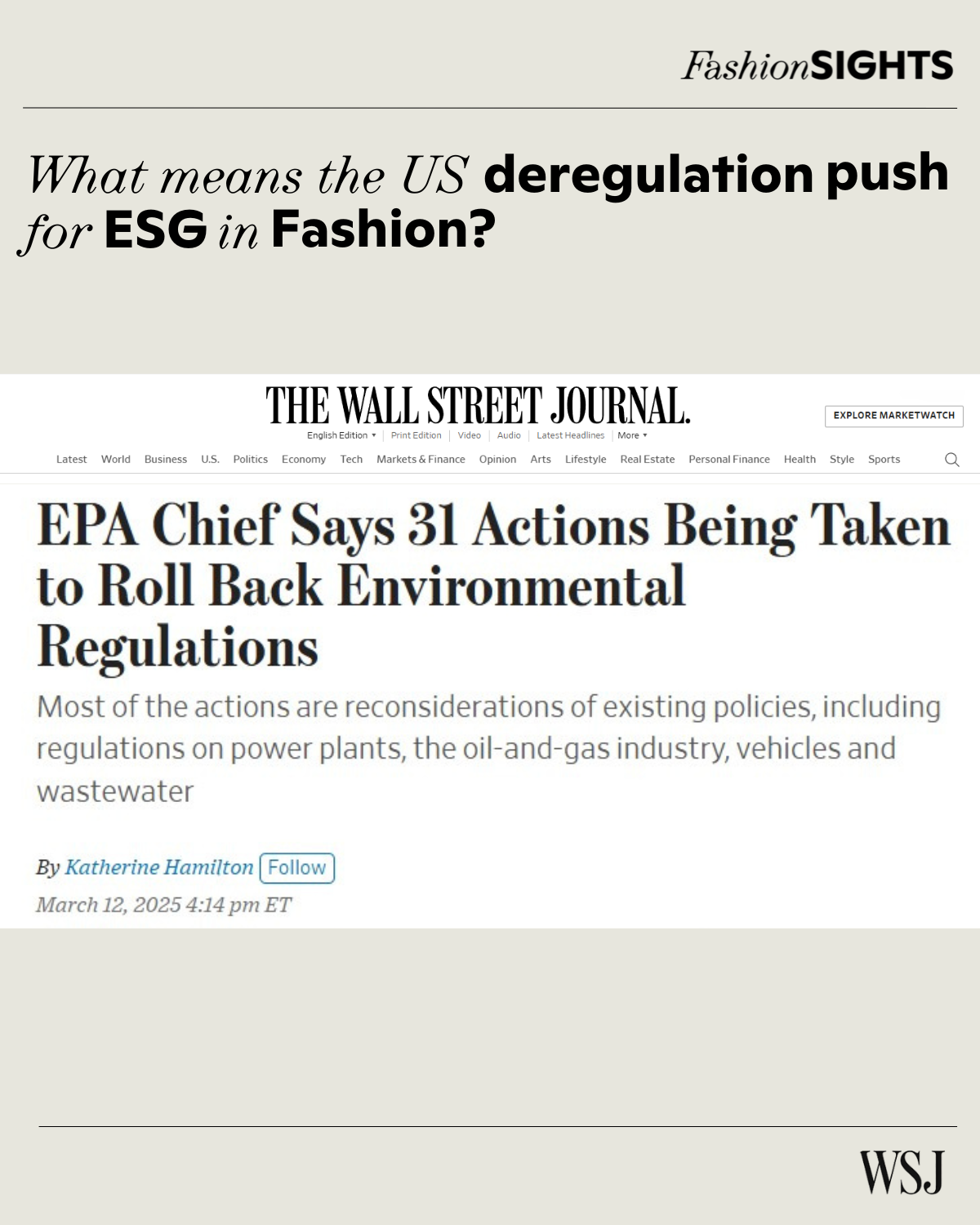
linkedin March 2025 What means the US deregulation push for ESG in fashion?
The US administration has announced a series of 31 regulatory rollbacks, including the repeal of emissions limits on power plants, a reconsideration of the mandatory greenhouse gas reporting program, and an overhaul of the “social cost of carbon.” These moves follow US foreign aid cuts in January and the country’s withdrawal from the Paris Climate Agreement. These regulatory changes will have significant implications for fashion. But what does this mean for ESG (Environmental, Social, and Governance) in fashion? Will US fashion players reverse their sustainability efforts, much like some retailers have scaled back on DEI initiatives?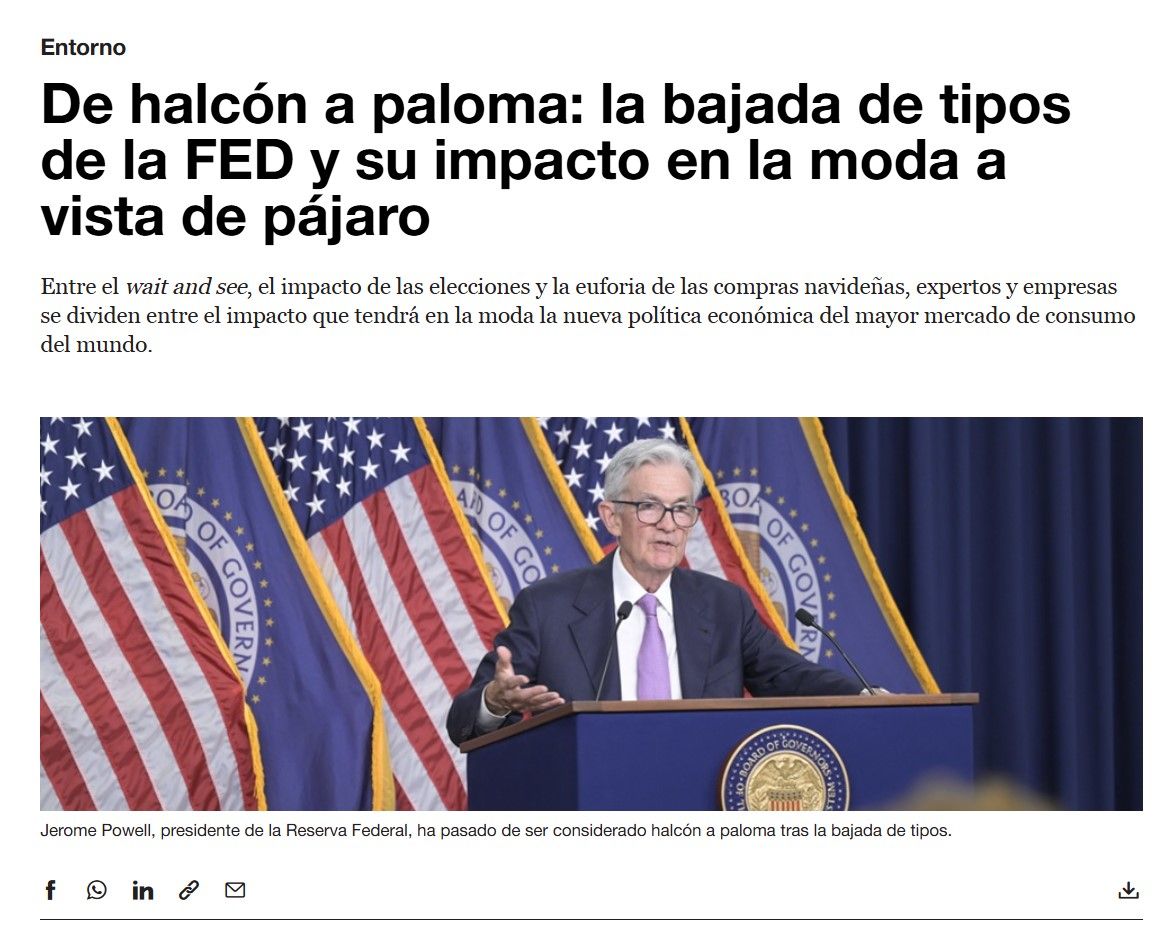
press September 2024 From hawk to dove: the Fed's rate cut and its impact on fash...
Modaes.com by Pilar RiañoIn a discussion with Modaes journalists, Achim shares his perspective on the impact of interest rates on the fashion industry.
The FED’s recent interest rate cut, the first in over four years, has sparked mixed reactions in the fashion industry. Some experts believe it could stimulate consumer spending, especially during the holiday season, while others think its effects may take time to materialize, and the upcoming U.S. elections could heavily influence its impact. The rate cut is expected to weaken the dollar, potentially reducing costs for European fashion companies sourcing materials from abroad but making exports to the U.S. more expensive.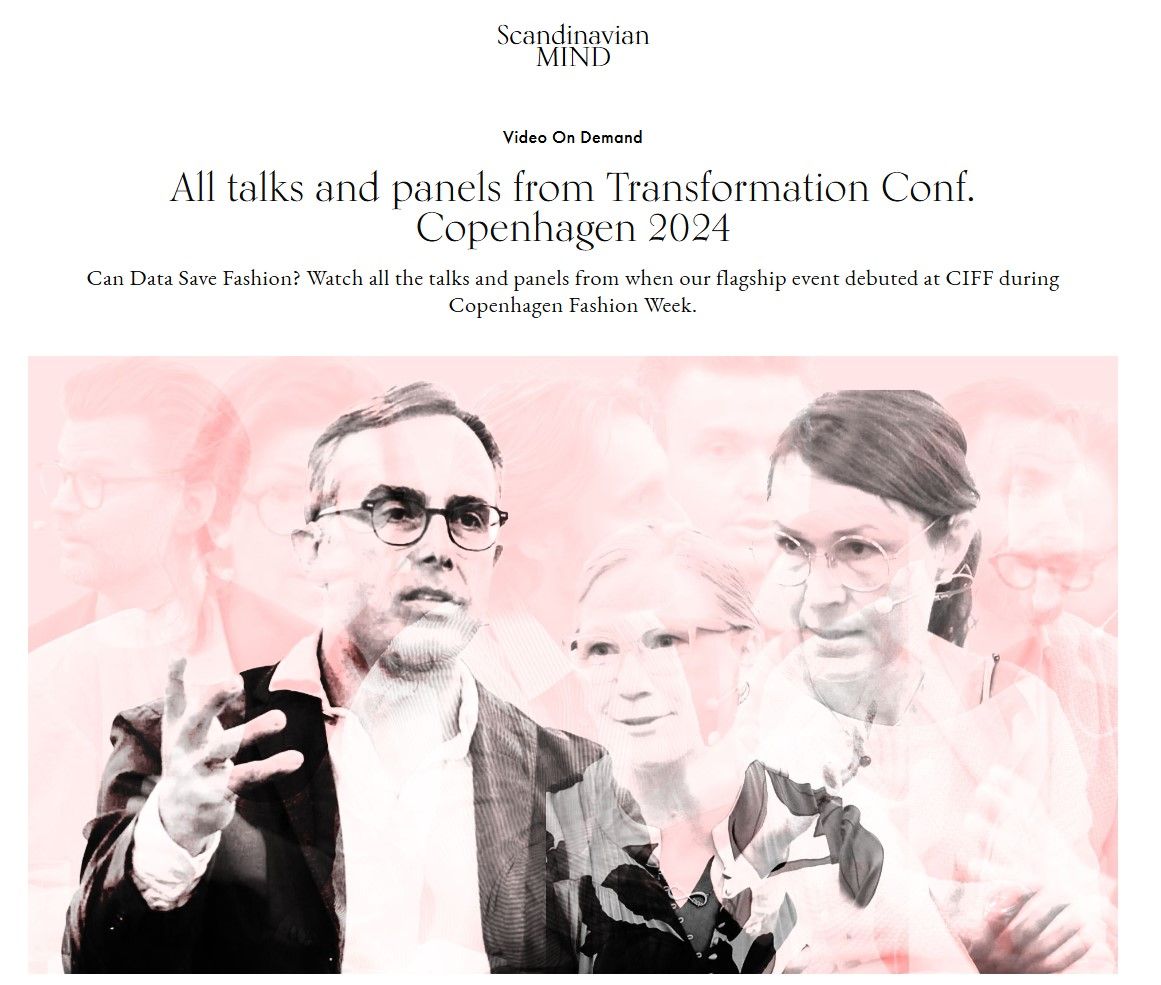
press August 2024 Scandinavian MIND Transformation conference Copenhagen 2024
scandinavianmind.comA fireside chat with Achim and Konrad Olsson at the Scandinavian MIND Transformation conference in Copenhagen.
Achim Berg reflects on the current state of the fashion industry, including the post-COVID boom and the industry's hard landing in the face of multiple global crises, a challenging macro economic environment, and weakening consumer demand. He also reflects on his personal career, the lessons learned at McKinsey, and provides insight into the plans for his new company.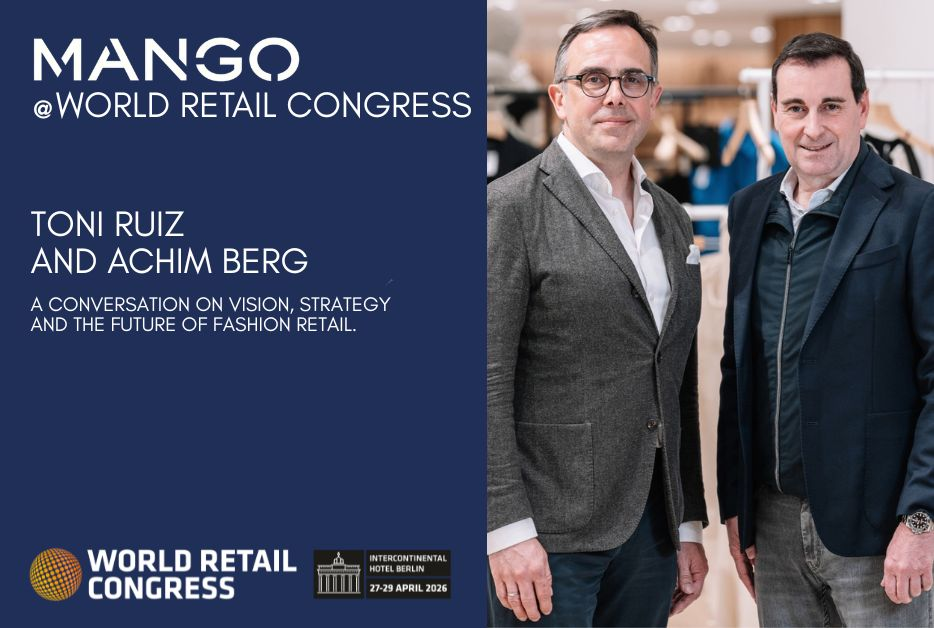
event April 2026 World Retail Congress
At this years World Retail Congress in Berlin, Achim will join Mango CEO Toni Ruiz on stage for the closing interview to talk about the strategic priorities driving MANGO's continued momentum while also looking ahead to 2030 and discuss what it takes to build a global leader in the upper mid-market.
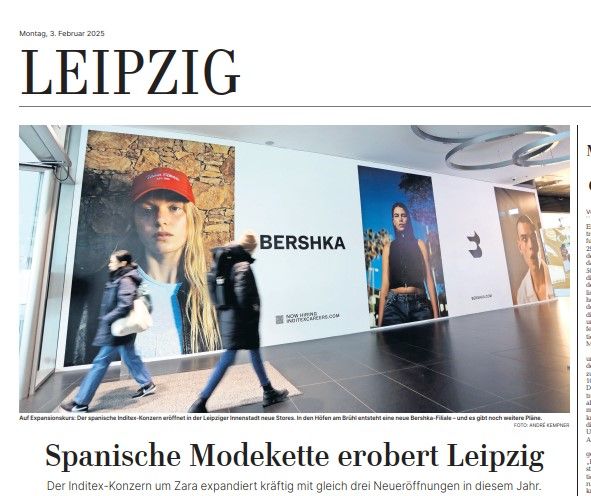
press February 2025 Spanish fashion conglomerate conquers Leipzig
Leipziger Volkszeitung by Florian ReinkeAchim shares his perspective on Inditex’s expansion strategy in Leipzig, Germany.
Inditex is expanding its brand portfolio in Leipzig with new stores for Zara, Pull & Bear, Bershka, and Stradivarius. Achim points out that this move reflects broader industry shifts, particularly in the mid-market segment, where competition has weakened due to bankruptcies. Coupled with lower retail rents, Inditex is seizing the opportunity for growth. Achim further explains that Inditex’s vertically integrated business model is a key driver of this success, allowing the company to control the entire value chain and operate with greater resilience.
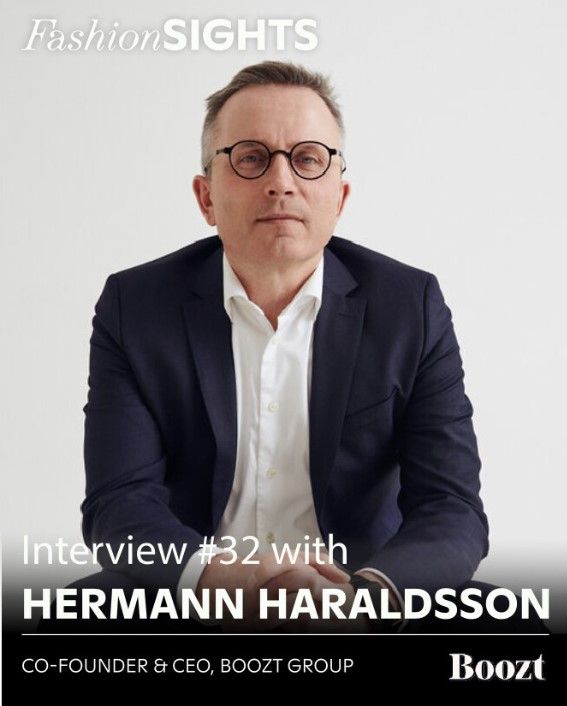
linkedin June 2025 Interview #32 - Hermann Haraldsson; Co-Founder & CEO, Boozt ...
What is the real potential of hashtag#fashion e-commerce? That’s the question I explored in a recent conversation with Hermann Haraldsson, Co-founder and CEO of Boozt - the leading multi-brand fashion pure player in the Nordics. Since 2009, Hermann and his team have built a hashtag#powerhouse by focusing on a region most global players overlooked. Today, Boozt not only dominates the Nordic market but also ranks among the most profitable fashion e-commerce platforms in Europe. We spoke about: How fashion e-commerce has matured over the past 15 years Why scale and hashtag#operational hashtag#efficiency are critical for long-term success Why Boozt believes the wholesale model is the right one for their business And why a 50–60% online share is the realistic sweet spot for the Nordic market, given its unique dynamics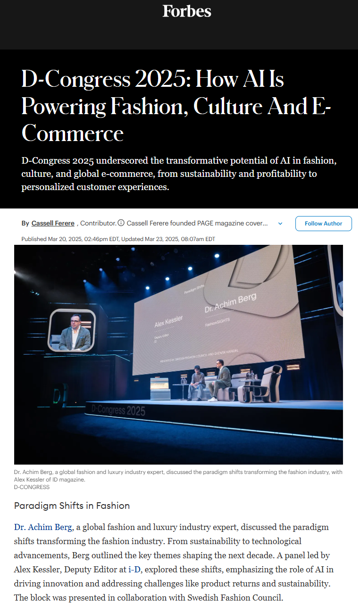
press March 2025 D-Congress 2025: How AI Is Powering Fashion, Culture And E-C...
Forbes by Cassell FerereAchim is featured as a top voice with his keynote speech on fashion's paradigm shifts and the evolving e-commerce landscape.
Held in Sweden, home to innovative e-commerce companies, D-Congress brought together prominent industry thought leaders to explore the transformative power of AI in global fashion, culture and retail. In his keynote, Achim discussed fashion’s e-commerce transformation, highlighting how the landscape is consolidating and evolving around three core value-driven archetypes. He also identified ten key paradigm shifts that are revolutionizing the fashion industry, from AI streamlining back-end operations to ESG initiatives becoming non-negotiable for brands.
press March 2025 Paradigm shifts: Dr. Achim Berg on D-Congress Talks
Achim's keynote on fashion's paradigm shifts, presented live at D-Congress, is now available as a podcast episode.
After a decade of massive growth, peaking during Covid, e-commerce now faces a reality check. Achim dives into the drivers behind the past decade's e-commerce boom and gloom and explains why the focus has now shifted from aggressive growth to profitability. This shift is leading to a market restructuring and consolidation, with a future focus on three key archetypes that define the landscape.
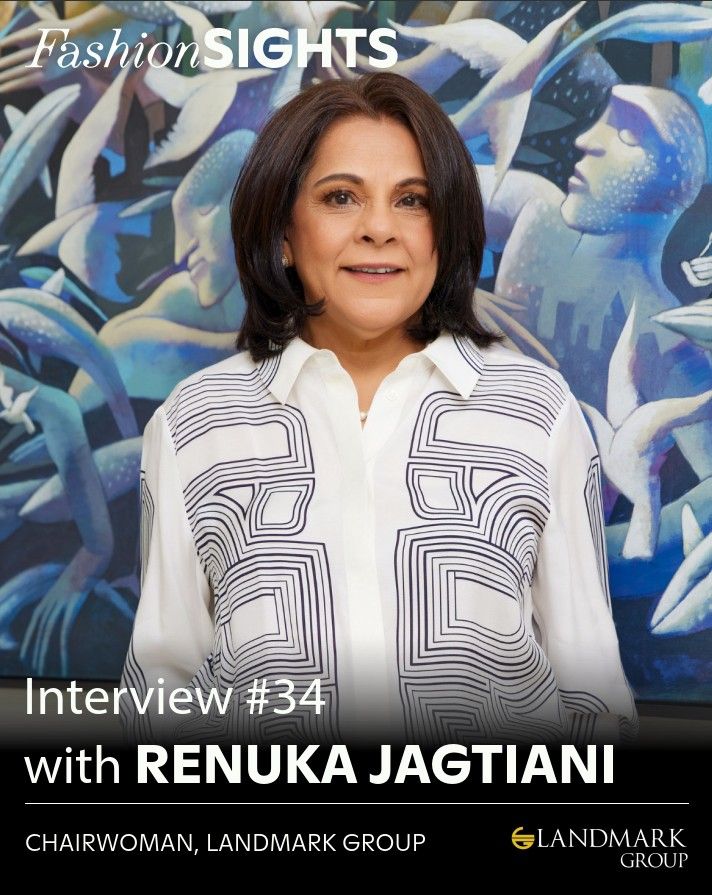
linkedin Interview #34 - Renuka Jagtiani, Chairwoman, Landmark Group
During my recent visit to Dubai, I had the privilege of sitting down with Renuka Jagtiani, Chairwoman of Landmark Group - one of the UAE’s leading multinational retail and hospitality groups, with over 2,200 stores across the Middle East, India, Southeast Asia, and Africa. The group is behind beloved brands like Max, Splash, Lifestyle, and Home Centre. In our engaging conversation, we discussed why retail in the hashtag#GCC thrives only with true #operational #agility and deeply #localized #strategies. When it comes to #India, Renuka shared her focus on major urban centers, strong product leadership, and a deep understanding of local customer demands in a highly competitive market. I left inspired by her energy, clarity, and leadership - especially amazed to have met my second female chairwoman of a major retail group within just a few hours. Something that, honestly, happens far too rarely in other parts of the world. This conversation is part of the interview series for my upcoming book on the Future of Fashion.
press April 2025 Luxury industry at the crossroads of price increases once ag...
Vogue Business China by Junjie WangAchim shares his perspective on the impact of currency shifts and gold prices on luxury.
With the luxury market facing persistent headwinds and a prevailing sense of uncertainty, Achim notes that hopes for the US to offset weakening demand in China and Europe are quickly fading. Since the announcement of new tariffs, the US dollar has dropped nearly 10%, adding yet another hurdle for American consumers purchasing European luxury goods. Market sentiment, Achim emphasizes, is closely linked to consumer psychology - while many still have the financial means, they increasingly lack the confidence and willingness to spend. In this environment, gold has re-emerged as a global safe haven. Its surge is weighing on the luxury sector, not only diverting discretionary spending away from luxury, but also driving up costs for hard luxury items like jewelry and watches.
press April 2025 Show goes on for Ralph Lauren as fashion reels from Trump ta...
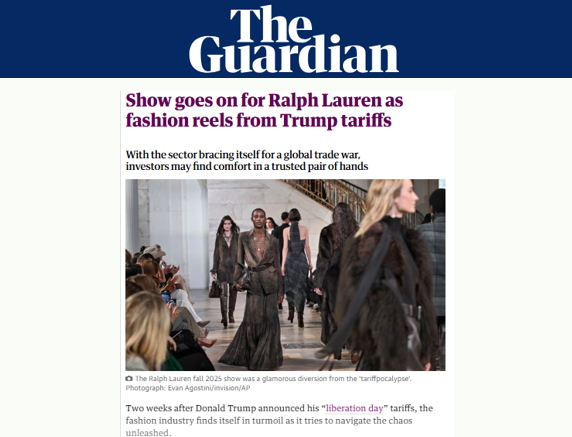
The Guardian by Chloe Mac DonnellAchim shares his view on navigating uncertainty and brand priorities.
Fashion and luxury brands are particularly vulnerable to Trump’s newly imposed tariffs on imported goods, due to the industry’s heavy reliance on Asia-centric supply chains. With ongoing confusion around the scope and timing of these measures, many brands remain unsure of the actual impact. Yet Achim emphasizes that moments of uncertainty are exactly when brands should reassess what they do. He highlights the importance of leaning into marketing and brand events to strengthen emotional connections and reinforce brand positioning. Ralph Lauren embraces this mindset, going ahead with his show despite the volatility triggered by Trump.
press April 2025 Luxury has experienced a cultural change
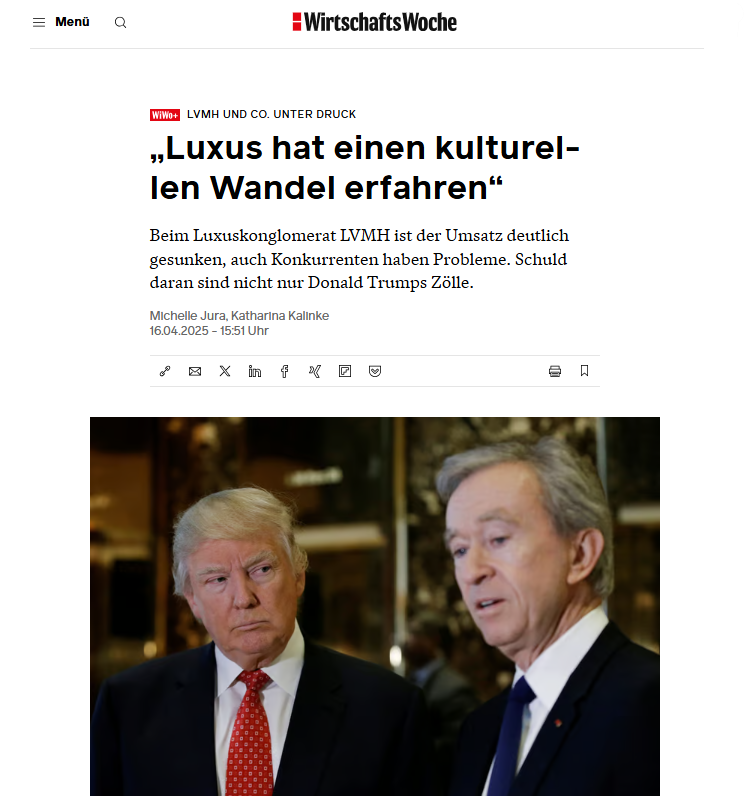
WirtschaftsWoche by Michelle Jura & Katharina KalinkeAchim comments on the democratization of luxury and the industry’s structural problems.
Following LVMH's weak quarterly results and falling share price, the downturn goes far beyond Trump's looming tariffs. They are just the latest piece in a much larger, already crumbling puzzle. Economic uncertainty continues to weigh on consumer confidence, but attributing the decline solely to external factors oversimplifies the luxury sector's deeper structural problems. Achim points out that internal missteps have also played a significant role. Years of aggressive price increases and efforts to make luxury more accessible to a broader audience have eroded the exclusivity that once defined luxury brands. He describes this as the democratization of luxury, a reflection of a broader cultural shift with a new understanding of luxury that is more experiential and value-driven than materialistic.
linkedin October 2025 Interview #40 - Jaume Miquel; Chairman & CEO, TENDAM
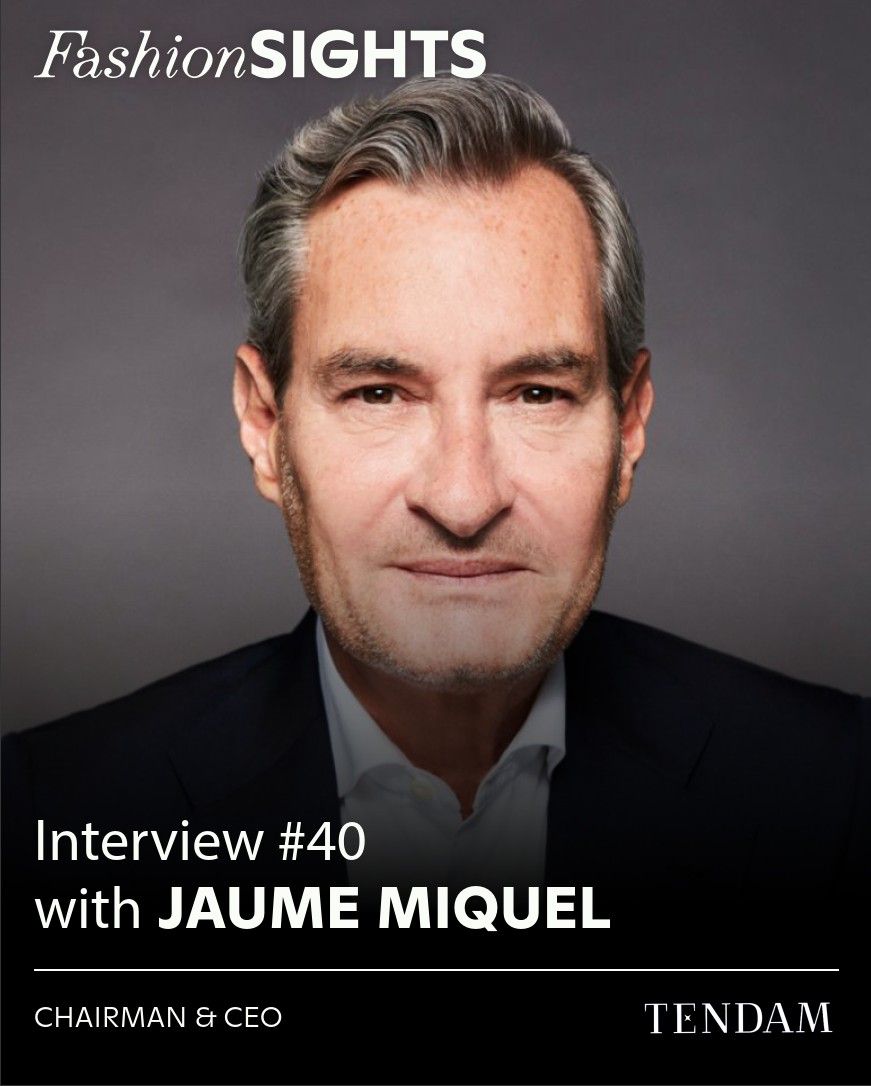
The fashion industry is being reshaped by changing consumer mindsets, sustainability pressures, and new investment models I recently had the pleasure of discussing these topics in depth with Jaume Miquel, the chairman and CEO of TENDAM and a renowned industry expert and strategist. Tendam is a Madrid-based multi-brand fashion and omnichannel retailer (Cortefiel, Springfield, Pedro del Hierro et al), since recently majority-owned by Multiply Group. Jaume and I first met some 10 years ago and I have always valued our insightful discussions about the evolution of fashion and the industry. During our latest conversation, he shared his perspective into the industry's ongoing consolidation, the impact of private equity on fashion, and how successful companies balance creativity with strategy. Thank you so much Jaume for taking the time to speak with me and for such an inspiring conversation. Further highlights from my interview with Jaume will be featured in my upcoming book on the future of fashion.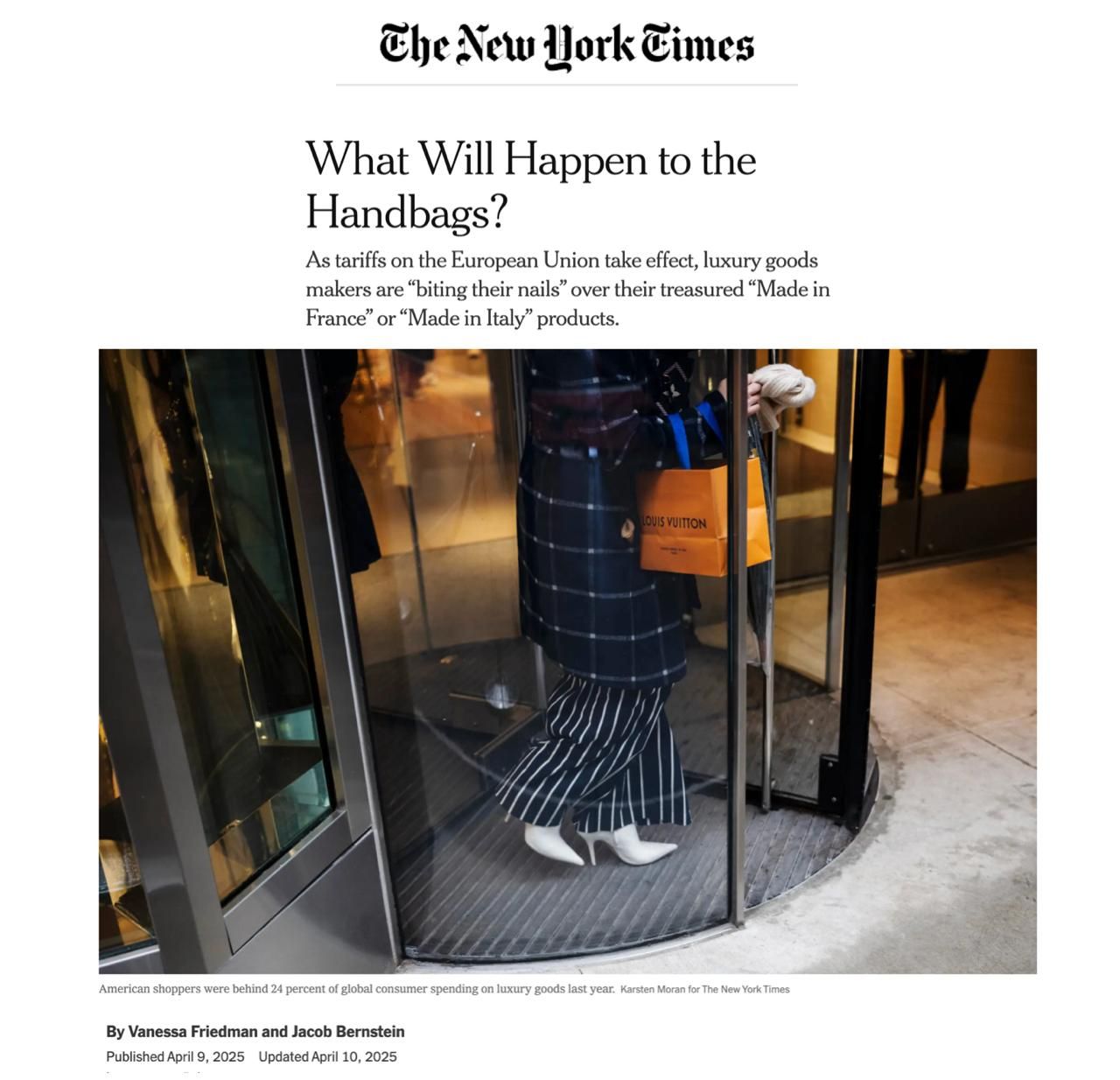
press April 2025 What Will Happen to the Handbags?
The New York Times by Vanessa Friedman & Jacob BernsteinAchim comments on how tariffs impact the luxury industry.
The US has long been seen as the next main growth engine for the luxury industry, but Trump's new tariffs have turned it into a source of concern. These measures act less as a tax on Europe and more as a burden on American consumers. Aside from Louis Vuitton's factory in Texas, no major brand is considering shifting production to the US, as "Made in Italy" and "Made in France" remain central to their identity. While some brands may be able to absorb the additional costs, years of price increases have already tested the limits of consumers. Although the luxury sector is more resilient than lower-margin segments, Achim warns that it won't remain untouched. The majority of luxury buyers are affluent or aspirational consumers - groups that are now hesitant amid market volatility and recession fears. In a climate of uncertainty, it is not necessarily wealth but confidence that drives indulgence, and right now, uncertainty is the prevailing mood, says Achim.
press May 2025 How luxury giant LVMH threatens to fall into Trump's customs...
WirtschaftsWoche by Katharina KalinkeAchim comments on the impact of tariffs and shifting dynamics in America’s role for luxury
Trump’s imposition of new tariffs is placing renewed pressure on European luxury houses. While no brand is seriously considering relocating production to the US, LVMH - already operating a manufacturing site in California - is the only one exploring an expansion of its American operations. The move aligns with Trump’s pro-domestic manufacturing narrative but remains largely symbolic, as Achim notes, given that a meaningful return of textile production to the US would require full automation - a challenge that has repeatedly proven unfeasible in the past. Beyond tariffs, Achim highlights the growing impact of luxury’s democratization, with middle-class consumers being the first to scale back spendings amid economic uncertainty. Even if tariffs prove temporary, he adds, they fail to restore the level of investment security needed. Mounting fears of a global recession and eroding investor confidence are steadily weakening America’s standing as a long-term growth engine for the industry.
linkedin January 2026 Smatch - raised €7.3m in Seed funding.
smatch is an AI-powered B2B marketplace transforming how unsold fashion hashtag#inventory is traded globally. By intelligently matching each item with the right buyer, smatch helps sellers regain control over distribution and margins, while buyers gain real-time access to a wide range of verified inventory. All transactions are discreet, fast, and data-driven. The opportunity is significant. In Europe alone, an estimated €300bn worth of fashion inventory is either heavily discounted or never sold, impacting profitability, brand equity, and sustainability efforts. Since launching in 2023, more than €15bn in inventory and 190 million items have offered to the platform. To support the next stage of growth, the team around Dr. Max Groberg and Dr. Hans-Martin Vetter has now raised €7.3m in Seed funding. The round was co-led by Transition Ventures, 42CAP, and 10x Founders, with backing from exceptional industry leaders including Noel Kinder (lululemon, former Nike CSO), Nigel Griffiths (former adidas SVP Global Sales), and myself.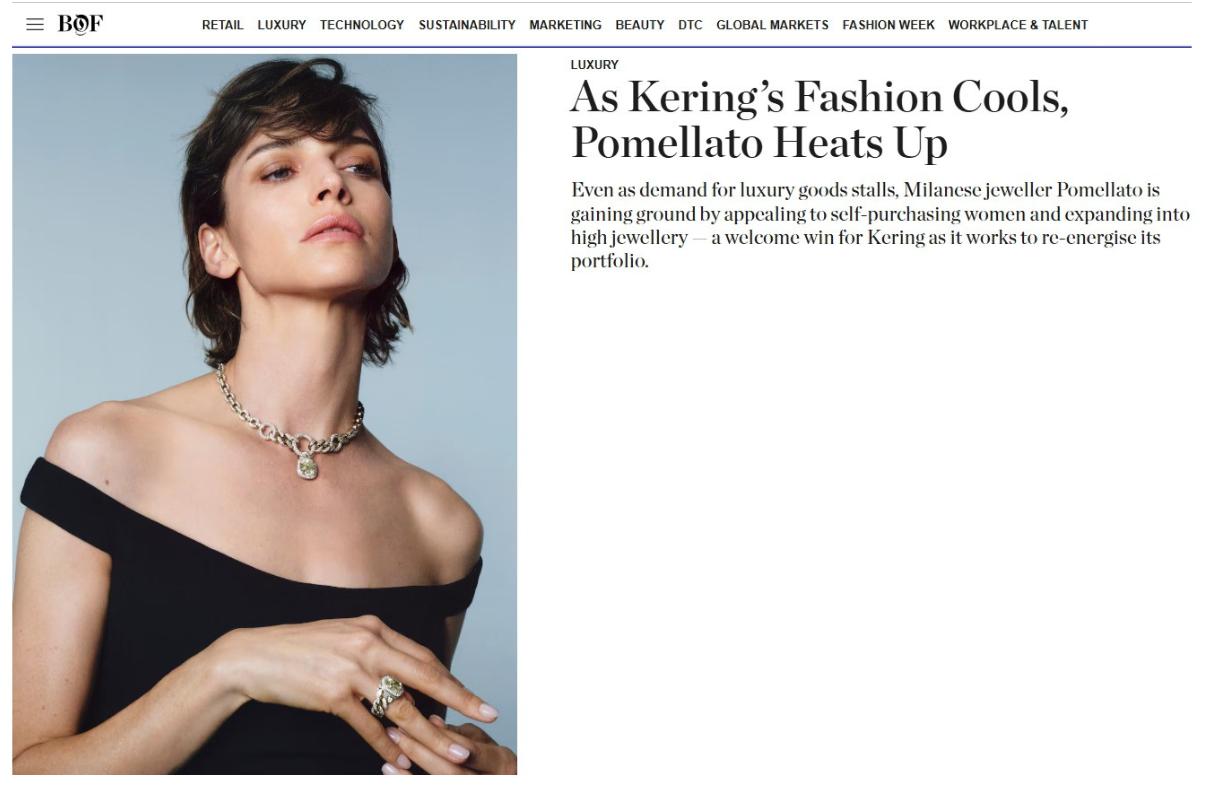
press June 2025 As Kering’s Fashion Cools, Pomellato Heats Up
BoF by Ming LiuAchim discusses how high-end jewellery is outperforming other luxury categories in times of economic uncertainty.
The Pomellato brand stands out as a positive performance outlier within parent company Kering, offering a blueprint for a shifting luxury landscape and overall industry phenomenon. While the demand for many luxury goods has softened, Achim notes that jewellery is gaining appeal due to its timeless nature and intrinsic value. Compared to other luxury items, it is viewed as a more solid, investment-worthy purchase. Achim also highlights that demand remains robust among high-net worth individuals, who are less affected by economic or geopolitical concerns. For brands, this makes high-end jewellery a strategic category to connect with a more resilient target segment.
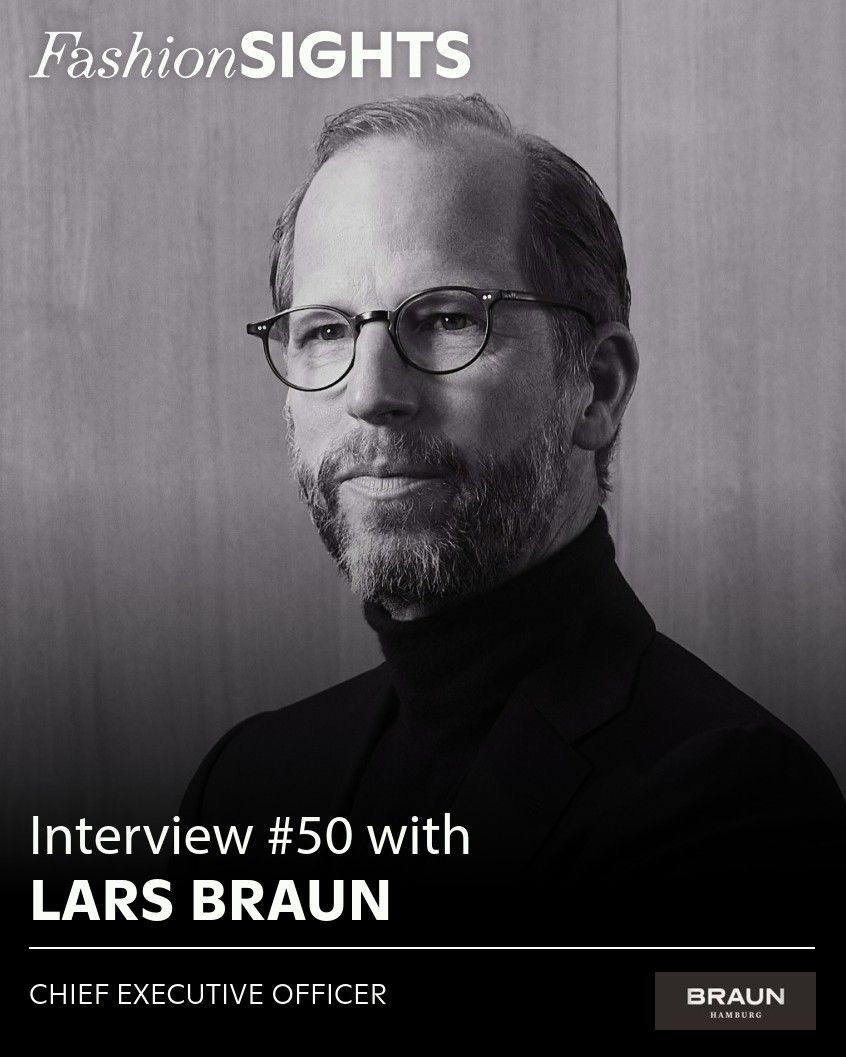
linkedin January 2026 Interview #50 - Lars Braun; CEO, BRAUN Hamburg
The State of German Fashion Retail A central thread of my recent conversation with Lars Braun, CEO of German luxury retailer BRAUN Hamburg, and one of the country’s top wholesale experts. We unpacked how the industry reached this moment of reckoning – and how consumers are pushing back amid economic pressure, fatigue, and years of overexpansion. Lars described it as a market hitting its ceiling, with customers growing more disillusioned and value-driven, shifting spend through substitution and off-price channels. We reflected on the state of German fashion retail and the changes that will shape its next chapter: e-commerce’s role in supporting financial resilience and why the wholesale model can provide strategic advantages over monobrand retail. Find more in the sneak peek below.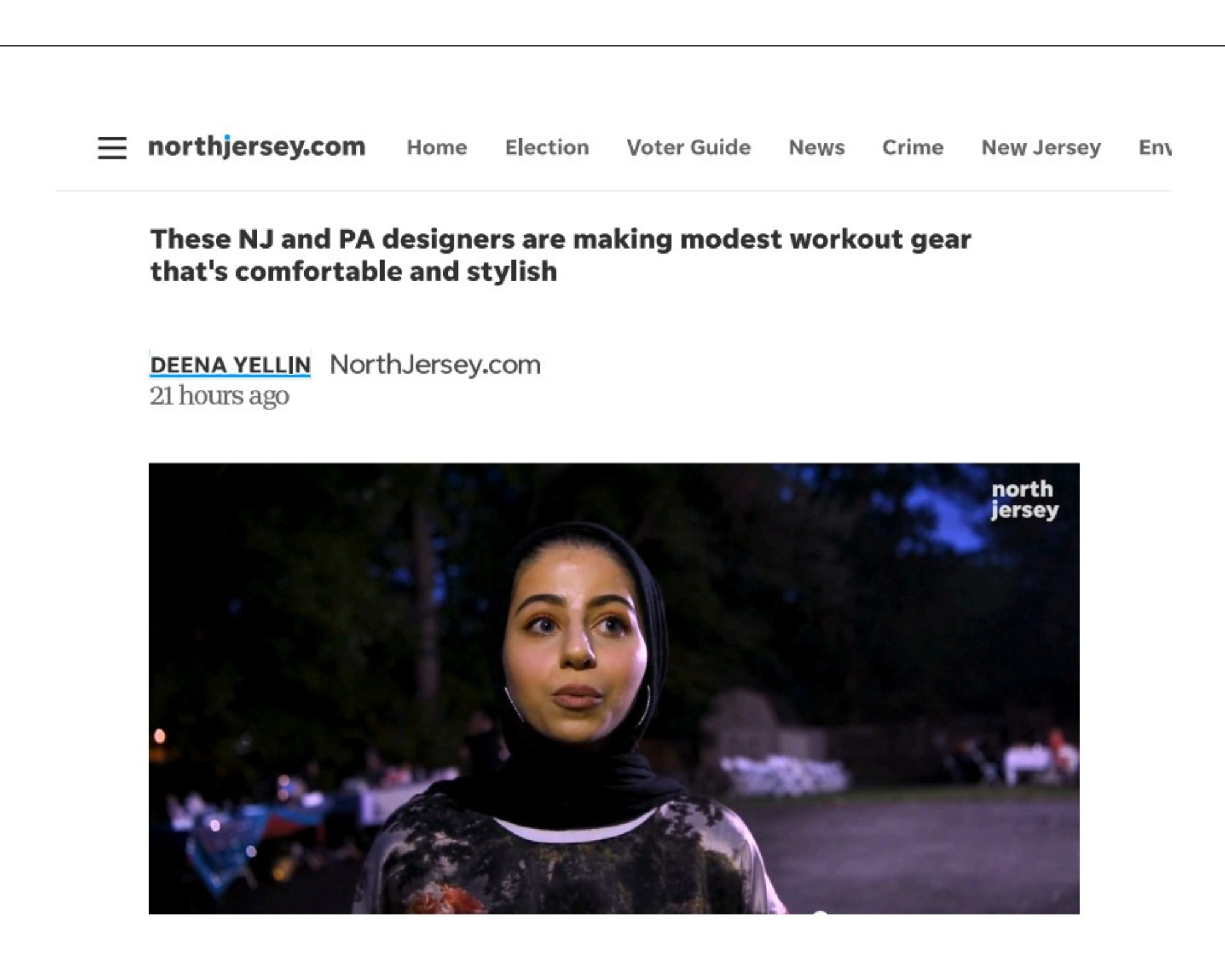
press August 2025 These NJ and PA designers are making modest workout gear tha...
northjersey.com by Deena YellinAchim shares his perspective on the state of modest fashion, highlighting its growth drivers, increasing popularity, and strong outlook.
Modest fashion, particularly activewear that conceals without constricting, is gaining traction. Achim notes that the global Muslim community, projected to comprise nearly a third of the world’s population by 2050, already accounts for a significant share of fashion and luxury sales, with its spending set to continue rising in the coming years. Achim further emphasizes that this demographic’s upcoming affluence and purchasing power represent a structural growth opportunity for brands, rather than a passing trend.
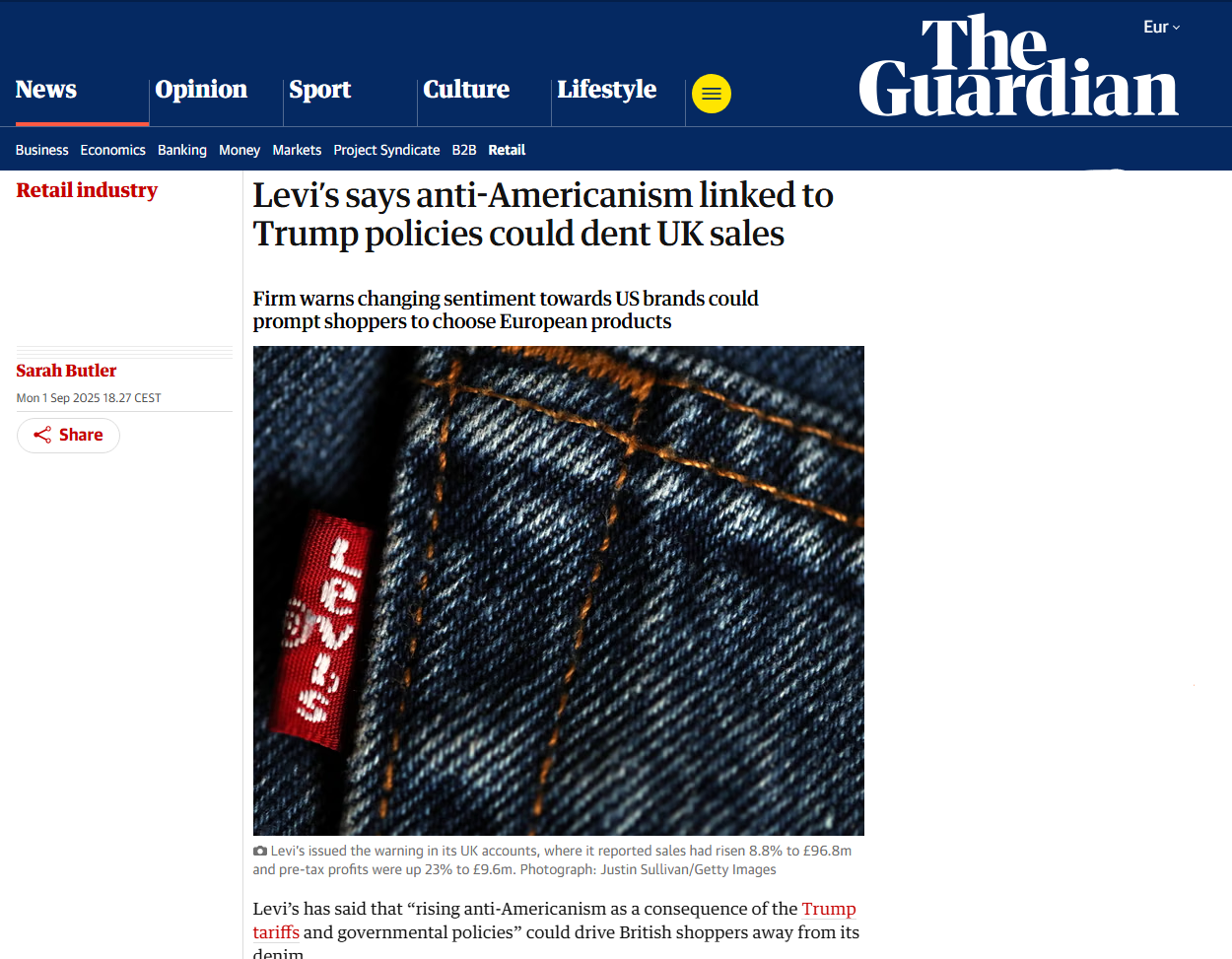
press September 2025 Are US fashion brands at risk of growing anti-American backl...
The Guardian by Lauren CochraneAchim comments on concerns that U.S. tariff policies may fuel anti-American sentiment abroad.
Sparked by Levi’s warning of potential sales losses in the UK, the debate centers on whether fashion brands face such risks. Achim notes that the backlash usually targets companies tied to the U.S. government, not fashion labels. He also points out that consumers continue to embrace American products, such as Apple and Netflix without hesitation. Debates around wokeness and sustainability have shown that consumers are usually less consistent and radical than media narratives suggest, often continuing to favor brands regardless of their reputation in those areas.
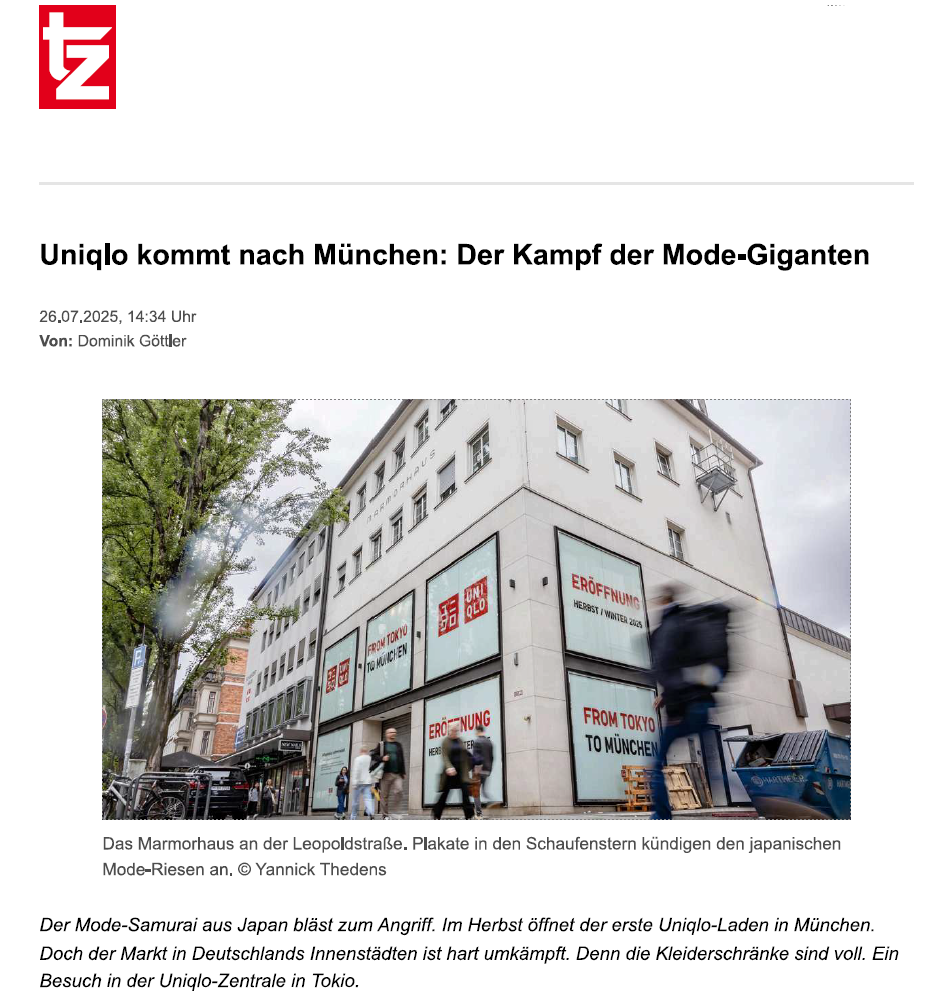
press July 2025 Uniqlo Lands in Munich: The Battle of the Fashion Giants
Münchner Merkur/tz by Dominik GöttlerAchim comments on Uniqlo’s continued push into the German market with its planned Munich store opening in fall 2025.
The company's expansion into Munich highlights both the opportunities and the hurdles of competing in Germany’s saturated fast-fashion landscape. Achim notes that the brand’s focus on durable, high-quality basics aligns with the shift in consumer preferences away from disposable fashion and toward functional, value-driven basics. Its Japanese image of precision and thoroughness further strengthens its positioning, even though production practices are similar to those of its rivals. He adds that durability supports Uniqlo’s sustainability profile; however, recycling challenges demonstrate that the industry is still in its infancy. Achim further states that Germany is a challenging market due to full wardrobes, cautious spending, and strong low-price competition. Achim makes clear that Uniqlo’s future in Germany depends on its ability to seize market share from established players.
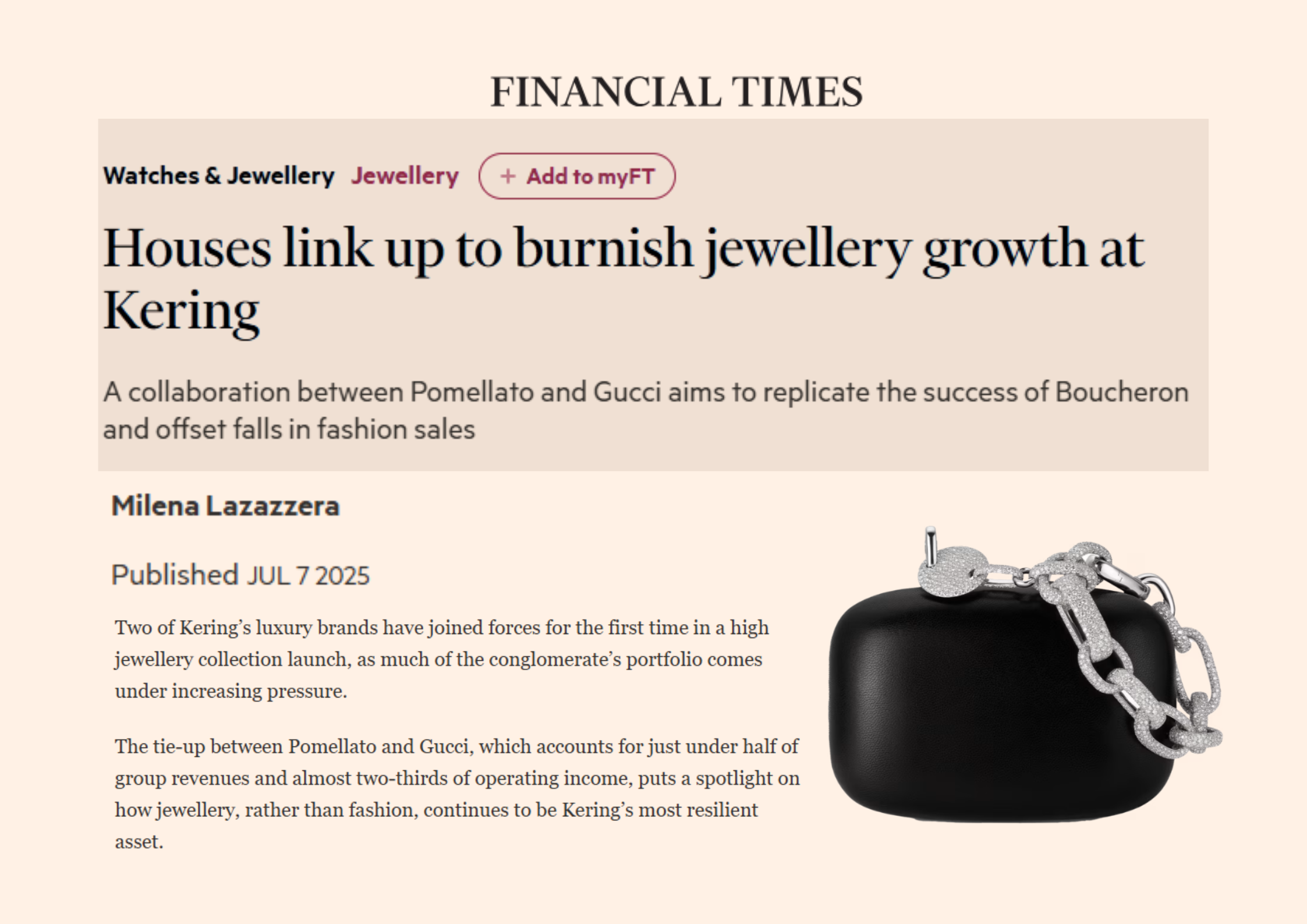
press July 2025 Houses link up to burnish jewelry growth at Kering
Financial Times by Milena LazazzeraAchim comments on the Gucci-Pomellato collaboration, viewing it as a smart way for Kering to navigate the current environment.
Kering brands Gucci and Pomellato have teamed up on a high jewelry collection to strengthen the luxury group’s jewelry segment, which has proven resilience even as its core fashion business faces pressure. With Gucci being in a transitional phase following the departure of Sabato De Sarno and ahead of Demna Gvasalia’s arrival as creative director, Achim states that the capsule serves as a strategic bridge to maintain momentum for the brand.
press June 2025 Why the Fashion Industry is Looking to India with Cautious O...
Hertzman Global Intelligence by Caletha CrawfordAchim comments on the renewed discussion about India’s potential as a sourcing market, particularly in light of trade and price policies.
He notes that a big breakthrough in India has often been predicted but never delivered. The article highlights both the country's potential and the challenges it faces, a perspective which Achim shares. In his view, India has most of what it takes to succeed; however, the challenge lies in organizing these strengths holistically. The current mix of trade shifts and new investments may finally create the conditions for progress. Achim concludes that India will only turn its sourcing potential into sustained growth if it secures reliable trade deals that provide fashion brands with confidence in stable costs and predictable market access.
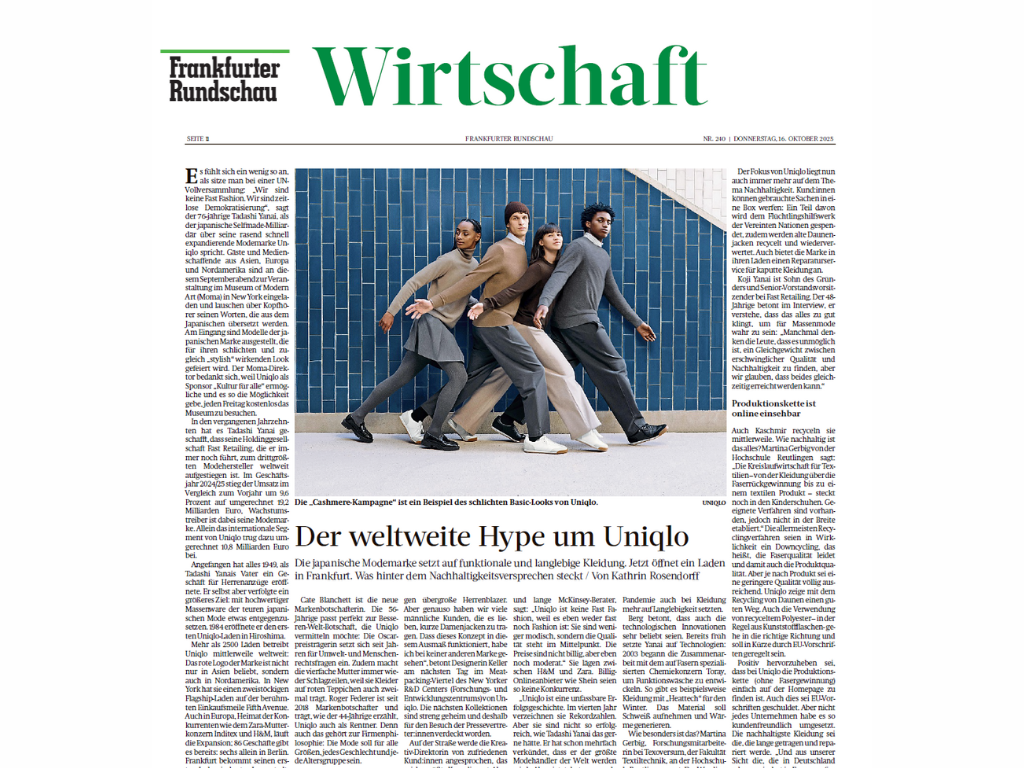
press October 2025 Uniqlo Lands in Frankfurt: The Global Hype About Uniqlo
Frankfurter Rundschau by Kathrin RosendorffAchim dissects Uniqlo’s success, positioning it as a considered alternative to the fast fashion paradigm.
As Uniqlo opens its 11th store in Germany, the article explores the brand’s positioning and growth drivers while critically examining its claims of democratization, quality, and sustainability. Achim notes that Uniqlo’s rise reflects a broader shift in consumer preferences toward longevity and quality, with its innovative, functional fabrics serving as a defining USP. Unlike its competitors, Uniqlo isn’t driven by rapid trend cycles or ultra-fast production; its focus on functionality, craftsmanship, and accessible yet moderate pricing sets it apart. Although he doubts that Uniqlo will overtake Inditex, Achim believes that Uniqlo is poised to challenge H&M amid its current slowdown.
Source: Frankfurter Rundschau
press October 2025 Fashion Forward: What Will the Industry Envision in 2026?
Modaes by Celia Oliveras, Pilar RianoAchim comments on what factors will shape the fashion industry in the year ahead.
As 2026 approaches, the fashion industry is bracing itself for another year of uncertainty. In a recent interview with Modaes, Achim shared his perspective on the structural forces shaping this reality. He notes that geopolitics, tariffs, and shifting regulations are driving market changes, leading companies to move away from centralized management towards distributed decision-making. He further points out that adapting to these circumstances comes at a high price, requiring businesses to carefully balance speed, costs and risk when making investment choices. Achim also highlights that, amid growing insecurity surrounding the impact of AI and the macroeconomic environment on the job market, consumers favor savings and smaller purchases over heavy expenditures.
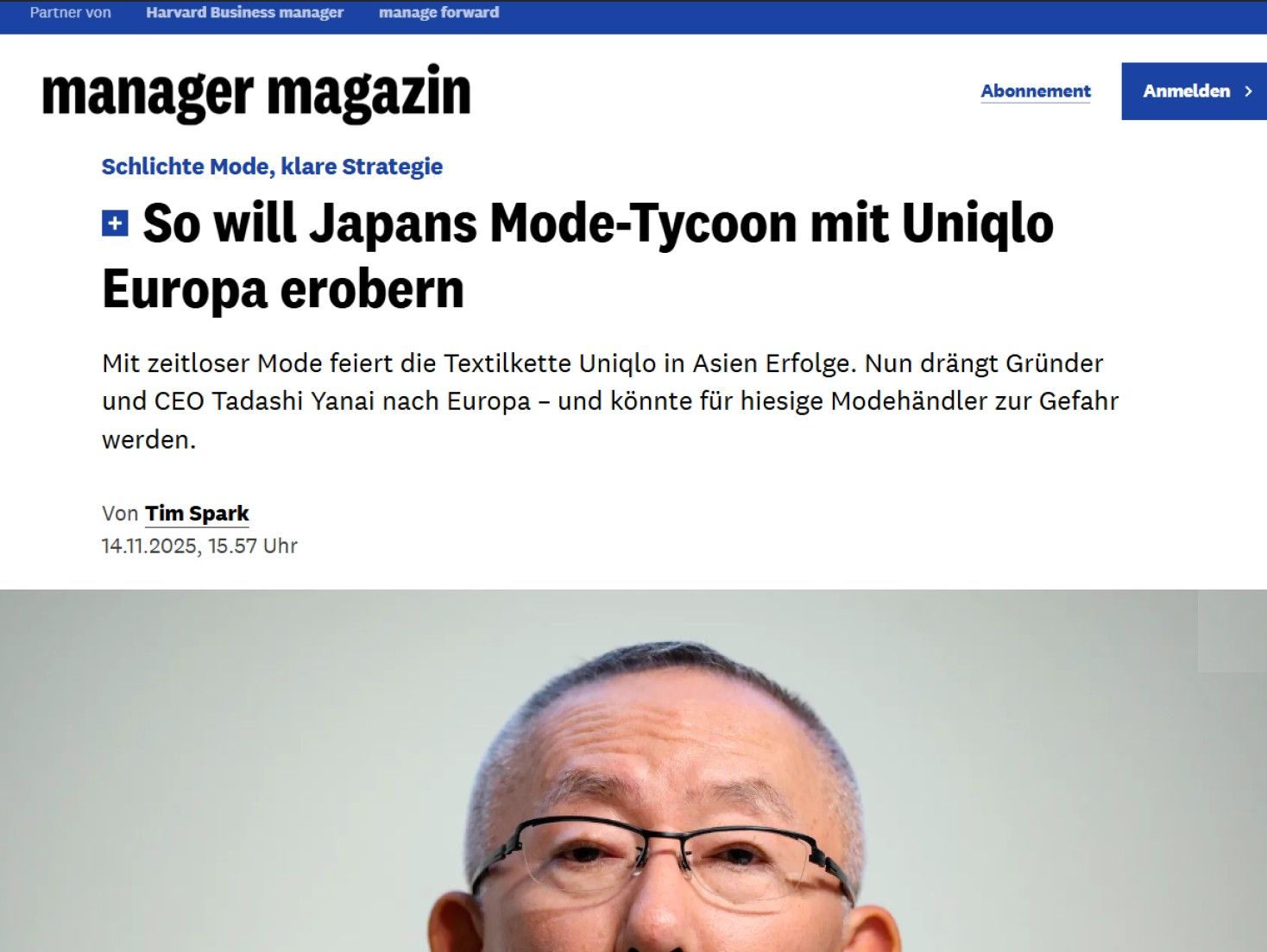
press November 2025 How Uniqlo’s Japanese Fashion Tycoon Plans to Conquer Europe
Manager Magazin by Tim SparkAchim comments on Uniqlo’s positioning and strategic path as the brand intensifies its push into the European market.
The article evaluates Uniqlo’s market position and growth potential to assess the realism of its ambition to overtake H&M and Inditex. Achim highlights that Uniqlo’s low-risk, quality-focused product strategy aligns strongly with today’s demand for durability and value. He also makes it clear that he views Uniqlo as a mid-market player rather than a fast fashion brand, as the company is built on timeless essentials rather than trend-driven, disposable apparel. Despite its global scale, Uniqlo still has a comparatively small presence in Europe, particularly in Germany, leaving significant room to grow. Achim notes that future gains will likely come from customers shifting away from mid-market and upper-mid-market retailers, many of which are already under pressure, making Uniqlo’s expansion demanding yet achievable.
linkedin February 2026 Does luxury have an off-price addiction?
Edouard Aubin and his team at Morgan Stanley just shared this striking graph mapping the physical outlet footprint across luxury brands – and the findings are revealing. 3 takeaways: A structural pressure hashtag#valve: Wholesale discounting, excess inventory, and new regulations that prevent brands from destroying surplus stock have all pushed luxury into outlet channels. For most players, outlets have become a release mechanism. The most resilient brands refrain from outlets and and sit at zero: Louis Vuitton, Hermès, CHANEL all have no outlets. Midst the gloomy landscape, these are also the brands with the strongest pricing power and the healthiest margins. Outlet discipline and brand resilience clearly go hand in hand. The outlet count mirrors the pressure: Versace and FERRAGAMO lead the outlet count – and are also among the brands facing the steepest desirability and profitability challenges today. Outlets offer a powerful short-term solution: clearing overstock, generating top-line revenue, and are usually margin accretive. Though the fix becomes the problem as the short-term gain dilutes brand equity, defeats scarcity, the perception as true luxury, and with it, desirability. For many struggling brands, a necessary course correction is already underway. Gucci is the most instructive case: down from 49 outlets to ~34 and heading toward 30 according to Morgan Stanley.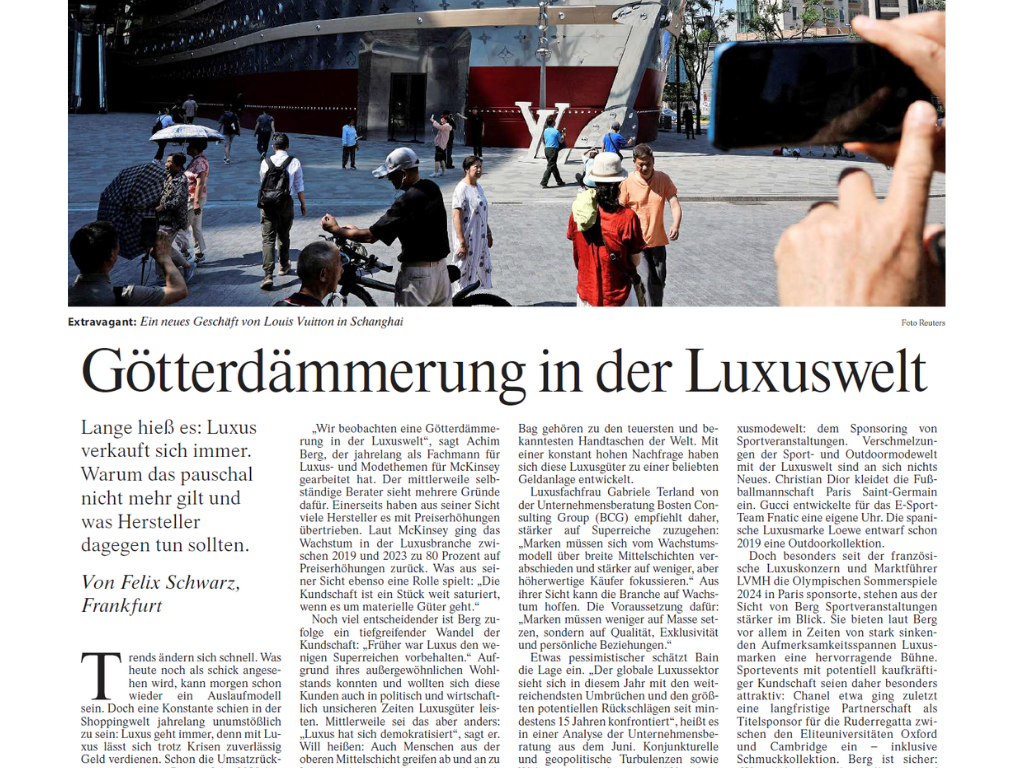
press November 2025 The Twilight of the Luxury World
FAZ by Felix SchwarzAchim outlines the key drivers and mitigants shaping luxury’s current reckoning.
He outlines the factors behind luxury’s current downshift, that consumers have become increasingly oversaturated with physical goods. Luxury, once reserved for the super-rich, has democratized, with upper-middle-class aspirational buyers and emerging markets – particularly China – driving past growth. This expansion created dependencies, leaving the industry a victim of its own success as Chinese demand weakens. As brands seek to counter this slowdown, Achim highlights sport as a mitigant. Major sporting events provide global visibility and access to attention-scarce, affluent audiences, making them an increasingly important platform for luxury brands seeking global success.
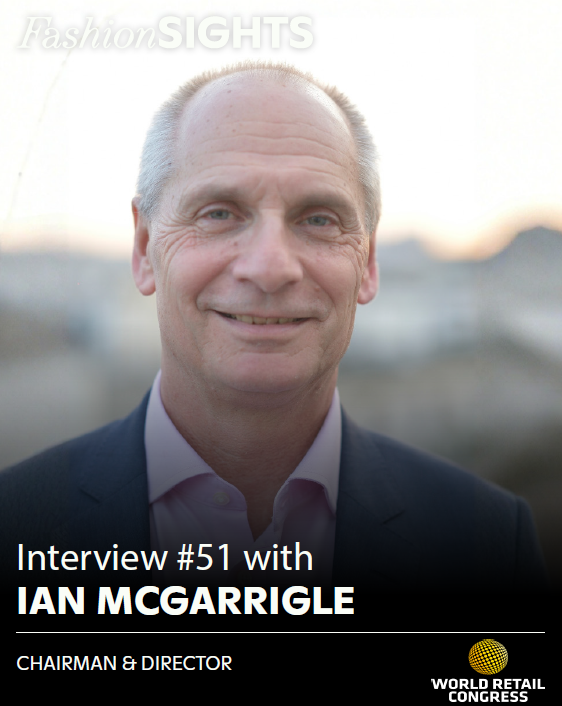
linkedin March 2026 Interview #51 - Ian McGarrigle; Founder & CEO, World Retail ...
What is the Future of (Fashion) Retail? Nobody is better positioned to answer that question than Ian McGarrigle, founder and chairman of the World Retail Congress. He is one of the most seasoned observers of the global retail landscape and is bringing together industry leaders each year to navigate their next chapter. Through that lens, Ian McGarrigle shared his perspective on how retail has evolved over the past decades, the forces shaping it, and where it is heading. We explored the transformative rise of e-commerce, the implications of globalization, and why data has become one of retail's most powerful strategic assets. He also reflected on why he founded the World Retail Congress and why strong leadership, perspective, and clarity of vision are more critical now than ever.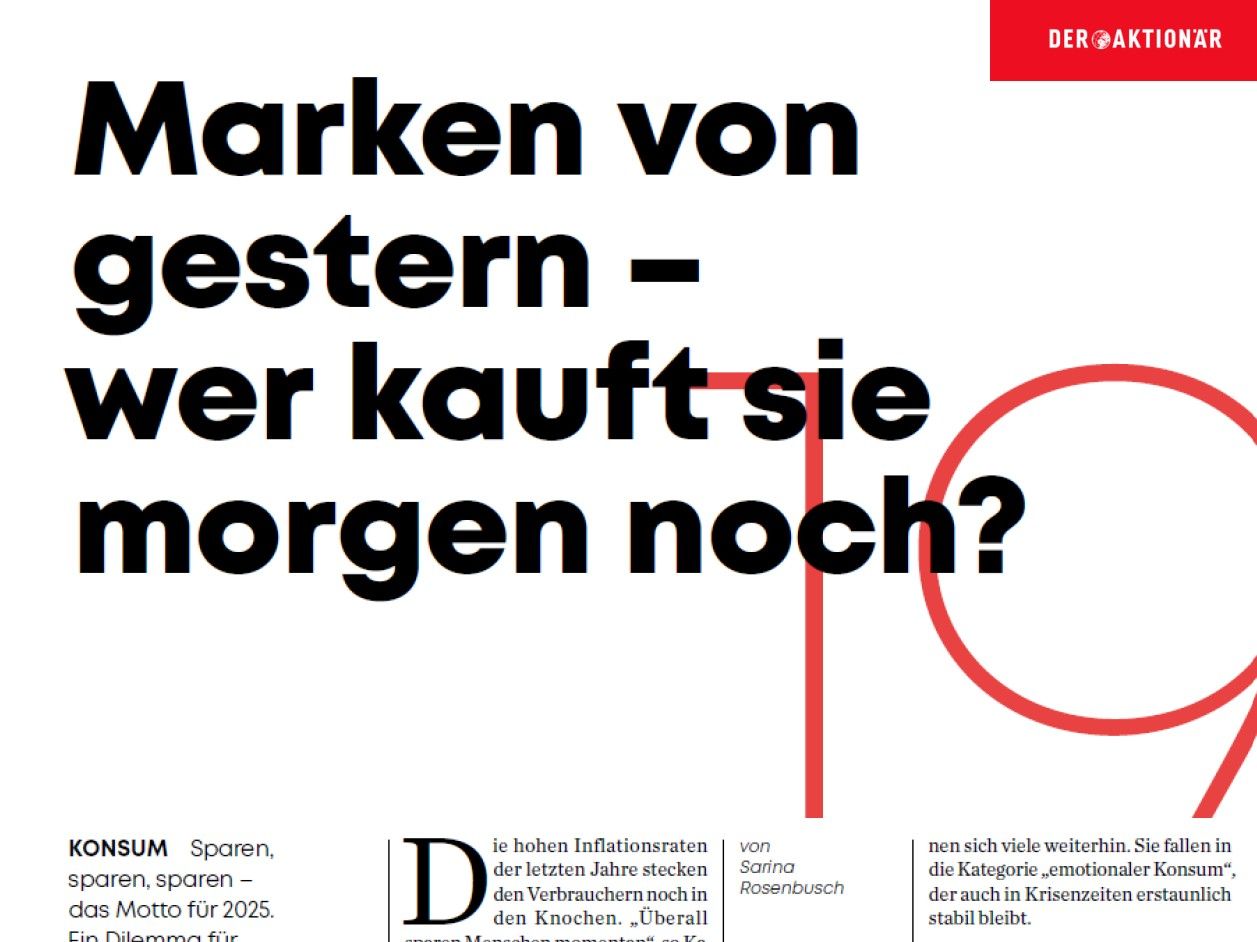
press December 2025 Brands of the Past – Who Will Buy Them in the Future?
Der Aktionär by Sarina RosenbuschAchim comments on luxury’s current reckoning amid macro pressures, weak consumer appetite, and what it will take to recover.
He highlights the industry paying the price for years of vanity-driven growth, where overexpansion and price inflation failed to deliver sustainable returns. Luxury is now entering a necessary phase of consolidation, seen as a prerequisite for the next growth cycle. While the ongoing reshuffling of creative directors aims to refresh creativity, Achim cautions that its impact will take time to materialize. He notes that luxury fulfills a fundamental human need for aspiration and self-expression, making recovery, though gradual, inevitable. A rebound will depend on broader economic stabilization, renewed growth in China, and easing regulatory pressure in the U.S. He adds that current experience-led luxury strategies enhance brand image rather than drive effective revenue growth.
press January 2026 India and EU agree game – changing trade deal
BBC World Business Report podcast with Leanna ByrneAchim comments on how ownership changes are reshaping the global sportswear and fashion industry.
There’s been a big shift after the Pinault family’s decision to sell its remaining stake in Puma to China’s Anta Sports. Achim discusses the reasoning behind the sale, Puma’s history and position as a brand and Anta’s plans going forward. He also shares his observations on Anta’s growing Western portfolio and what the acquisition means for them as a company.
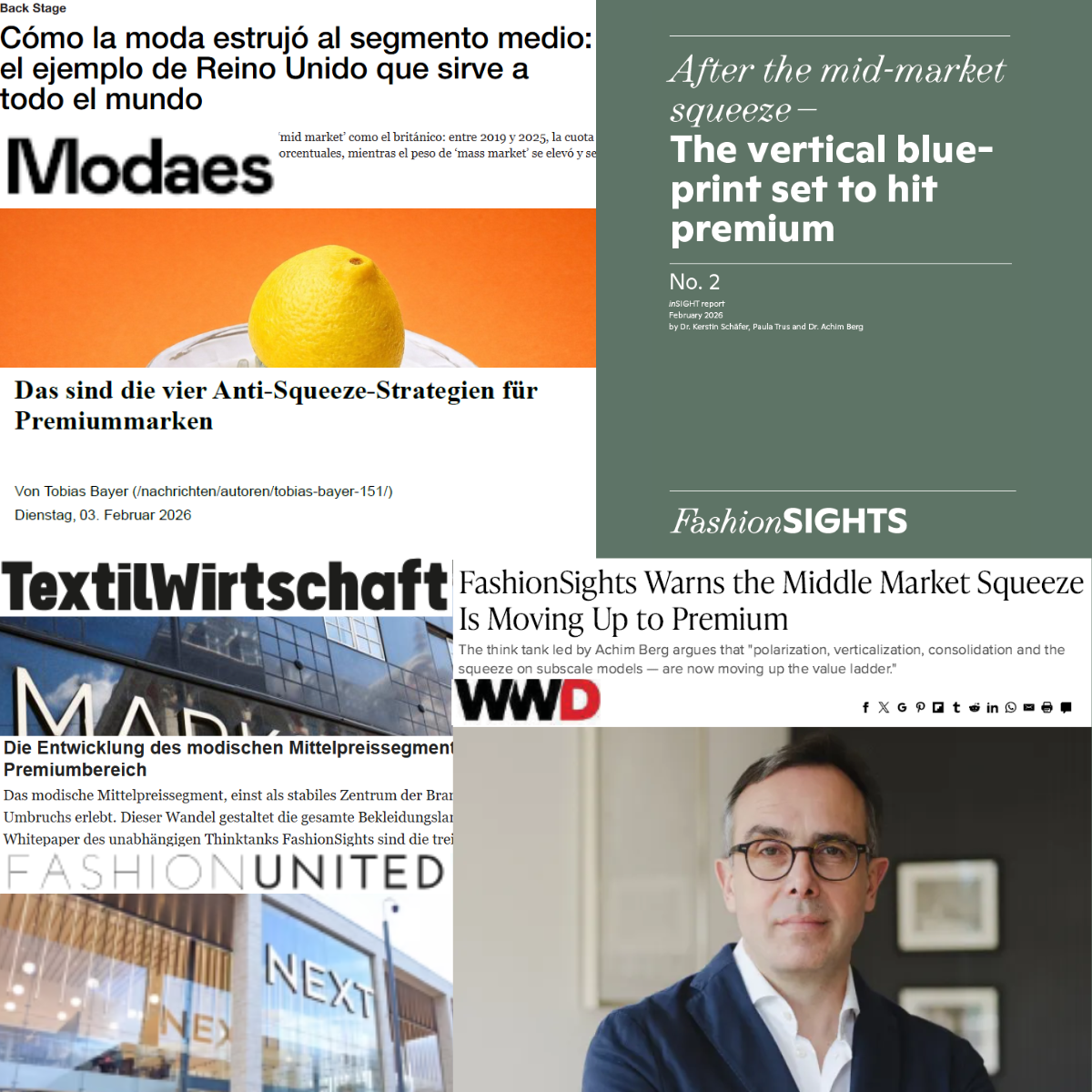
press February 2026 After the Mid-Market Squeeze – The Vertical Blueprint Set to...
WWD; Modaes; TextilWirtschaft; FashionUnitedFashionSights’ latest report analyzes how the forces hollowing out the mid-market are now reshaping the premium segment.
Following the publication of “After the Mid-Market Squeeze: The Vertical Blueprint Set to Hit Premium,” international trade media highlighted its central warning: polarization, verticalization and consolidation are moving up the value ladder. WWD and FashionUnited stressed the growing pressure on brands caught between value and luxury, while TextilWirtschaft focused on the four strategic responses premium players must adopt. Modaes placed the findings in a European context, pointing to the UK as a leading indicator of structural change.
Together, the coverage signals a broader industry shift: as the middle erodes, only clearly positioned brands will remain profitable.
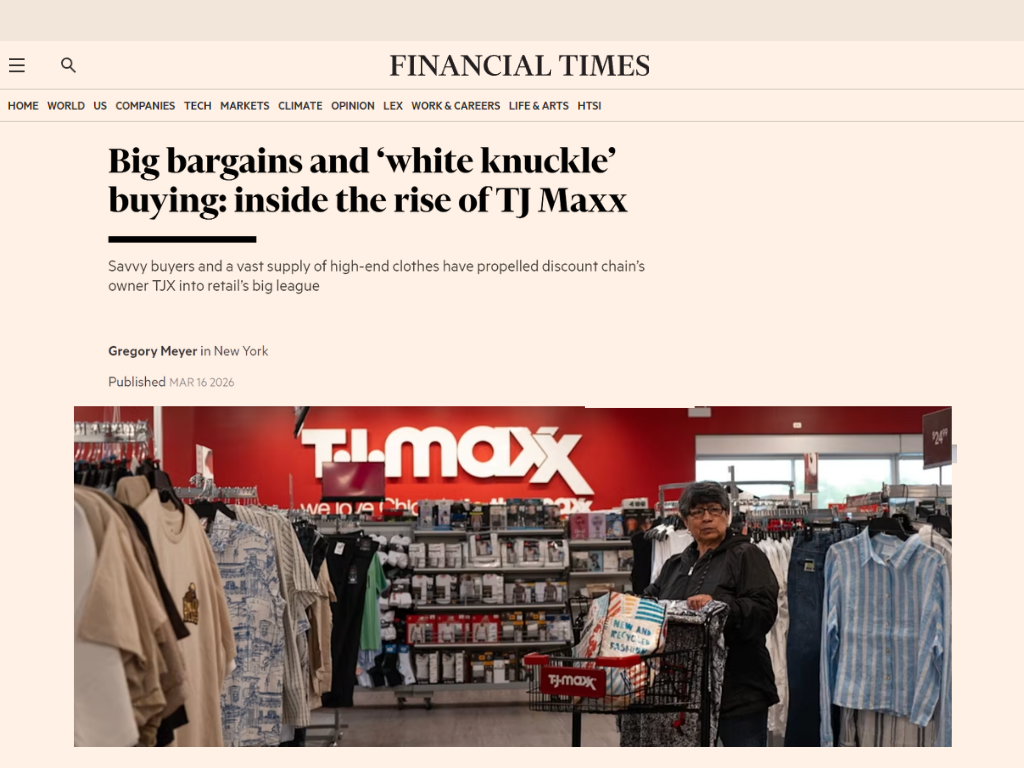
press March 2026 Big Bargains and 'White Knuckle' Buying: Inside the Rise of ...
Financial Times, Capital by Gregory MeyerAchim comments on the rise of off-price giant TJX and how a perfect storm of consumer pressure and surplus inventory has propelled the discount group into retail's big league.
Against a backdrop of structural headwinds – softening consumer spending, elevated cost of living, and price fatigue at the high end – TJX (operator of TJ Maxx, Marshalls, and TK Maxx) is thriving. The group absorbs surplus merchandise from brands, manufacturers, and retailers, converting excess inventory into quick cash, selling at 20-60% below retail, and providing a discreet clearing channel for the industry's stock imbalances. Bankruptcies and full-price distress only deepen the supply pipeline, turbocharging the "treasure hunt" dynamic that drives repeat footfall. Achim notes that most brands now actively embrace off-price – increasingly using these channels as a planned release valve rather than a last resort. The risk, he cautions, remains the dilution of brand equity over the long term.
linkedin March 2026 Luxury reality check in Milan
Last week, Tradebyte brought together an inspiring group of industry experts for ECD Premium in Milan – arguably a great setting to discuss the state of luxury in e-commerce, the rise of Agentic AI, and the evolving role of platforms. A particular highlight was the presentation of the new Tradebyte Premium report "Luxury in the Age of Algorithms", which set the stage for our keynote conversation on the State of Luxury in 2026. In the discussion, we explored why the industry has reached an inflection point: after decades of expansion, growth dynamics are shifting, consumer sentiment has softened, and the sector is increasingly confronting the limits of price-led growth. The conversation also focused on what comes next – from restoring creative momentum and sharpening strategic focus to embracing new technologies such as AI that are beginning to reshape operations and content production.linkedin March 2026 Inside the off-price playbook
Off-price is as one of fashion retail’s resilient growth models. The momentum has been building for over two decades. The drivers are both cyclical and structural. What began in the United States is now proving a winning formula globally. Why does off-price work? (1) Consumer reality has shifted. Elevated living costs, coupled with significant price increases from fashion brands, are pushing more demand into off-price. (2) In a world of oversupply, consumers still enjoy the “treasure hunt”. Beyond price, the in-store discovery experience drives both traffic and repeat visits. (3) There is no shortage of supply. Off-price acts as the industry’s pressure valve: particularly in today’s softer market environment. (4) Brands and retailers could, in theory, use AI and data to reduce overstock. In practice, many choose not to. Off-price has become a vital – and profitable – channel, especially for mid-market, premium and luxury players. What does this mean for the fashion industry? Structural shifts are reinforcing the model. Ongoing disruption in department stores (for example, Saks Global) and sustained pressure on the mid-market, squeezed between value and discounted premium, are accelerating the role of off-price
press May 2026 "Buy Cheap, Sell High." How to Make Money on the Resale of L...
TVN24 Business by Alicja SkibaAchim on why the resale market has moved from niche trend to permanent fixture of the luxury economy.
What began as niche sneaker flipping has quietly grown into a multi-hundred-billion-dollar industry. Achim contextualizes the shift: the secondary market gained momentum in the mid-2000s with online platforms, but the pandemic was the true accelerator — drawing millions of new participants driven by financial incentive and social media influence. He notes that today's resale buyer is motivated not only by status but increasingly by cultural belonging and investment logic, with limited-edition items treated as appreciating assets rather than consumer goods. Inflation and rising living costs have since given the market a second wave of momentum. His conclusion is unambiguous: resale is here to stay.
linkedin March 2026 Mid-market elevation needs to translate into a higher sell-t...
In UK womenswear, the gap between full-price and discounted sales illustrates the broader shift in the mid-market. Our latest analysis shows: Total market: 62% sold at full price (+1 pp vs. 2024) / 38% discount MANGO: 75% sold at full price (+2 pp vs. 2024) ZARA: 83% sold at full price (+5 pp vs. 2024) The takeaway: leading vertical mid-market players are less reliant on markdowns while strengthening their full-price position. In a market where the middle is under pressure, that says a lot about desireability, pricing power, margin resilience, and brand relevance. Thanks to Worldpanel by Numerator for the analysis input.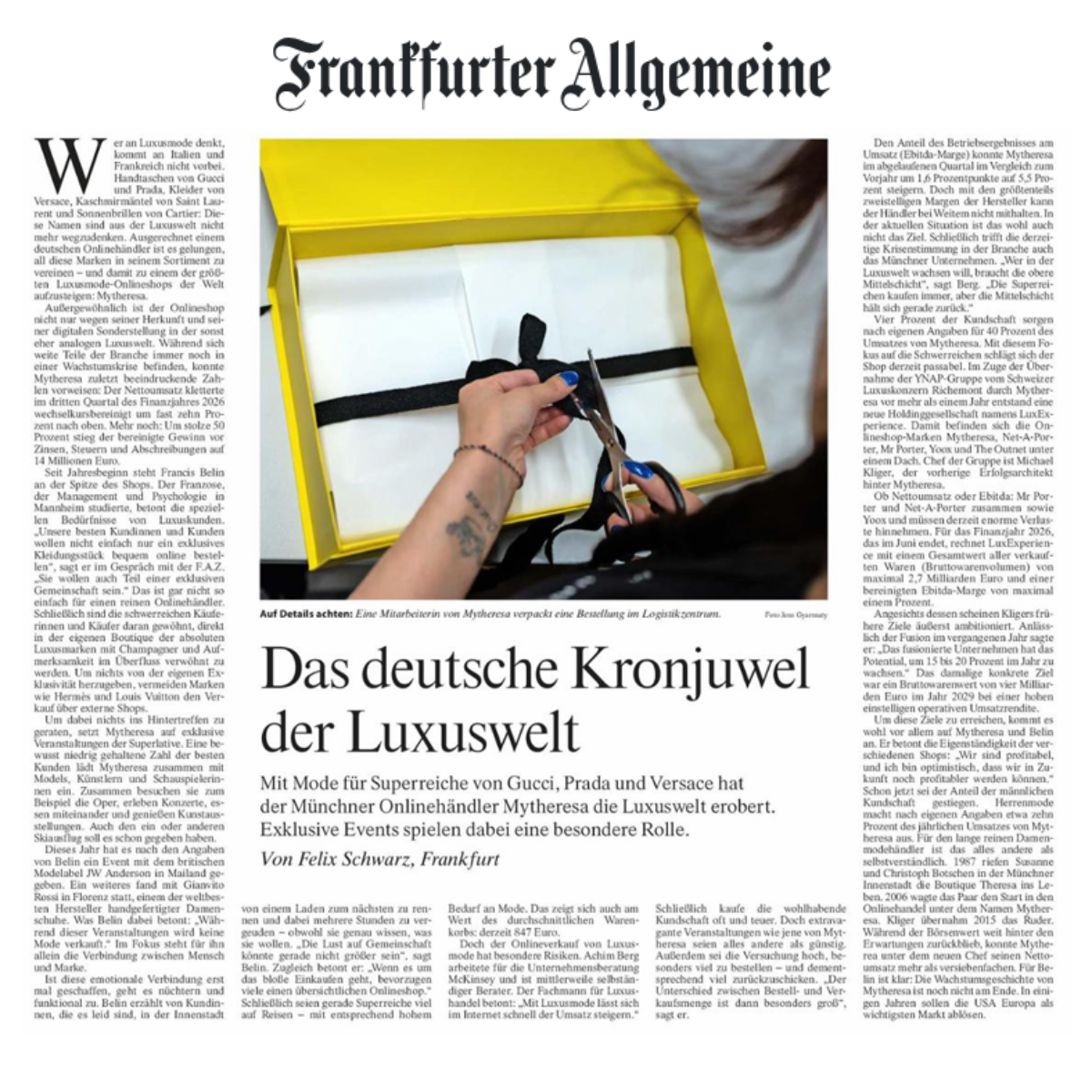
press June 2026 The German crown jewel of the luxury world
FAZ by Felix SchwarzAchim reflects on Mytheresa's strengths and the risks of scaling luxury e-commerce.
Mytheresa has quietly become one of the world's largest luxury online retailers, stocking the full spectrum of top-tier European houses under one digital roof, at a time when most of the industry was still debating whether luxury belonged online at all. Its model is built on exclusivity, such as a loyal, high-spending customer base, curated brand relationships, and an experiential layer of private events and cultural programming. Achim points to the core tension in luxury e-commerce - growth ambitions must never come at the cost of brand integrity. Mytheresa's discipline in resisting that pull is precisely what sets it apart.
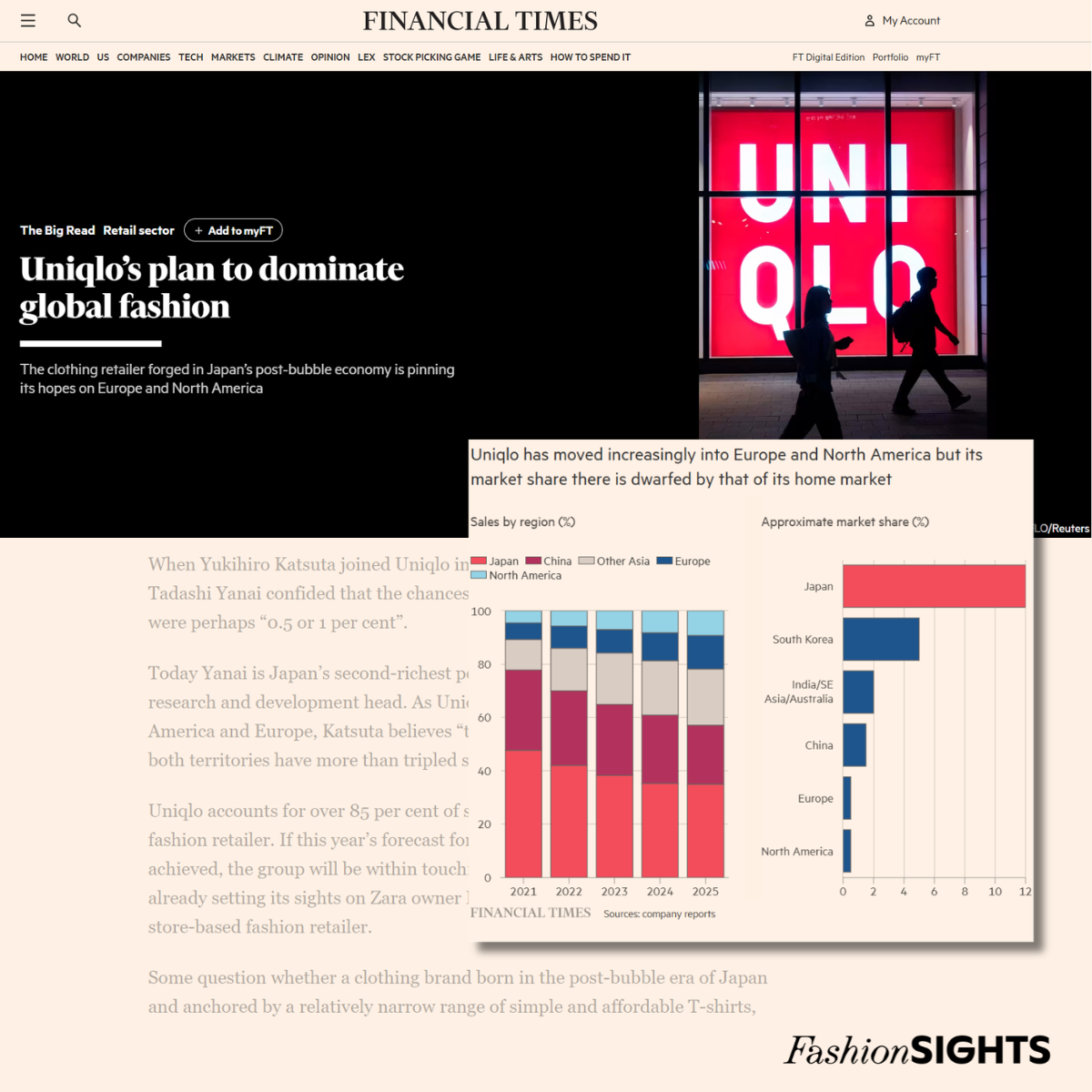
press June 2026 Uniqlo's plan to dominate global fashion
Financial Times by Harry DempseyAchim discusses Uniqlo's ambition to lead global fashion and whether the brand can finally crack Europe and North America.
Uniqlo remains exceptionally strong in its home market while posting impressive growth across Europe and North America. Achim points to the brand's core proposition of high-quality wardrobe essentials at accessible price points, which has benefited from the broader consumer shift toward modesty and quiet luxury. The ambition itself is nothing new: Uniqlo has long stated its intent to become the world's leading apparel retailer and to overtake Zara. While those targets remain unmet, the scale of its achievement is undeniable, with Fast Retailing consistently outpacing its European rivals. Whether Uniqlo can convert this momentum into true leadership in Western markets remains one of the most compelling questions in global fashion retail.
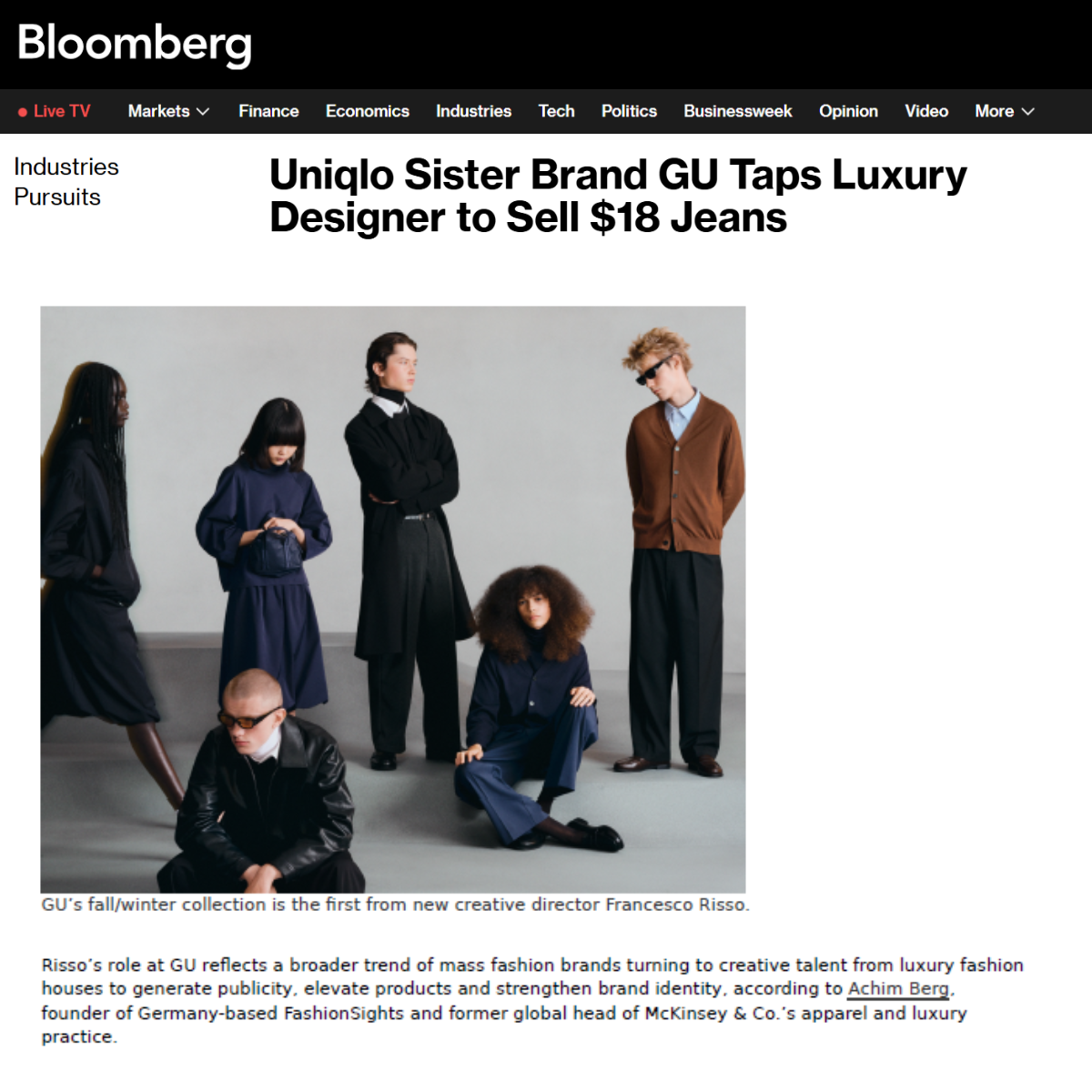
press July 2026 Uniqlo Sister Brand GU Taps Luxury Designer to Sell $18 Jean...
Bloomberg News by Yui HasebeAchim comments on the growing convergence between luxury creative talent and the mass market.
GU, Fast Retailing's lower-priced sibling to Uniqlo, has unveiled its first collection under former Marni creative director Francesco Risso, a move designed to sharpen the brand's identity and pave the way for international expansion. Achim emphasises that the appointment reflects a broader industry pattern: mass fashion brands increasingly recruiting creative leaders from luxury houses to generate publicity, elevate product, and strengthen brand identity. There is an increasing blurring of the lines between luxury and the mass market, with creative talent moving freely across both. Such partnerships offer brands a way to elevate their image and test new positioning territory.
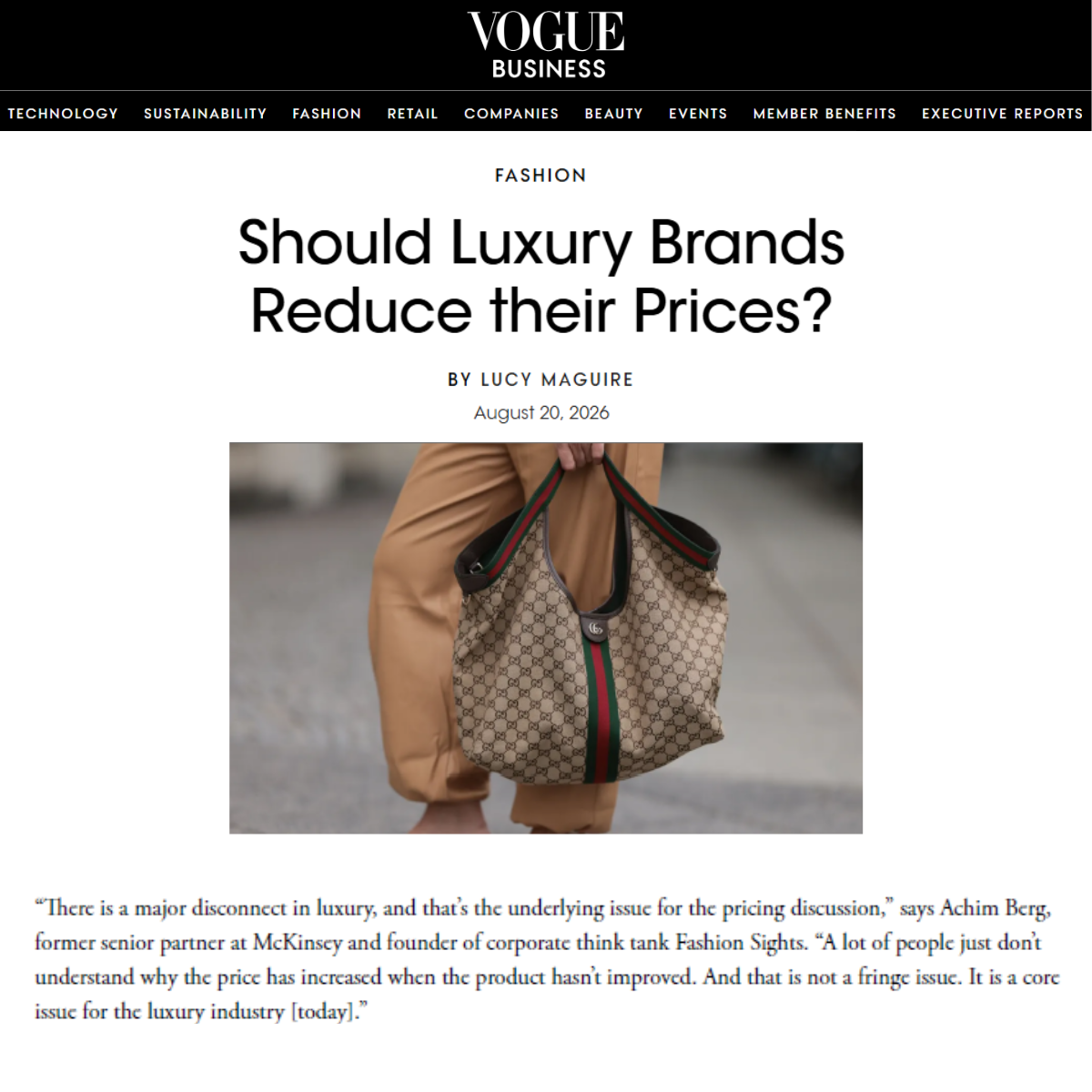
press August 2026 Should Luxury Brands Reduce their Prices?
Vogue Business by Lucy MaguireAchim examines whether repricing can repair the broken link between price and value in luxury.
After years of steep price increases across the sector, luxury faces the question of whether lowering prices can win back the shoppers it has lost. As Gucci quietly lowers prices on newer styles, the industry confronts the fallout of aggressive hikes that alienated aspirational consumers. Achim identifies the core issue as a major disconnect: consumers no longer understand why prices have risen when the product has not improved. For iconic pieces, prices must hold and the market must catch up over time, while newer styles allow quiet corrections that carry little risk to brand equity.
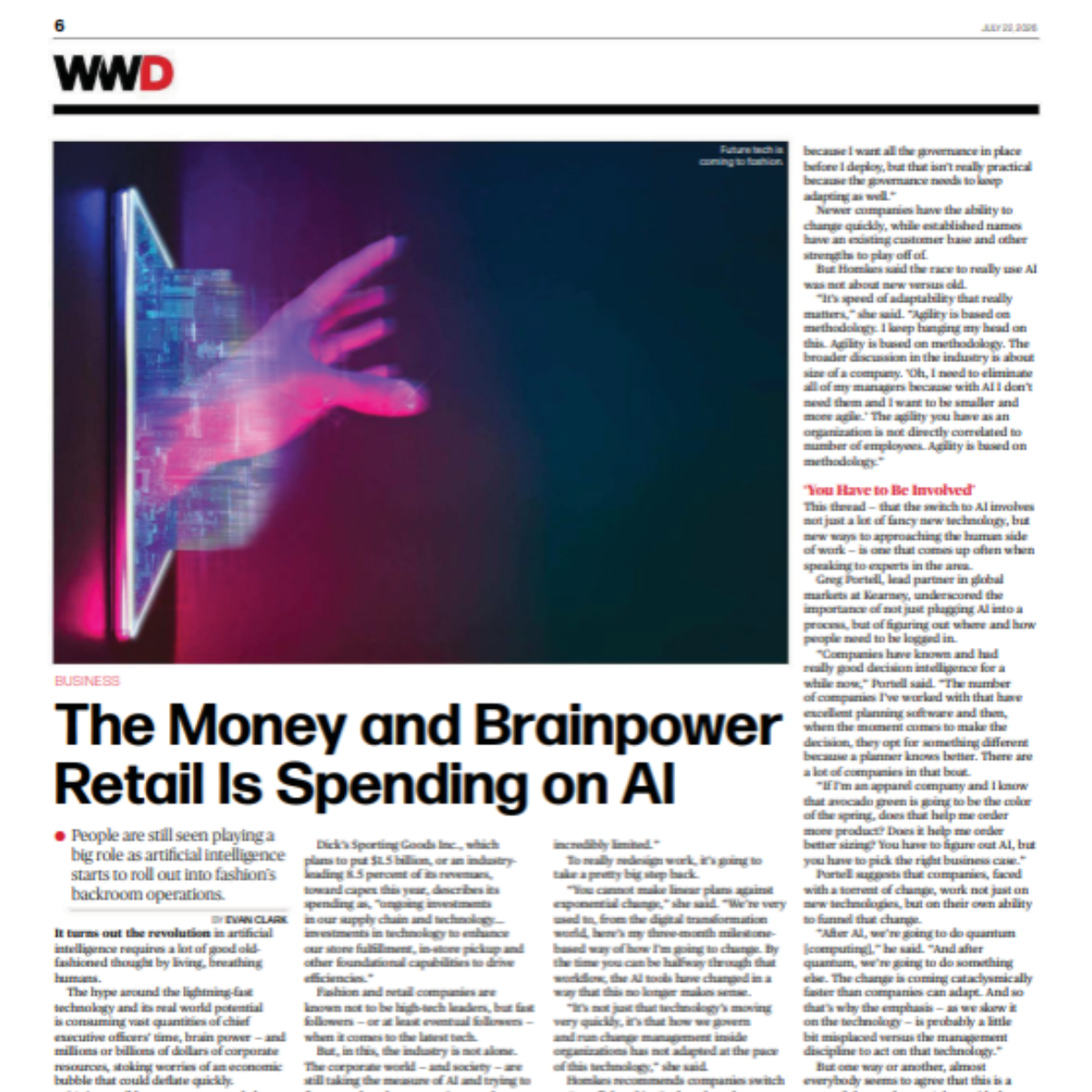
press July 2026 The Money and Brainpower Retail Is Spending on AI
WWD by Evan ClarkAchim weighs in on where fashion should direct its AI investments and why the real opportunity sits in the back end.
As fashion pours time and capital into artificial intelligence, companies across the industry are still working out where the technology genuinely creates value. Achim notes that most CEOs remain unsure how much to invest, recognising that AI now carries real costs requiring management and dedicated budgets. He highlights that while attention has centred on consumer-facing applications, the larger opportunities lie in a long-neglected area where lead times, buying, and sourcing processes have barely changed in decades. The pressing challenge for leadership is developing a plan that makes the return on investment tangible rather than vague.
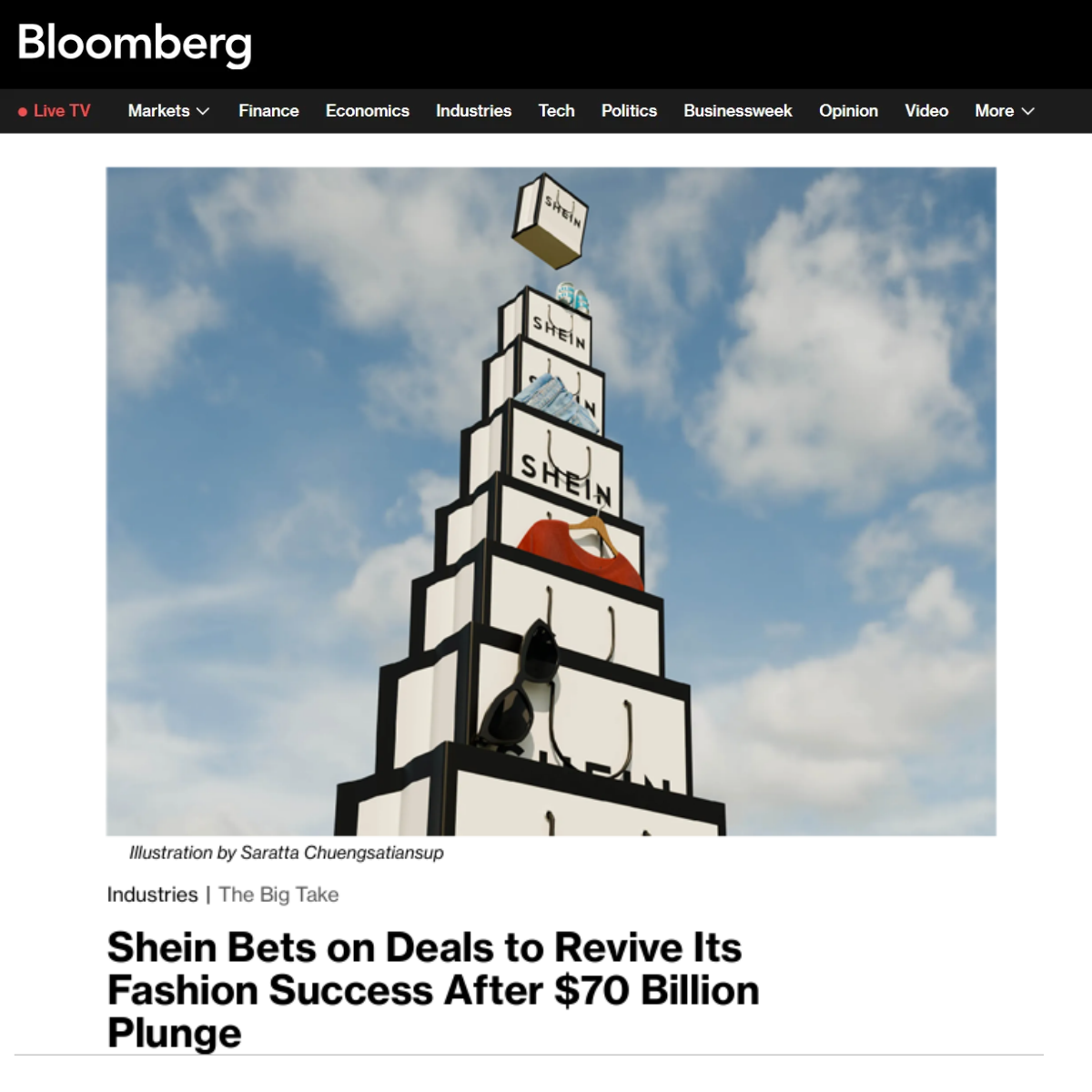
press August 2026 Shein Bets on Deals to Revive Its Fashion Success After $70 ...
Bloomberg News by Julia Fioretti, Daniela Wei, Dave Sebastian, Dong Cao, Olivia Poh, Martin Alfonsin Larsen and Erinn GardnerAchim reflects on Shein's public listing and the shifting conditions testing its once unstoppable model.
As trade barriers rise and geopolitical tensions reshape global retail, Shein heads into its long-awaited public listing at a fraction of its former valuation. The fast fashion giant is pivoting from pure direct-to-consumer growth towards acquiring and powering other brands through its supply chain infrastructure. Achim emphasises that the company's peak valuation was set in a very different world, one built for frictionless globalisation. Investors are now asking whether the model works equally well under new conditions, where the strengths that fuelled rapid expansion face fresh scrutiny. The listing marks a turning point for a business redefining its role in the industry.
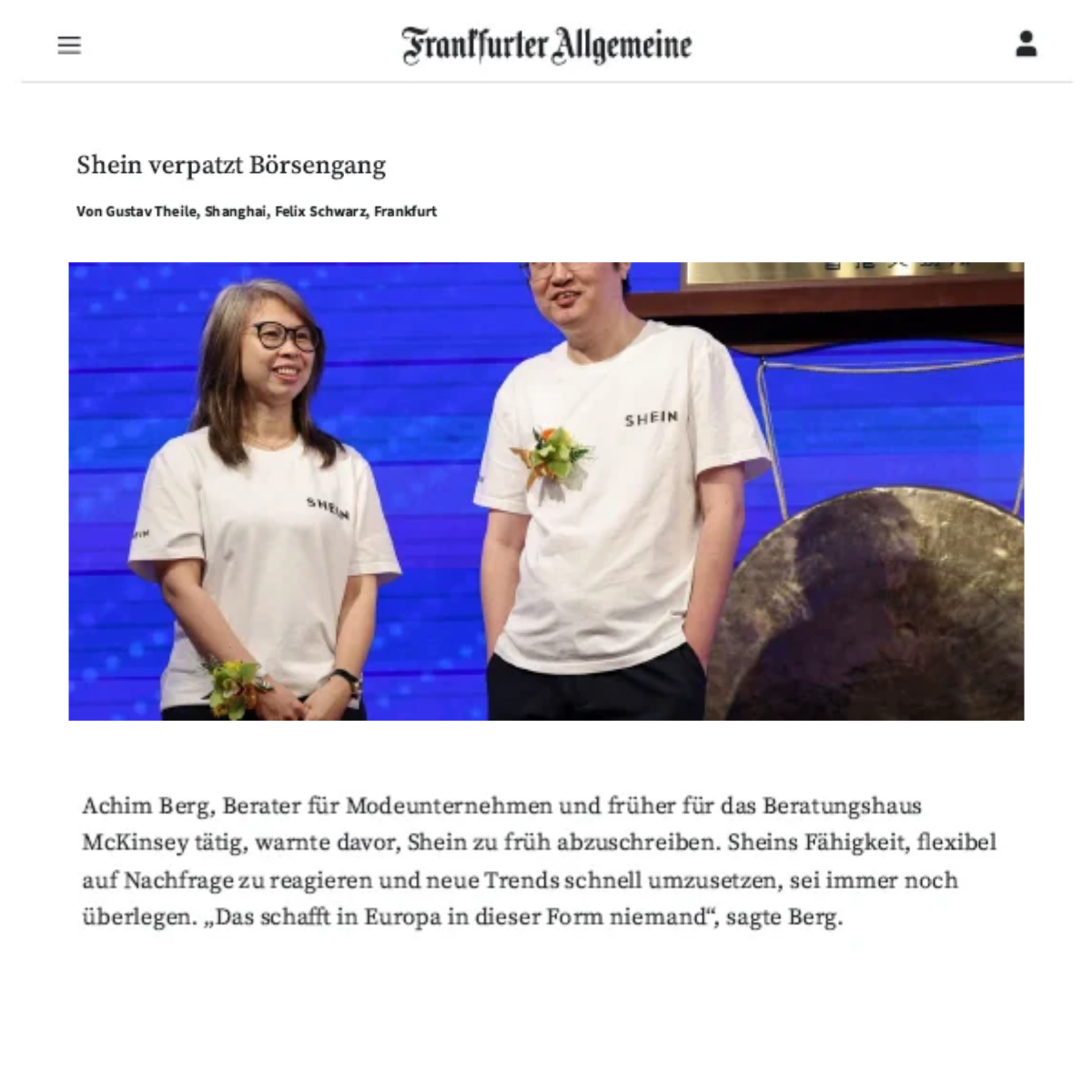
press September 2026 Shein verpatzt Börsengang (Shein Fumbles Its IPO)
Frankfurter Allgemeine Zeitung by Gustav Theile and Felix SchwarzThe article examines Shein’s weak Hong Kong market debut, with its shares falling sharply and the company’s valuation dropping well below previous levels. The listing comes after failed attempts in New York and London and amid growing pressure from US and European tariff changes, slowing growth and political scrutiny of its supply chain. Despite these headwinds, Shein remains a major global fashion player. Achim Berg provides industry context on the company’s speed, demand responsiveness and long-term competitive potential, while noting that it missed a more favourable window for an IPO.
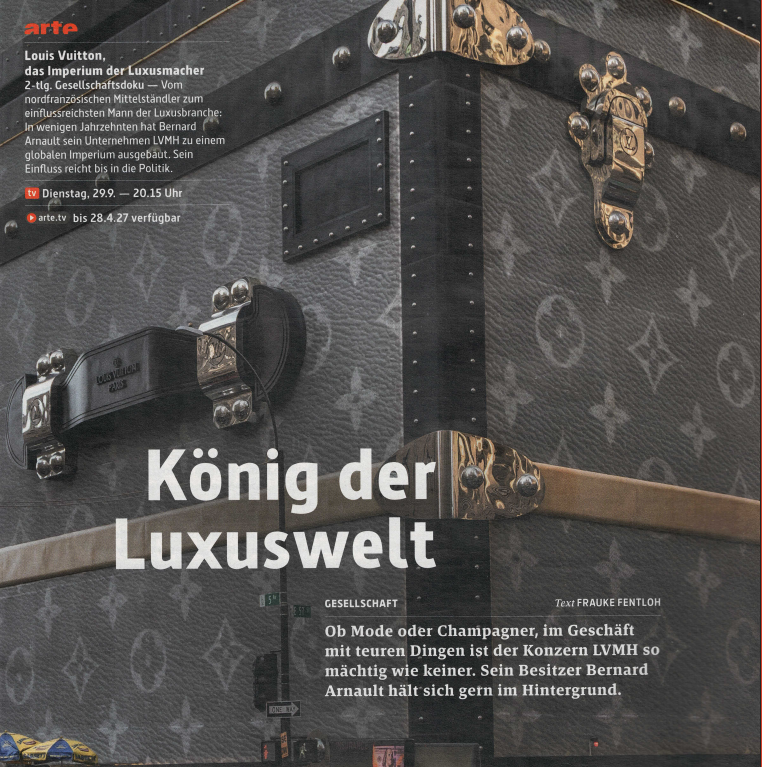
press September 2026 König der Luxuswelt
ARTE Magazin by Frauke FentlohThe article examines Bernard Arnault’s transformation of LVMH into a global luxury powerhouse, combining historic maisons with aggressive international expansion, creative reinvention and a broad portfolio spanning fashion, jewellery, hospitality and champagne. It also explores Arnault’s discreet but far-reaching influence, including his political connections and the question of succession within the family-controlled group. Achim Berg provides broader industry context on how the democratization of luxury and the rise of social media have significantly expanded the sector’s cultural relevance and desirability.
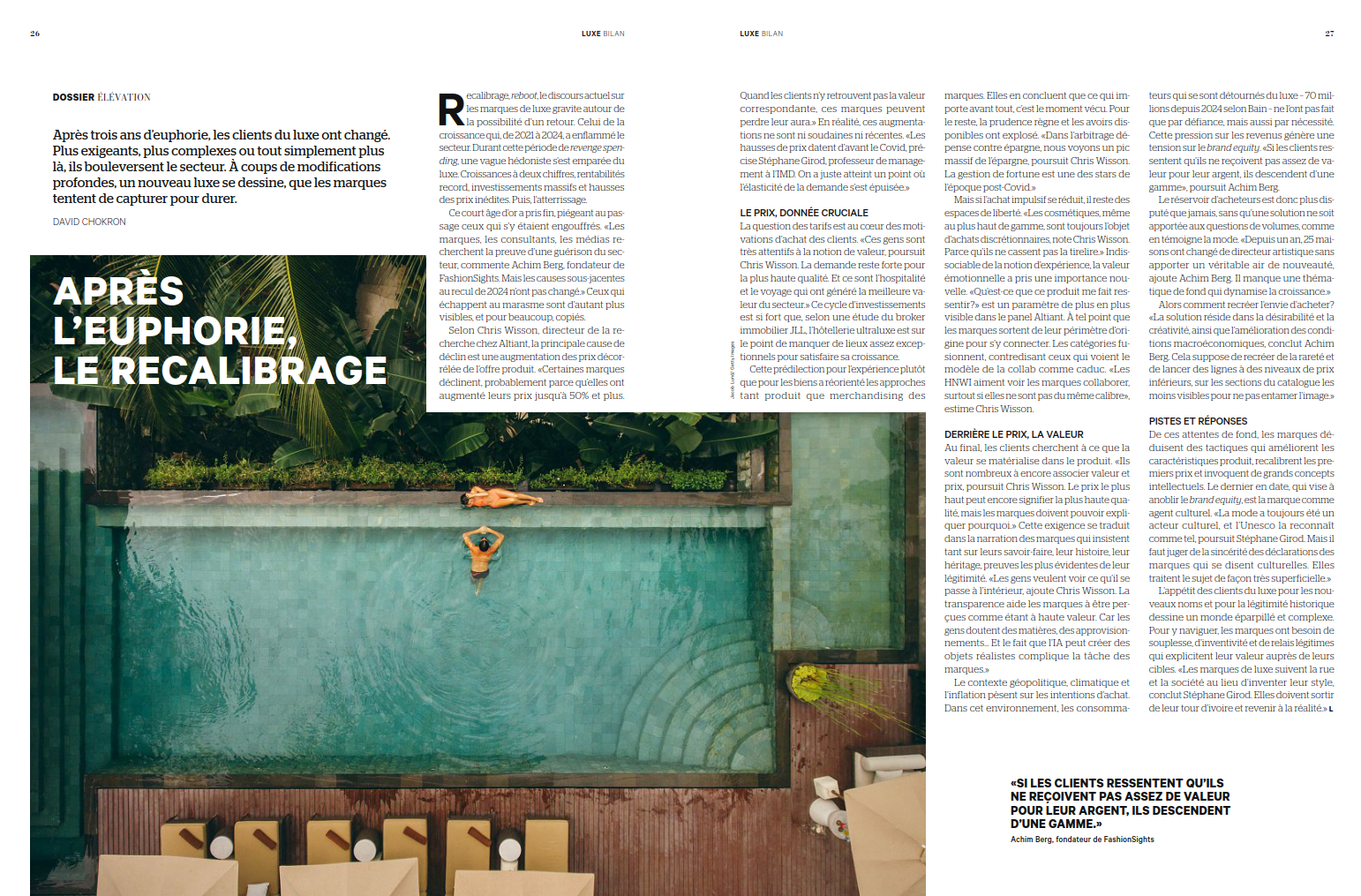
press September 2026 After the Euphoria: Luxury’s Recalibration
Bilan by David ChokronAfter years of post-pandemic growth, the luxury sector is adjusting to more selective consumers, weaker demand and greater scrutiny of price, quality and value. The article examines how brands are responding through sharper entry pricing, renewed emphasis on craftsmanship and transparency, and a stronger focus on experiences and emotional value. Against a backdrop of inflation and geopolitical uncertainty, Achim Berg provides industry context on the sector’s structural challenges, noting pressure from aggressive price increases, limited volume growth and the need to restore desirability through creativity, scarcity and more accessible product offers.
linkedin April 2026 What is Mango’s roadmap to 2030?
Next week Wednesday, I’ll be joining Toni Ruiz Tubau, Chairman and CEO of MANGO for the closing interview at the World Retail Congress in Berlin. Our conversation will focus on the strategic priorities driving MANGO’s continued momentum: deep customer understanding, brand and product elevation, investment in physical retail, strong digital growth, and the agility required to perform in an increasingly complex market. We will also look ahead to #2030 and discuss what it takes to build a global leader in the upper mid-market A timely discussion at a defining moment for our industry. See you in Berlin. Thanks to Ian McGarrigle and World Retail Congress team for bringing us all together in Berlin!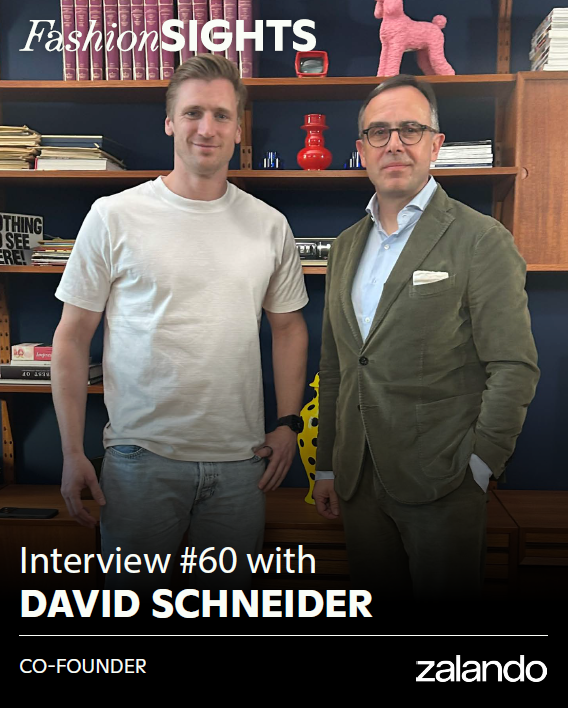
linkedin April 2026 Interview #60 - David Schneider; Co-Founder, Zalando
Can online fashion ever reach 50% market share? One of the most striking questions from my recent conversation with David Schneider, co-founder of Zalando – one of the earliest and most successful scale-ups in European e-commerce. We explored key factors that have shaped the category over the past decade, including Zalando’s launch and scaling strategies, COVID’s impact on the industry's trajectory, and current approaches for navigating a soft market backdrop. We also addressed ESG: its significance in difficult market conditions, strategies for managing reputational and strategic risks associated with disengagement, and the prospects for renewed investment in ESG. Ultimately, the most critical question emerged: Can fashion e-commerce ever capture 50% of the market?linkedin May 2026 AI is raising the bar – not leveling the field
AI is raising the bar – not leveling the field That was the conclusion of my recent interview of Zalando co-founder David Schneider. I’ve been spending a lot of time recently discussing AI with founders, operators, and platform leaders across the industry. One thing is clear: AI isn’t a future topic anymore – it’s already reshaping how fashion works. Yes, the tools are more accessible than ever. But the outcome isn’t democratization – it’s divergence. AI is making strong operators faster, sharper, and more precise: #personalization is better #reliable customer experiences are increasing #execution is becoming more clean AI is turning speed into a non-negotiable From demand planning to allocation, the entire system is accelerating. What used to take weeks now takes days – or hours. The implication? Agility is no longer a competitive edge. It’s the baseline. AI is forcing a mindset shift from brand to business For a long time, many believed product + brand storytelling would carry the model. AI is challenging that assumption. It rewards those who truly understand demand, operate with discipline, and think end-to-end. In other words: It pushes brands to become better retailers. And it will sort out those who don’t. Curious to hear your takes on the topic.linkedin May 2026 A keynote speaker’s worst nightmare: nobody shows up.
Thankfully, that was not the case when I opened the second day of the World Department Store Summit. Jet lag turned out to be my friend and we had an almost full house for an early 8am start. A big thank you to André Maeder the IGDS team for inviting me to speak about the squeeze in the fashion mid-market and why these pressures are increasingly moving upscale into the premium segment. During my presentation, I explored how the mid-market, once the industry’s comfortable “happy place”, has been caught between value players on one side and premium brands on the other. I also argued that many of the same structural pressures are now beginning to reshape the premium segment itself. While my presentation was not specifically focused on department stores, I closed with a number of practical implications and recommendations for department store players navigating this increasingly polarized market. If you missed the presentation (or lost the battle against jet lag), please check the comments for a download link to the report. P.S. El Puerto de Liverpool, Mexico’s leading department store retailer, invited us for an early morning tour of its flagship store … where I also met Mexico’s mascot for the upcoming FIFA World Cup.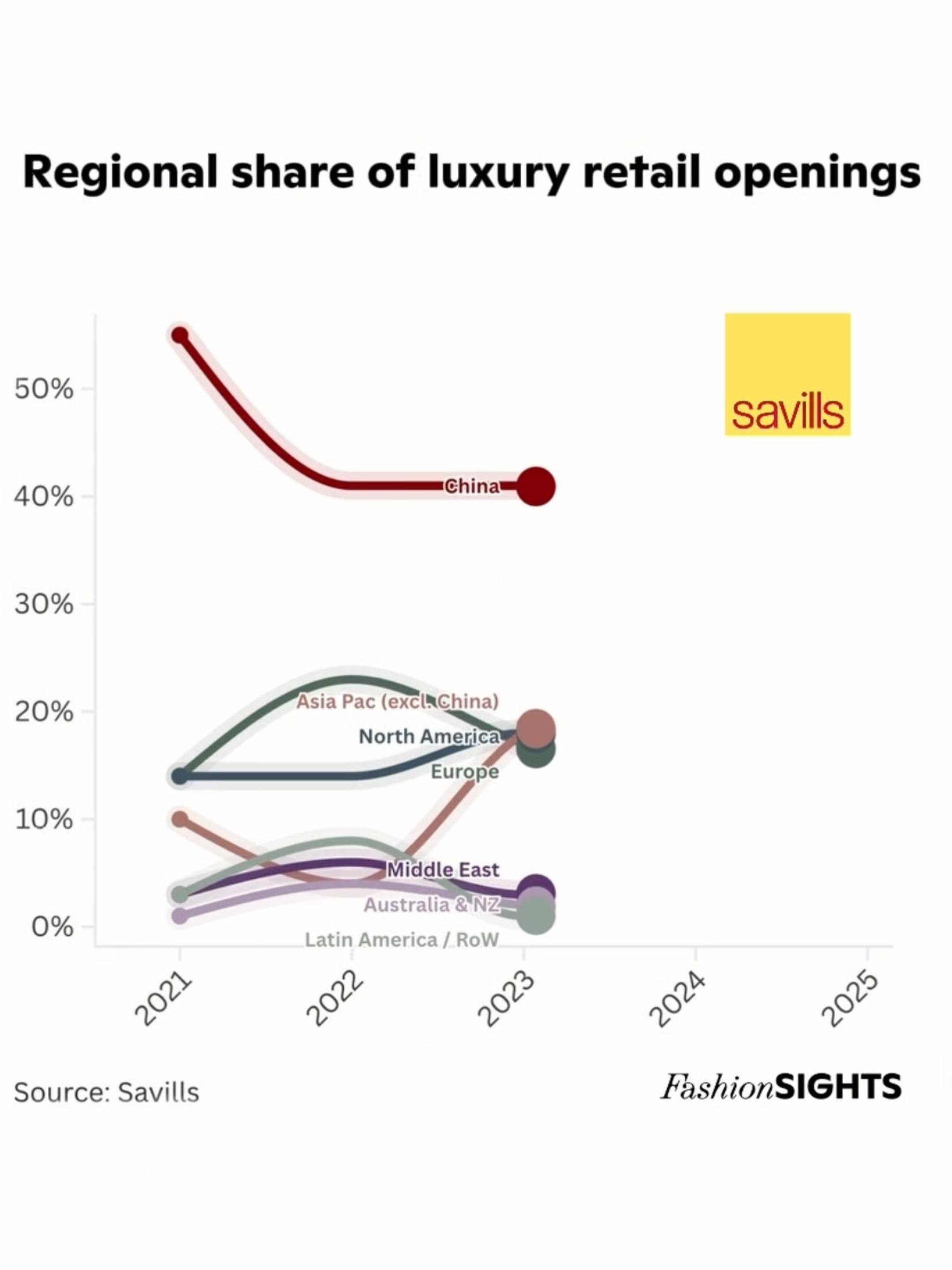
linkedin June 2026 Luxury Is Learning That Growth Doesn’t Always Mean More Stor...
As the downturn stretches into its third year, the industry’s leading brands are shifting from expansion to concentration. The number of new store openings fell to its lowest level since 2020; North America declined by −13%, Europe by −8%, China by -52%. Three dynamics we are seeing reshape the luxury retail sector: Capital reallocation: Luxury brands are closing smaller stores in B+ cities while concentrating on upsizing and refurbishing flagships in Alpha cities. According to Savills, 42% of all new store activity in 2025 consisted of enlargements and expansions of existing locations. Experience retail: Top locations are being transformed into destination flagships & pop-ups, landmarks, housing cafés, bookstores, exhibitions, and resorts, gaining traction China, the epicenter of closure: As market growth assumptions are reassessed, most exits are concentrated in China – particularly in lower-tier cities. Major pullbacks include Cartier, Loewe , Tiffany & Co., and Gucci. China's share of new store openings has collapsed from 55% in 2021 to 19% in 2025. The regional rebalancing is stark: - China's share of new openings has collapsed from ~55% in 2021 to ~19% in 2025 - Asia Pacific (excl. China), Middle East, Latin America, and Australia & NZ have all seen their shares contract or flatline - North America and Europe have both seen their share of new openings grow, each now reaching ~26–27% The West is re-gaining relevance, not through growth, but through reallocation. While the direction is set, data confirms a course correction is underway: - Kering : 133 store closures in 2025, with ~40–50% of 2026 closures concentrated in Asia; mainkly driven by Gucci : -75 stores closed in 2025, -100 further closures planned in 2026 - FERRAGAMO: -70 closures planned in 2026, +35 reopenings at stronger locations - LVMH : exiting travel retail, particularly in China, while investing in flagship upgrades, and best-in-class anticipated renovation of its 5th Avenue flagship in New York So, what do you think that means for the future of luxury retail?linkedin June 2026 Worn by everyone, owned by no one
The global lingerie market is estimated at roughly $100bn (according to Grand View Research, Inc Research). However, only 9 brands exceed $1bn in revenue, with three of them only barely crossing the threshold. Victoria’s Secret & Co. → ~ $6.5bn Oniverse (holding company that owns #intimissimi)→ ~ $4.1bn Gildan (acquired Hanesbrands Inc. Last year) ~ $3.6bn Aerie by AEO, Inc. → ~ $1.9bn Triumph Group →~ $1.3bn #Wacoal → ~ $1.2bn PVH Corp. (esp. Calvin Klein) → ~ $1.0bn SKIMS → ~ $1.0bn Groupe ETAM → ~ $1.0bn What is striking is that no single player breaks double digits. Across both fashion mass and luxury, category leaders often generate multiples of that. In intimates, the top player sits at just $6.5bn. This excludes mass-fashion and general merchandise retailers with significant intimates sales (e.g., Amazon, Walmart, Target, H&M, Marks and Spencer, C&A, etc.), but even then, no brand has truly come to dominate the category. Everyone wears it, yet no one truly owns it. The reason the category remains so fragmented is structural. Few categories require brands to simultaneously master fit and sizing (across regions), technical product innovation, sophisticated sourcing, inventory complexity and, increasingly, genuine emotional resonance with the consumers. For decades, underwear was the quiet corner of fashion: functional, unglamorous, and largely viewed as a replenishment category. A handful of incumbents carved up the market and left it at that. More recently, challengers emerged and the category was reshaped by the comfort and casualization wave accelerated by the pandemic. The result is a category where scale remained elusive. Building either a strong product or a strong brand in isolation is not enough. A future winner will need to combine an exceptional product execution with aspirational marketing, while understanding and adapting to the realities of modern women's lives. That combination has proven stubbornly hard to scale. Who do you think wins this category and why has no giant emerged yet?linkedin June 2026 UNIQLO's success challenges conventional fashion retail.
I was in London last week and while walking down Oxford Street, something caught my attention. Within 15 minutes, I passed three Uniqlo stores. One of them was the Global Flagship at 311 Oxford Street. All three locations are large-format stores, ranging from roughly 1,300 to 2,240 square meters. And they are packed with product. Not messy, but very efficient and systematic. Which is interesting because much of modern retail thinking points in the opposite direction. Many value and mid-market fashion retailers have spent years trying to make their stores feel like boutiques by moving towards curated store concepts and lifestyle merchandising. Uniqlo largely ignores that playbook. The stores are highly functional. With their stacked products and clear navigation, they’re almost utilitarian. Some people might even say the merchandising feels closer to a grocery store than to a fashion store. But maybe that’s exactly the point. Uniqlo doesn’t seem to make the store the hero. Instead, the product is. Basics in many colours. Functional innovations like Heattech or AIRism. Fair price points. Instead of competing on fashion trends, they compete on reliability. And apparently, it works. In 2025 Uniqlo Europe reported €2.27 billion in revenue and grew around 34% year-over-year, with Fast Retailing's international Uniqlo business continuing to deliver double-digit growth globally as well. So while many retailers are investing heavily in experience and storytelling, Uniqlo shows that a very focused and functional approach can still stand out. What do you think – is UNIQLO the exception, or a sign that retail has overcomplicated itself?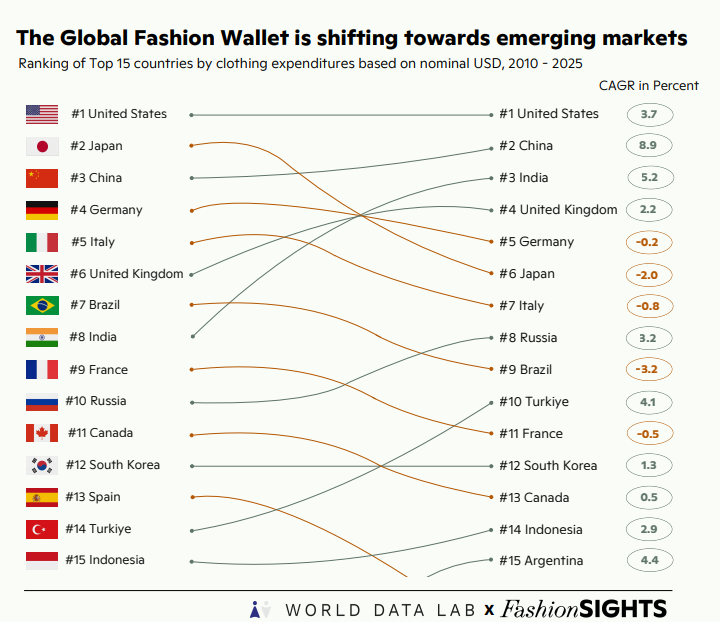
linkedin June 2026 The global fashion wallet is shifting.
The top 15 countries for clothing and footwear spending look very different today than they did 15 years ago. While the US remains #1, the real story lies beneath the surface: the ranking is becoming more competitive and growth momentum is increasingly shifting toward emerging markets. Three observations stand out: 1. The entry bar has been raised In 2010, Indonesia entered the top 15 with around $22 billion in clothing and footwear expenditure. In 2025, Argentina needed roughly $30 billion to claim the same spot. While inflation explains part of this increase, more consumer economies are reaching meaningful scale, making the lower end of the ranking increasingly competitive. 2. Emerging markets are reshaping the leaderboard India climbed from #8 to #3. Turkey moved from #14 to #10. Argentina entered the top 15. Meanwhile, several mature markets lost relative ground: Japan fell from #2 to #6, Italy from #5 to #7, France from #9 to #11, and Spain dropped out of the ranking entirely. Not all declines reflect weaker consumer demand. In Brazil and Japan, currency depreciation against the US dollar significantly reduced nominal spending growth when measured in USD, despite continued growth in local-currency terms. The strongest upward moves, however, are coming from large consumer economies where rising incomes are expanding the consumer class. Since 2010, China and India have seen a strong increase in the share of their populations with meaningful discretionary spending power, which in turn fundamentally reshaped fashion demand. 3. The US still leads, but China is closing the gap The US remains the world's largest apparel market, with spending rising from approximately $273 billion to $470 billion between 2010 and 2025. China's trajectory is even more remarkable. While moving up "only" one position, from #3 to #2, its clothing expenditure grew at nearly 9% CAGR over the period, reaching $324 billion and steadily narrowing the gap with the US. Behind that growth is a profound shift in consumer purchasing power. In 2010, only around one-fifth of China's population belonged to the consumer class. Today, that figure exceeds 70%. Turkey tells a related story. While it already had a sizeable consumer class in 2010, its wealthy population expanded from roughly 1 million to 19 million people over the period, providing a powerful tailwind for fashion spending. The broader takeaway: Fashion consumption is being redistributed. The next phase of growth will require understanding where consumer spending power is created in the future. Thank you to World Data Lab for sharing the data and insights behind this analysis. Source: World Data Lablinkedin June 2026 The climate isn't waiting for fashion to adapt.
We're currently on our way to Sweden for our annual family vacation. While much of Europe is struggling with an intense heatwave, we're heading somewhere considerably cooler. That contrast got me thinking. According to climate scientists, this heatwave would have been virtually impossible without human-caused climate change. And it's no longer just a weather story. It's becoming a business story too. Europe is warming roughly twice as fast as the global average, and businesses are already beginning to adapt. Paris Fashion Week is shifting runway schedules to cooler parts of the day. Retailers are questioning autumn collections arriving even as temperatures exceed 30°C. H&M is redesigning theirs with lighter fabrics to prepare for longer, hotter summers. That's why one figure from TextilWirtschaft caught my attention. Germany's fashion retailers recorded their weakest June trading week despite having an additional selling day. Even discounts of up to 70% weren't enough to bring shoppers into stores. Only, online retailers somewhat benefited, but with a strong forcus on very summerly outfits, as our friend Made Lapuerta showcases on her insta channel hashtag#databutmakeitfashion. One industry, however, is already benefiting from this shift. Air conditioning is still relatively uncommon across much of Europe. But that's changing quickly. Markets that historically had little need for cooling infrastructure are suddenly investing in it. Retail is only one example. According to Allianz Trade's latest risk analysis, extreme heat could reduce GDP by 5–7% in Europe's most exposed economies by 2030. France is expected to be the hardest hit, followed by Italy, Germany, and Spain. Lower productivity, infrastructure challenges and rising operating costs are all part of the equation. And those numbers don't even capture the broader impact on farmers, vulnerable communities, the elderly, and wildlife. To me, this shows that climate change is no longer just a sustainability discussion. It is changing how consumers shop, how retailers plan assortments, how cities operate and where companies invest. The winners won't necessarily be those with the best products, but those that adapt the fastest. The retail calendar was built around predictable seasons. The climate is no longer playing by those rules. Maybe it's time retail stopped doing so, too. What do you think? Sources: TextilWirtschaft, CNN, Reuters, WWD, Vogue, Fortune, Allianz Trade, databutmakeitfashion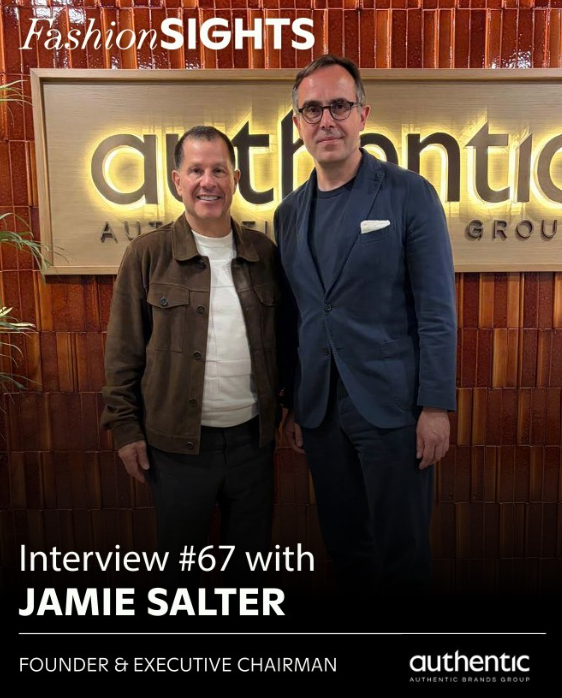
linkedin June 2026 Interview #67 with Jamie Salter; Founder & Executive Chairma...
The future of fashion won’t be won by those who make the best products. It will be won by those who own the best stories. In the interview for my upcoming book, I spoke with Jamie Salter, the founder and executive chairman of Authentic Brands Group about licensing, brand ownership, entertainment, retail, and why the next era of commerce may belong to those who know how to turn content into demand. Traditional licensing has always had clear limits: put a brand name on a product, collect royalties, and move on. Jamie saw it differently. For him, the real opportunity was to bring content, entertainment, lifestyle, and commerce together into one powerful flywheel. “Content creates commerce – Disney makes great movies, and from that, you want the experience, the merchandise. We saw that early and built our whole model around that topic.” This thinking has shaped the model of Authentic Brands Group: asset-light, globally scalable, digitally fluent, and built around storytelling. While many others were still relying heavily on traditional media, Authentic Brands Group leaned early into digital, social, entertainment, collaborations, and live experiences; turning brands into cultural platforms rather than just labels on products. Looking ahead, Jamie sees marketplaces, live shopping, faster fulfillment, and asset-light models reshaping retail. His message is direct: companies that hold on to outdated, asset-heavy platforms without adapting to the new IP-driven economy will find it increasingly difficult to compete. For me, this conversation raised a fundamental question for fashion and retail: who will be able to monetize brand equity without compromising it? Thank you, Jamie for sitting down with me in Mexico City for this incredibly open and insightful conversation. Further insights from this conversation will be featured in my upcoming book, bringing together leading voices shaping the #FutureOfFashion.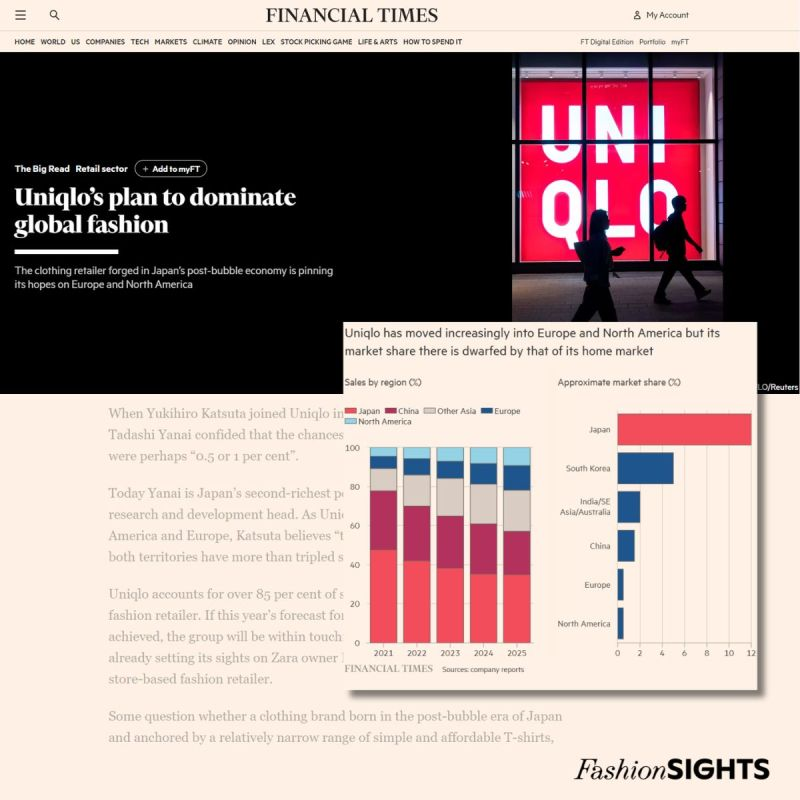
linkedin July 2026 Can UNIQLO crack the US and Europe?
That was one of the questions I discussed with Harry Dempsey, Tokyo correspondent for the Financial Times. His latest FT Big Read explores Uniqlo’s ambition to become a dominant force in global fashion. While Uniqlo remains exceptionally strong in its Japanese home market, the brand has recently seen impressive growth in both Europe and North America. With its proposition of offering high-quality wardrobe essentials at an affordable price point, Uniqlo’s recent rise has also benefited from broader shifts toward modesty and quiet luxury. The question now is how much more value the brand can create before that momentum begins to fade. Uniqlo’s ambition to lead in global fashion are nothing new. In 2008, Uniqlo set the goal of becoming the world’s No. 1 apparel retailer by 2020. In 2017, Fast Retailing CEO Tadashi Yanai stated that the company would overtake industry leader Zara. Even though the brand has not fully achieved those targets yet, the scale of its accomplishments becomes clearer when looking at the numbers. Around 85% of Fast Retailing’s revenue comes from Uniqlo, and between 2008 and 2025, the company grew at a CAGR of 11%, increasing revenue from approximately $3.9 billion to $22.7 billion. Over the same period, H&M and Zara grew at around 6% and 8% CAGR, respectively. Uniqlo is slowly but steadily closing the gap with its European rivals. Whether it can translate its success into true leadership in Western markets remains one of the most interesting questions in global fashion retail. Thank you, Harry Dempsey, for featuring me and our FashionSIGHTS analysis in the article. You can find the link to the FT Big Read in the comments. Source: Finacial Times, FashionSIGHTS analytics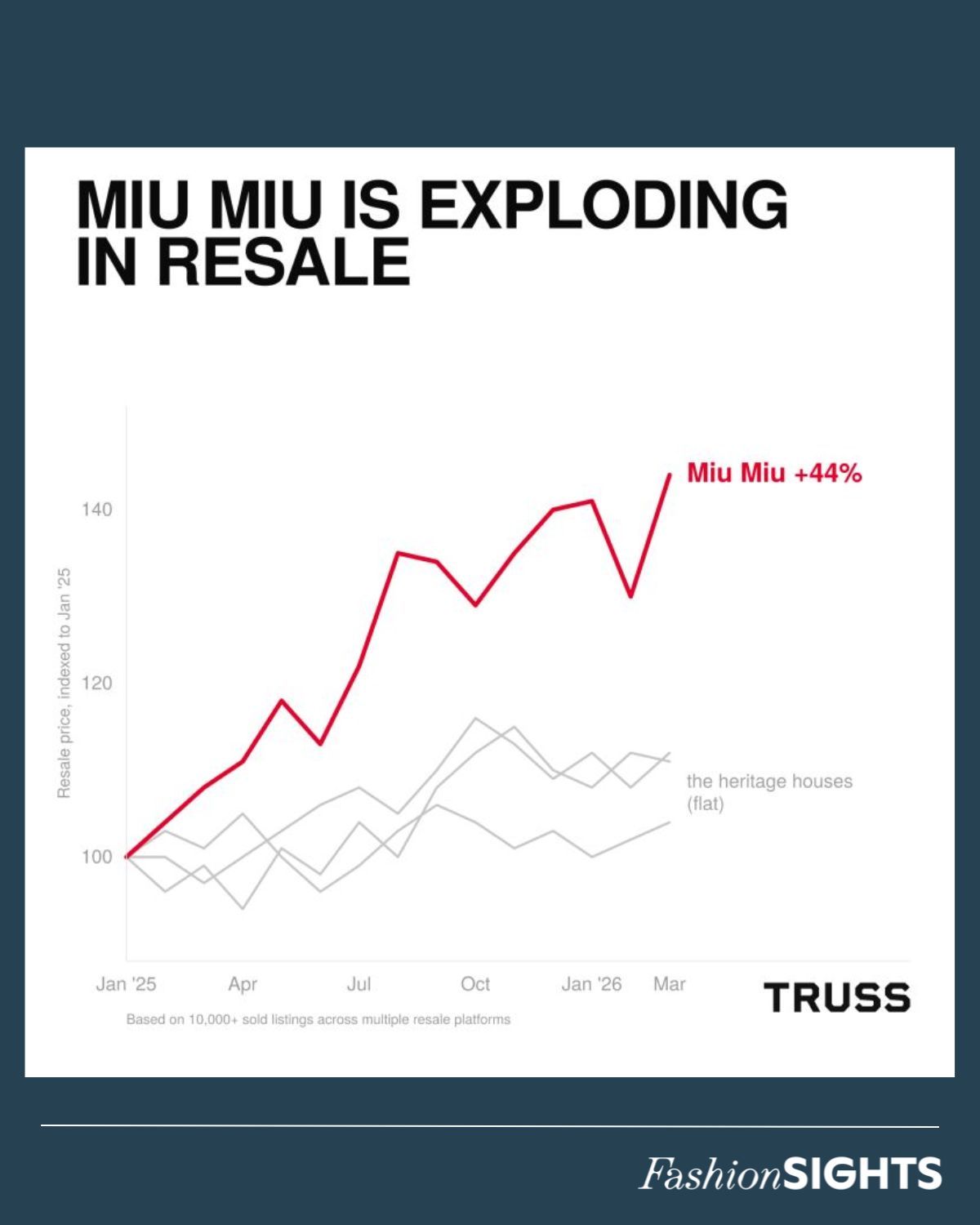
linkedin July 2026 Miu Miu’s Resale Rise – strength signal or hype aftermath?
The latest TRUSS analysis shows Miu Miu’s resale prices climbing while many heritage luxury houses remain flat. More than 30 years after its launch, the brand has moved far beyond being Prada’s "little sister” and became one of luxury’s most talked-about names – at a time when many established players were struggling. It topped the Lyst Index for the first time in Q3 2023 and stayed near the top until recently, ranking #4 in Q1 2026. While heritage brands are now reclaiming the Lyst rankings, the resale market tells a different story. Indexed to January 2025, Miu Miu’s resale prices continue to outperform. For the second time, Miu Miu is moving against the tide – this time on the secondhand market. Most interestingly, this is driven purely by supply and demand, without any marketing. So, what is actually driving this phenomenon? At first glance, this looks like another proof point for Miu Miu’s exceptional brand heat. Miu Miu built desirability through standout products, cultural relevance, and a strong community. Entry-level pieces like bag charms and initiatives such as the Literary Club resonated with Gen Z, a generation that is also highly engaged in resale. But the resale market may also tell a more ambiguous story. Yes, Miu Miu’s secondhand prices are outperforming. But rising resale demand could also signal that the brand has become more mainstream: the hip early adopters who bought into Miu Miu at the height of its momentum, may now be moving on to the next it-brand, while those who could not, or would not, buy at full price are entering through secondhand. In that sense, resale strength is not automatically the same as long-term brand strength. Many assumed the Miu Miu phenomenon would be rather short-lived. Could the numbers reflect more durable desirability? Or is it just the afterglow of a trend that is starting to move on? Thank you TRUSS and Woody Lello for the insightful analysis. Source & Visual: TRUSS Analysis: FashionSIGHTS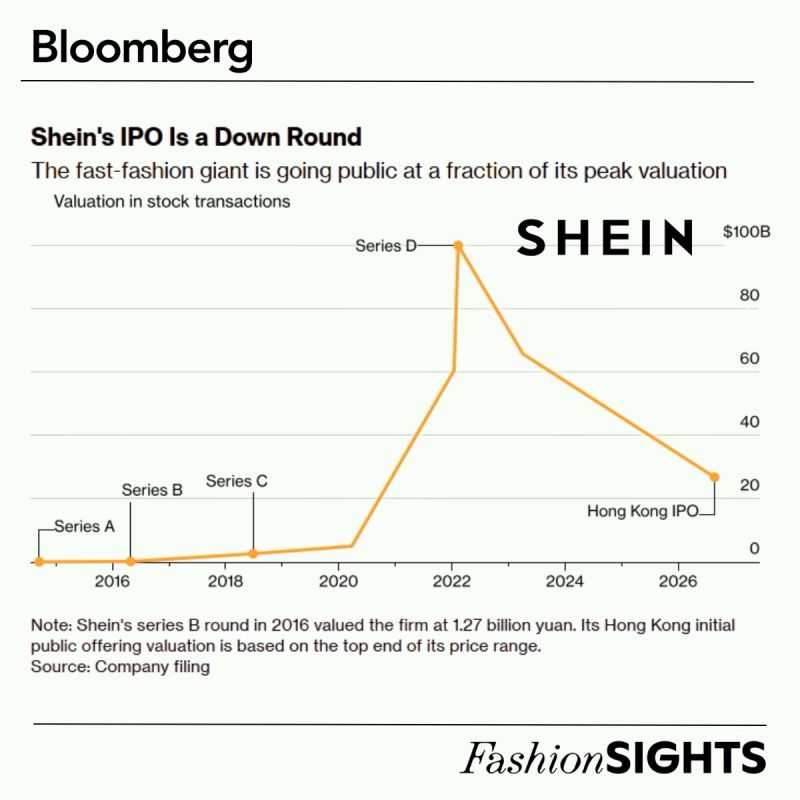
linkedin August 2026 How SHEIN's investors missed their exit window
SHEIN certainly doesn't need the cash. The company has almost $15 billion in reserves. The answer is that VC and PE funds are ultimately judged by realized returns, not paper valuations. Liquidity has likely become more important than maximizing the headline valuation. The business itself also deserves a more balanced assessment. The de minimis changes in the US, regulatory scrutiny in Europe and geopolitical tensions will undoubtedly make growth more difficult. But SHEIN created one of the very few genuine business model innovations our industry has seen over the past three decades. Inditex pioneered the push-pull model - SHEIN invented the manufacturer-to-customer model: digitally connecting consumer demand with a highly responsive manufacturing ecosystem. The result is lower inventories, faster product cycles, exceptional capital efficiency and an unprecedented level of scalability. What impressed while reading the IPO prospectus is their ambition to become the "AWS of fashion" as Bloomberg put it. Rather than simply selling more products, SHEIN increasingly wants to provide its supply chain, technology and manufacturing capabilities to other brands. Another point that is often overlooked is hashtag#profitability. Today's discussion is focused on slowing growth. But businesses of this scale have a choice between maximizing growth and maximizing earnings. Given its scale, tech platform and highly efficient operating model, SHEIN has significant untapped potential to improve its bottom line. The current margin may therefore understate the company's long-term earnings power. Ironically, that is precisely why the IPO could become an attractive investment opportunity. Many of today's risks are now well understood and are largely reflected in the valuation. Congrats to the Bloomberg team on another excellent piece and thanks for including my perspective.linkedin September 2026 Why every luxury brand now sells jewelry … or at least tries...
For years, soft luxury outperformed hard luxury. HSBC’s latest Global Luxury Goods report shows that the balance shifted in 2024. In its comparison of the major luxury segments, the “Soft Luxury” segment recorded 14% growth in 2023, compared with 9.4% in the “Hard Luxury” segment. In 2024, the “Hard Luxury” segment grew by 3.2%, while the “Soft Luxury” segment fell by 1%. The gap widened sharply in 2025. The divergence is also visible at the company level: over the past nine quarters, organic sales growth at Richemont’s jewelry maisons averaged around 13 percentage points above LVMH’s Fashion & Leather division. Why the change? High jewelry is more focused on affluent customers, who have proved more resilient as aspirational buyers face pressure. There is also a question of perceived value. After years of price increases in fashion, jewelry offers customers a more tangible combination of precious materials, craftsmanship and longevity. HSBC also points out that jewelry houses began renewing their collections roughly a year before the current creative reset in fashion. The opportunity goes beyond today’s growth rates. For fashion houses, jewelry offers a way to expand into another luxury category. Prada launched its Eternal Gold fine jewelry collection in 2022, building it around recycled gold and the house’s triangle motif. Dior and Louis Vuitton are also investing in high jewelry collections and launches. There is room for brands to compete: an estimate cited by HSBC puts the unbranded share of the overall jewelry market at 67% in 2023. But category expansion raises a question of credibility. Can a fashion house bring its identity into jewelry through distinctive design and craftsmanship, and give customers a reason to choose the piece itself? The jury is out and I would argue that some brands overstretch their brand integrity. We will see.


