Explore our library, where insights, press articles, and events are organized by tags, making it easy to find relevant topics.
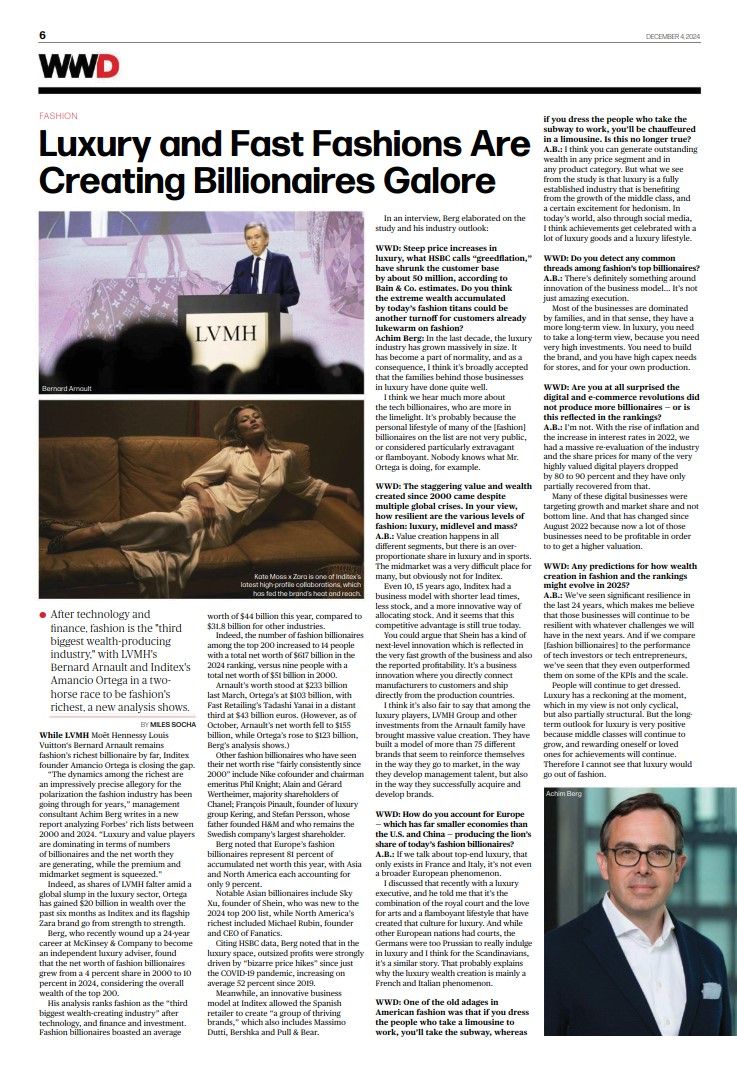
press December 2024 Luxury and Fast Fashions Are Creating Billionaires Galore
WWD by Miles SochaAchim talks to WWD about our research on the fashion and luxury industry’s wealth creation.
Fashion and luxury billionaires, led by LVMH’s Bernard Arnault and Inditex’s Amancio Ortega, have solidified their wealth despite global crises and a pandemic, with fashion and luxury ranking as the third-largest wealth-creatingindustry after technology and finance. The analysis highlights the polarizationin the industry, where luxury and value players dominate, while the mid-market struggles. It also showcases a dominance of European-based billionaires that account for 81% of the sector’s net worth. Looking forward, business model innovations, such as Inditex’s agility and Shein’s direct-to-consumer approach,coupled with the growing middle-class worldwide, suggest a resilient and prosperous future for fashion and luxury.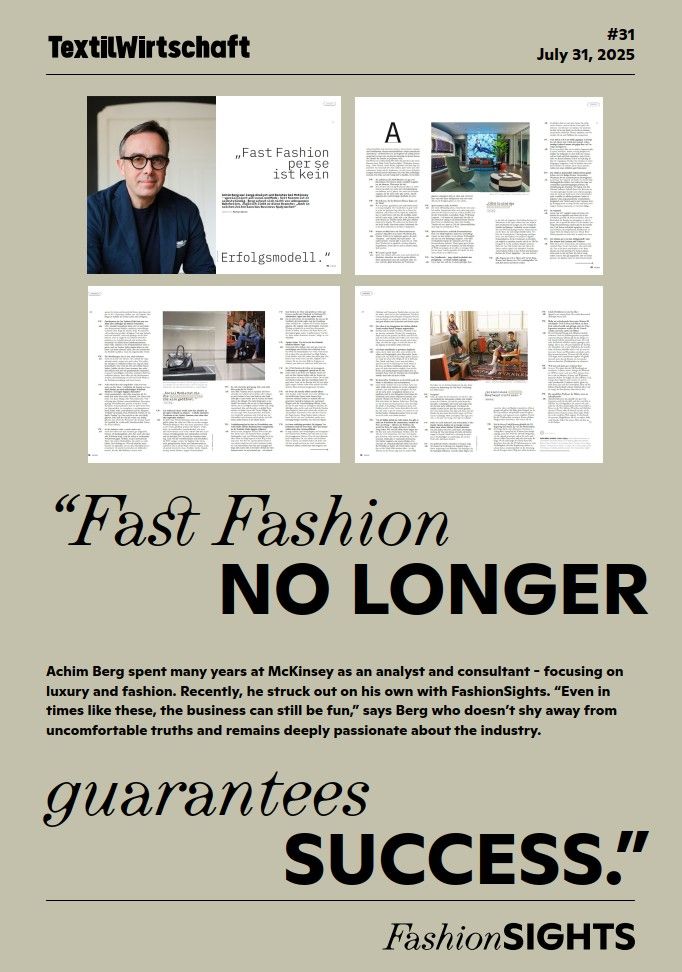
linkedin August 2025 Fast fashion no longer guarantees success
A few weeks ago, I had the privilege of sitting down with Michael Werner, Editor-at-Large at TextilWirtschaft to discuss the State of Fashion in Germany. We explored a wide range of topics: from weak #consumer #sentiment and the challenges facing #fast #fashion, to the current crisis in #luxury. Despite the headwinds, we also identified #bright #spots: growth pockets, resilient mid-market players, and real opportunities for those who are prepared to adapt. The full interview was originally published across 8 pages in TextilWirtschaft, the leading fashion industry magazine in the German-speaking world. We’ve now translated the piece to make it accessible to a wider audience.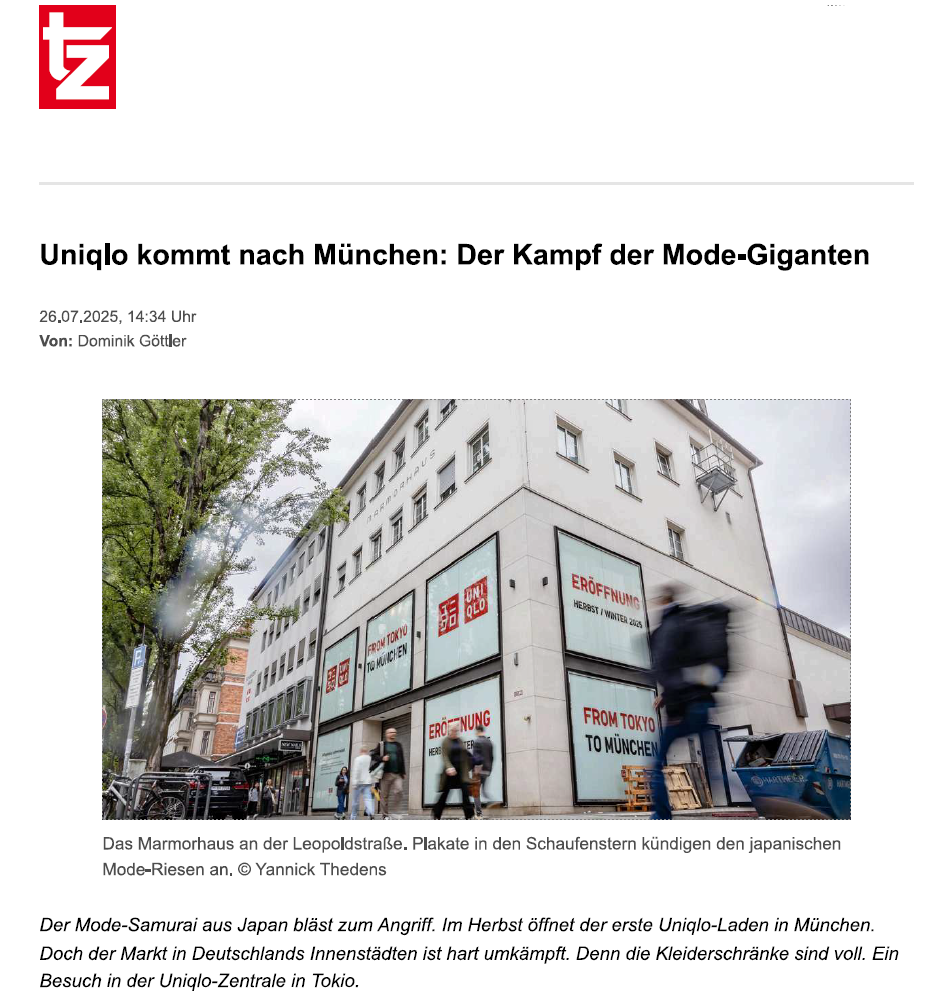
press July 2025 Uniqlo Lands in Munich: The Battle of the Fashion Giants
Münchner Merkur/tz by Dominik GöttlerAchim comments on Uniqlo’s continued push into the German market with its planned Munich store opening in fall 2025.
The company's expansion into Munich highlights both the opportunities and the hurdles of competing in Germany’s saturated fast-fashion landscape. Achim notes that the brand’s focus on durable, high-quality basics aligns with the shift in consumer preferences away from disposable fashion and toward functional, value-driven basics. Its Japanese image of precision and thoroughness further strengthens its positioning, even though production practices are similar to those of its rivals. He adds that durability supports Uniqlo’s sustainability profile; however, recycling challenges demonstrate that the industry is still in its infancy. Achim further states that Germany is a challenging market due to full wardrobes, cautious spending, and strong low-price competition. Achim makes clear that Uniqlo’s future in Germany depends on its ability to seize market share from established players.
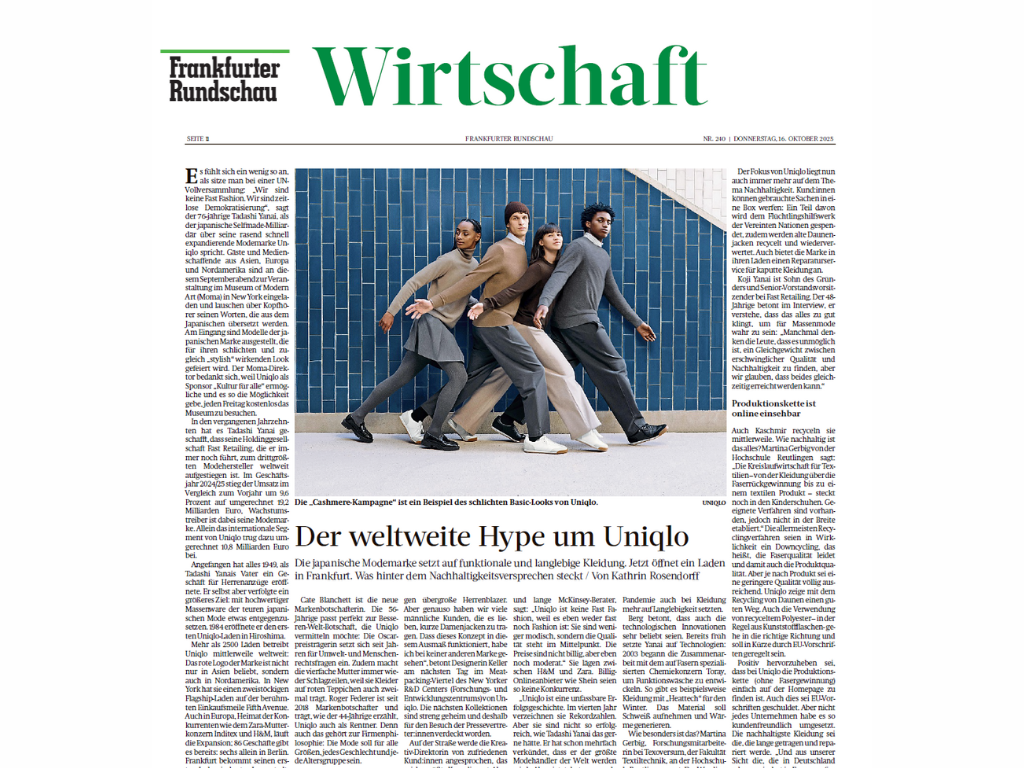
press October 2025 Uniqlo Lands in Frankfurt: The Global Hype About Uniqlo
Frankfurter Rundschau by Kathrin RosendorffAchim dissects Uniqlo’s success, positioning it as a considered alternative to the fast fashion paradigm.
As Uniqlo opens its 11th store in Germany, the article explores the brand’s positioning and growth drivers while critically examining its claims of democratization, quality, and sustainability. Achim notes that Uniqlo’s rise reflects a broader shift in consumer preferences toward longevity and quality, with its innovative, functional fabrics serving as a defining USP. Unlike its competitors, Uniqlo isn’t driven by rapid trend cycles or ultra-fast production; its focus on functionality, craftsmanship, and accessible yet moderate pricing sets it apart. Although he doubts that Uniqlo will overtake Inditex, Achim believes that Uniqlo is poised to challenge H&M amid its current slowdown.
Source: Frankfurter Rundschau
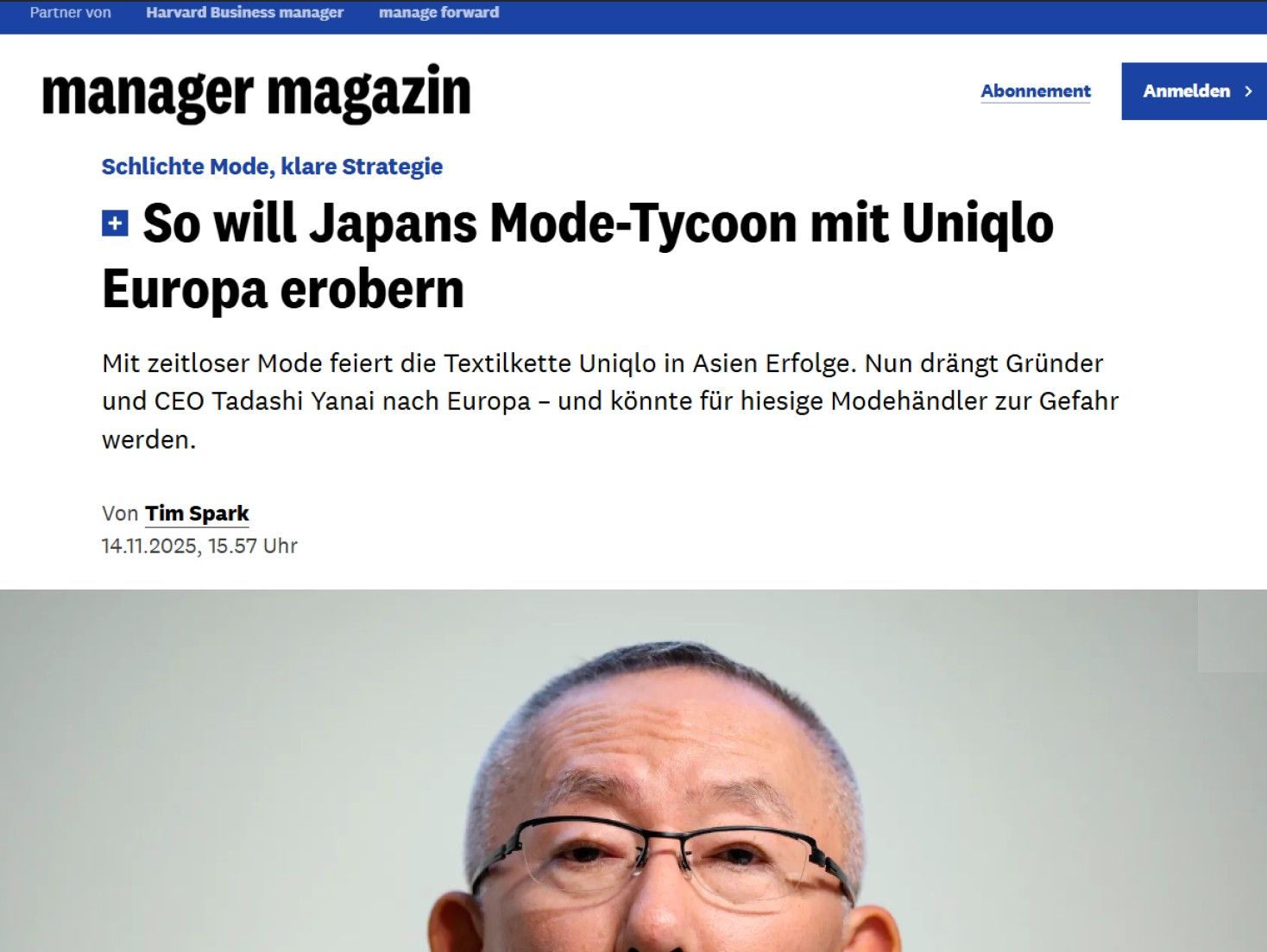
press November 2025 How Uniqlo’s Japanese Fashion Tycoon Plans to Conquer Europe
Manager Magazin by Tim SparkAchim comments on Uniqlo’s positioning and strategic path as the brand intensifies its push into the European market.
The article evaluates Uniqlo’s market position and growth potential to assess the realism of its ambition to overtake H&M and Inditex. Achim highlights that Uniqlo’s low-risk, quality-focused product strategy aligns strongly with today’s demand for durability and value. He also makes it clear that he views Uniqlo as a mid-market player rather than a fast fashion brand, as the company is built on timeless essentials rather than trend-driven, disposable apparel. Despite its global scale, Uniqlo still has a comparatively small presence in Europe, particularly in Germany, leaving significant room to grow. Achim notes that future gains will likely come from customers shifting away from mid-market and upper-mid-market retailers, many of which are already under pressure, making Uniqlo’s expansion demanding yet achievable.
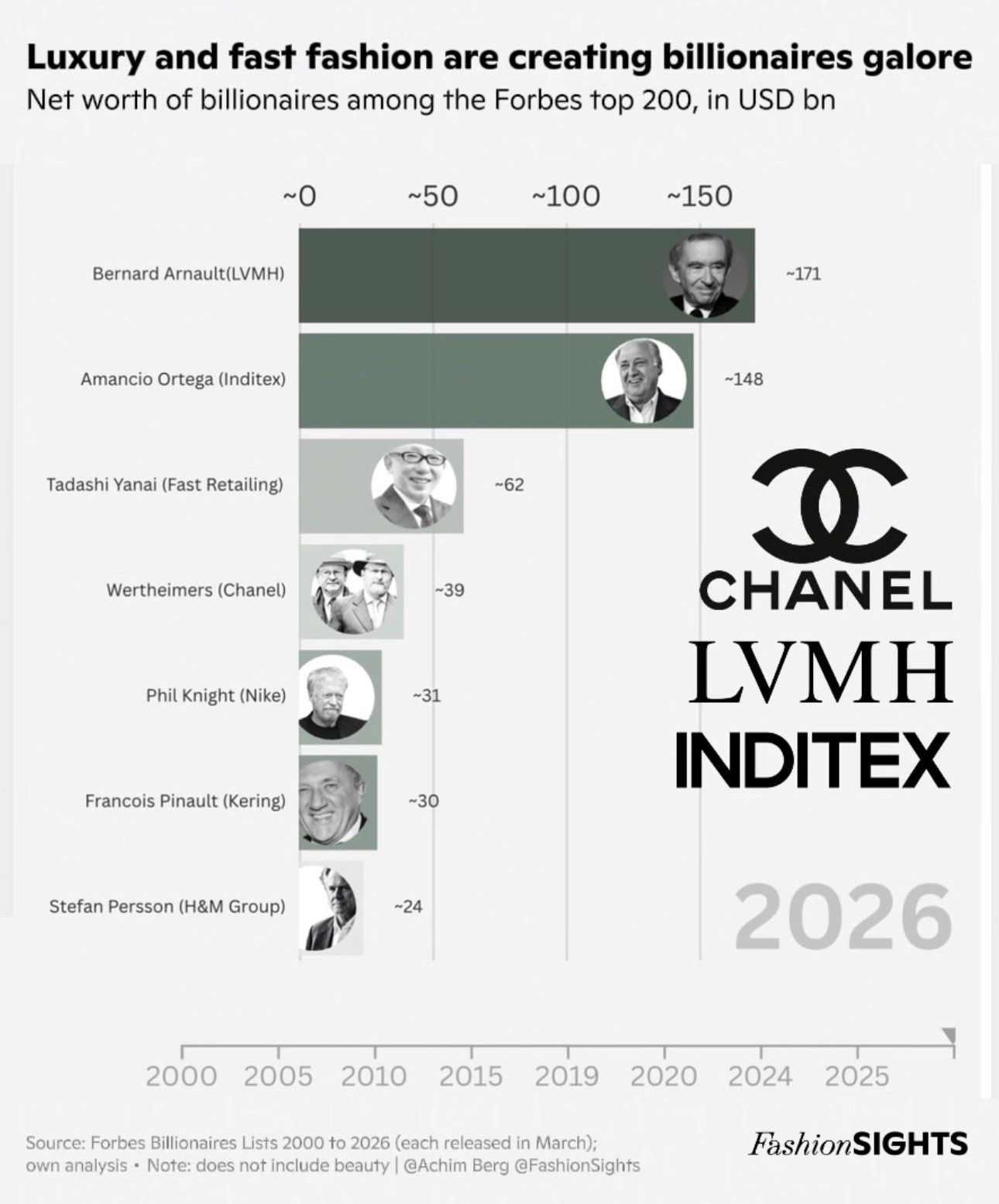
linkedin March 2026 Value creation in #Fashion and #Luxury: A two-horse race bet...
Our FashionSIGHTS analysis of the Forbes rich lists from 2000 to 2026 highlights how LVMH and Inditex have outperformed other strong players in the industry. The data reveals: - Ortega has closed in on Arnault: the Spanish Fast Fashion model makes ground on the more than double the size luxury conglomerate - Luxury, Fast Fashion, and sportswear have been the key “waves to ride” for value creation. - The COVID pandemic and its aftermath provided a significant boost to the luxury sector – though more recent headwinds have tested even the strongest players. - The number of fashion billionaires in Forbes’ top 200 grew from 9 in 2000 (worth $51 billion) to 14 in 2026, with a combined worth of ~$505 billion.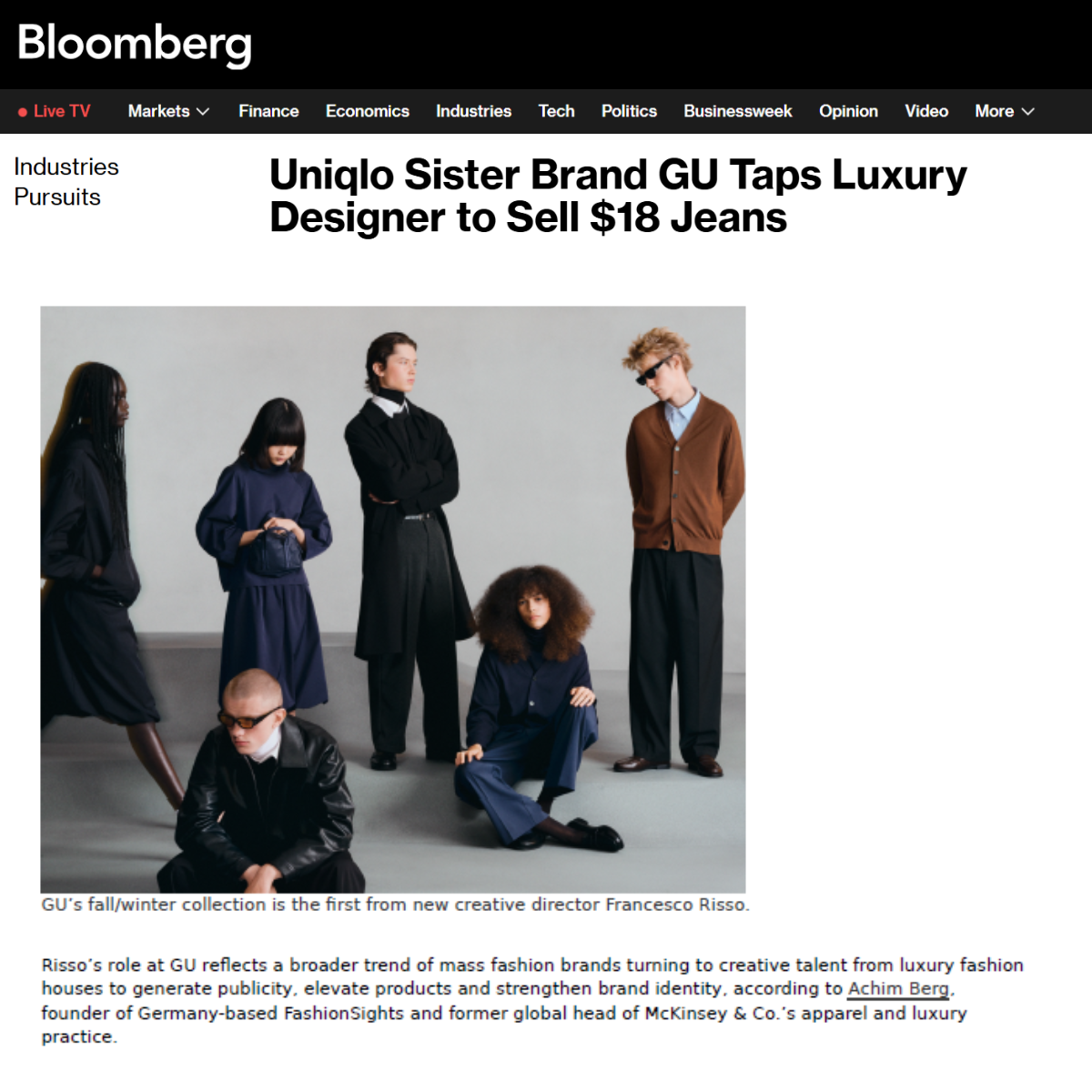
press July 2026 Uniqlo Sister Brand GU Taps Luxury Designer to Sell $18 Jean...
Bloomberg News by Yui HasebeAchim comments on the growing convergence between luxury creative talent and the mass market.
GU, Fast Retailing's lower-priced sibling to Uniqlo, has unveiled its first collection under former Marni creative director Francesco Risso, a move designed to sharpen the brand's identity and pave the way for international expansion. Achim emphasises that the appointment reflects a broader industry pattern: mass fashion brands increasingly recruiting creative leaders from luxury houses to generate publicity, elevate product, and strengthen brand identity. There is an increasing blurring of the lines between luxury and the mass market, with creative talent moving freely across both. Such partnerships offer brands a way to elevate their image and test new positioning territory.
press August 2026 Shein Bets on Deals to Revive Its Fashion Success After $70 ...
Bloomberg News by Julia Fioretti, Daniela Wei, Dave Sebastian, Dong Cao, Olivia Poh, Martin Alfonsin Larsen and Erinn GardnerAchim reflects on Shein's public listing and the shifting conditions testing its once unstoppable model.
As trade barriers rise and geopolitical tensions reshape global retail, Shein heads into its long-awaited public listing at a fraction of its former valuation. The fast fashion giant is pivoting from pure direct-to-consumer growth towards acquiring and powering other brands through its supply chain infrastructure. Achim emphasises that the company's peak valuation was set in a very different world, one built for frictionless globalisation. Investors are now asking whether the model works equally well under new conditions, where the strengths that fuelled rapid expansion face fresh scrutiny. The listing marks a turning point for a business redefining its role in the industry.
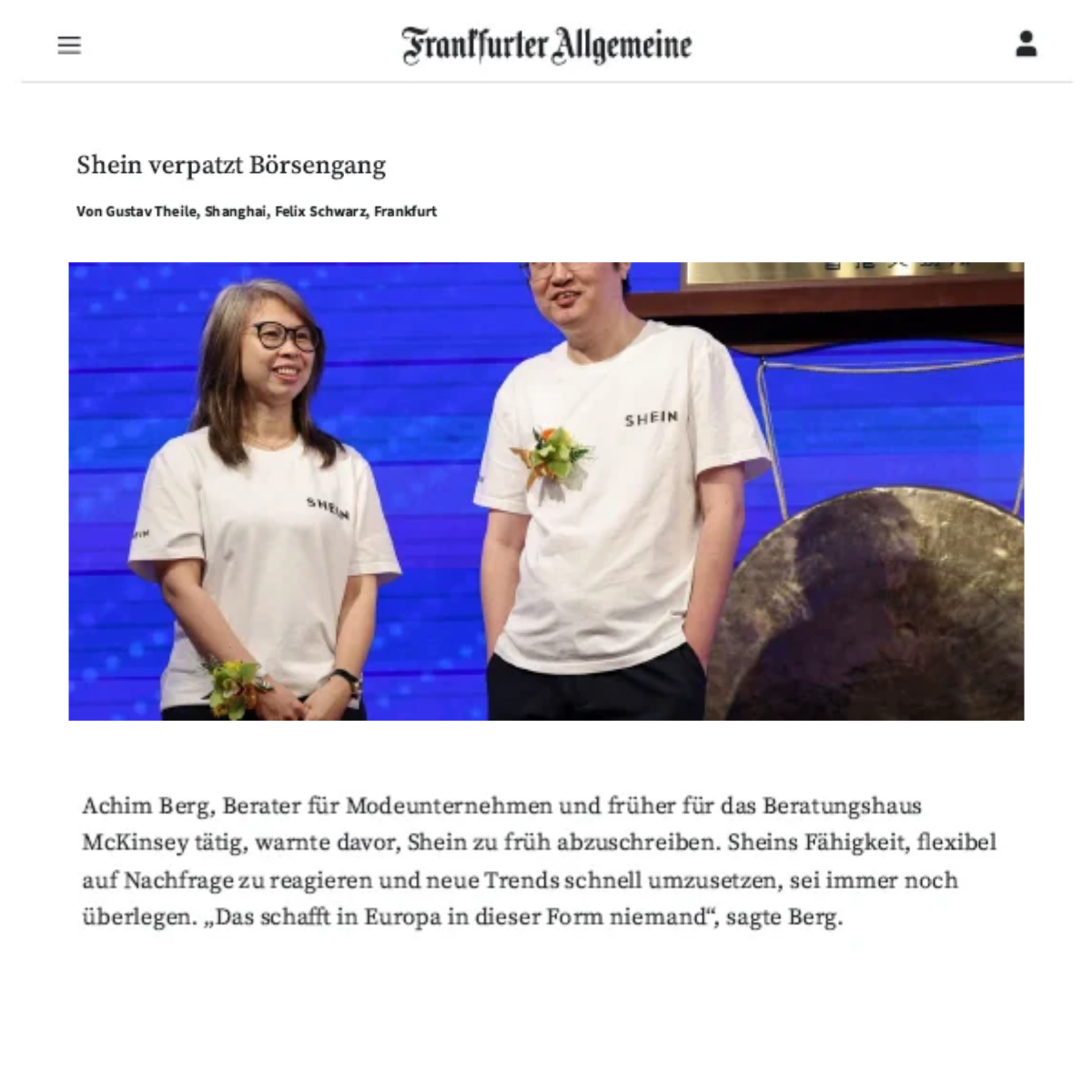
press September 2026 Shein verpatzt Börsengang (Shein Fumbles Its IPO)
Frankfurter Allgemeine Zeitung by Gustav Theile and Felix SchwarzThe article examines Shein’s weak Hong Kong market debut, with its shares falling sharply and the company’s valuation dropping well below previous levels. The listing comes after failed attempts in New York and London and amid growing pressure from US and European tariff changes, slowing growth and political scrutiny of its supply chain. Despite these headwinds, Shein remains a major global fashion player. Achim Berg provides industry context on the company’s speed, demand responsiveness and long-term competitive potential, while noting that it missed a more favourable window for an IPO.
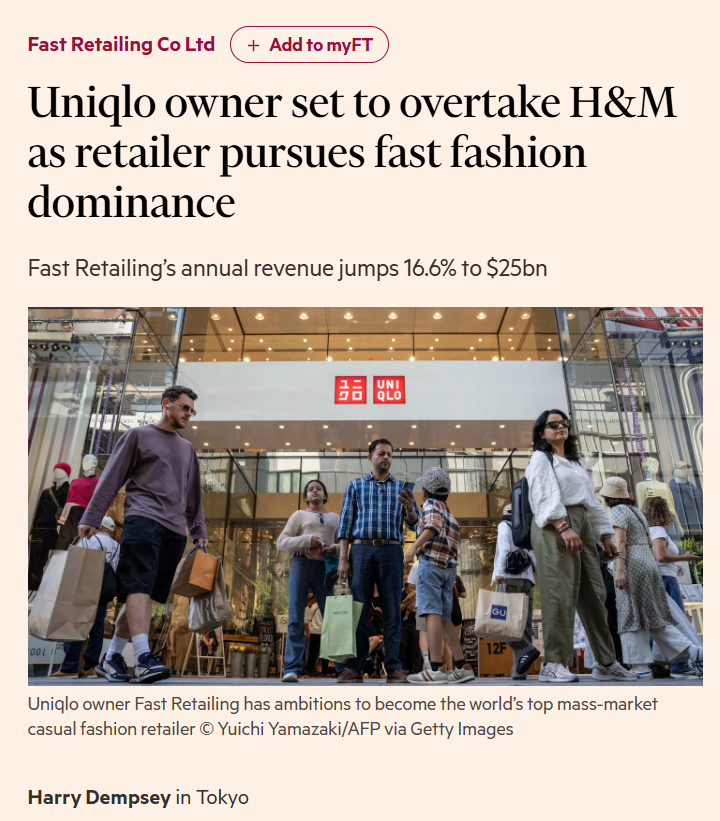
press October 2026 Uniqlo Owner Set to Overtake H&M as Retailer Pursues Fast Fa...
Financial Times by Patrick DempseyUniqlo owner Fast Retailing is set to overtake H&M in annual revenue for the first time. Revenue for the year to 31 August rose 16.6% to ¥3.96tn ($25bn), and the company announced a significant dividend increase. Growth reflects demand for Uniqlo's simple, seasonless essentials and new store openings in Europe and North America, while H&M's weaker performance and pressure on rivals such as Shein provide further context. Achim Berg provides industry context, noting that overtaking H&M has long been Fast Retailing's ambition, though the company still has some way to go to become the world's largest fashion retailer.
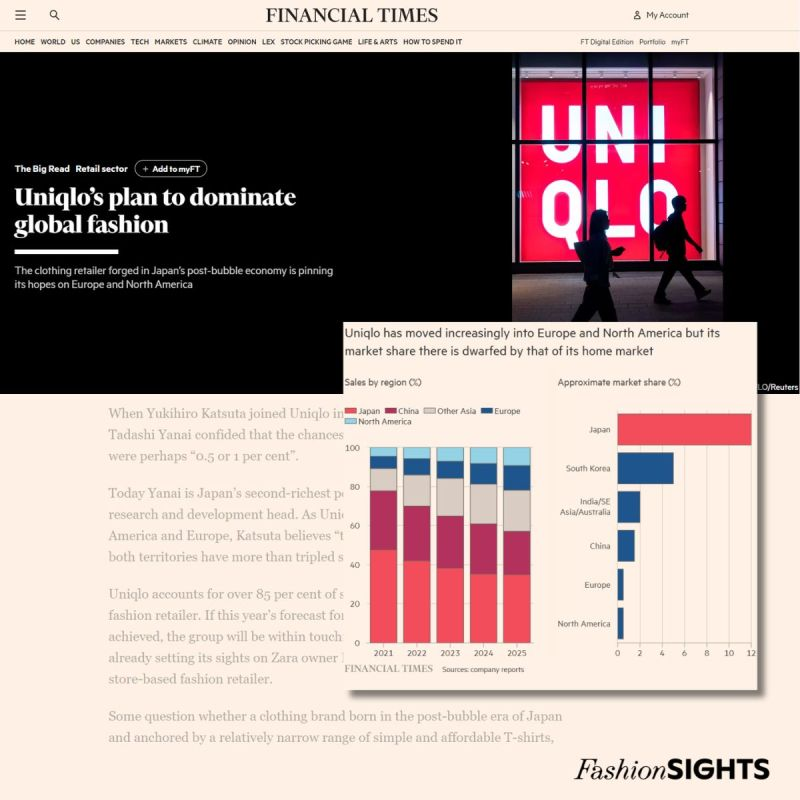
linkedin July 2026 Can UNIQLO crack the US and Europe?
That was one of the questions I discussed with Harry Dempsey, Tokyo correspondent for the Financial Times. His latest FT Big Read explores Uniqlo’s ambition to become a dominant force in global fashion. While Uniqlo remains exceptionally strong in its Japanese home market, the brand has recently seen impressive growth in both Europe and North America. With its proposition of offering high-quality wardrobe essentials at an affordable price point, Uniqlo’s recent rise has also benefited from broader shifts toward modesty and quiet luxury. The question now is how much more value the brand can create before that momentum begins to fade. Uniqlo’s ambition to lead in global fashion are nothing new. In 2008, Uniqlo set the goal of becoming the world’s No. 1 apparel retailer by 2020. In 2017, Fast Retailing CEO Tadashi Yanai stated that the company would overtake industry leader Zara. Even though the brand has not fully achieved those targets yet, the scale of its accomplishments becomes clearer when looking at the numbers. Around 85% of Fast Retailing’s revenue comes from Uniqlo, and between 2008 and 2025, the company grew at a CAGR of 11%, increasing revenue from approximately $3.9 billion to $22.7 billion. Over the same period, H&M and Zara grew at around 6% and 8% CAGR, respectively. Uniqlo is slowly but steadily closing the gap with its European rivals. Whether it can translate its success into true leadership in Western markets remains one of the most interesting questions in global fashion retail. Thank you, Harry Dempsey, for featuring me and our FashionSIGHTS analysis in the article. You can find the link to the FT Big Read in the comments. Source: Finacial Times, FashionSIGHTS analytics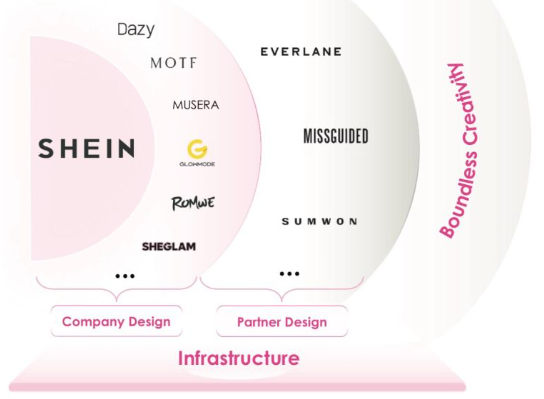
linkedin August 2026 SHEIN is no longer just trying to become the world’s biggest...
SHEIN is no longer just trying to become the world’s biggest fashion retailer. It is trying to become fashion’s platform. That, to me, is the most important takeaway from SHEIN’s Hong Kong IPO prospectus. Much of the attention has focused on tariffs, the end of de minimis in the US and increasing regulatory scrutiny in Europe. The prospectus confirms that these developments are already affecting growth and profitability. But the more interesting story is how SHEIN is responding. Rather than doubling down on its traditional first-party retail model, SHEIN is accelerating its evolution into a hybrid platform. The numbers are telling: • 273 million active customers across around 160 markets. • US$41.8 billion in net revenues in 2025. • Service revenues increased from US$0.9bn in 2023 to US$4.7bn in 2025, now accounting for more than 11% of total revenues. • Brand enablement services generate operating margins around twice the Group average. The strategic logic is compelling. Having built one of the world’s largest fashion apps, unparalleled customer reach and an exceptionally agile supply chain, SHEIN is increasingly monetising its infrastructure, not just its products. Through its marketplace and the expanded SHEIN Xcelerator programme, brands can leverage SHEIN’s manufacturing, logistics, technology and global customer base instead of building these capabilities themselves. This is more than a response to tariffs. It is a deliberate shift towards a more asset-light, higher-margin and potentially more resilient business model. One that capitalises on the scale and critical mass SHEIN has built over the past decade. The implications reach far beyond SHEIN. If successful, the company will increasingly compete not only with H&M or Primark, but also with Amazon , Zalando, ASOS.com and boohoo. The source of competitive advantage shifts from owning products to owning customers, traffic, data and infrastructure. The next battle in fashion may no longer be about who sells the most products, but about who owns the platform on which others sell them.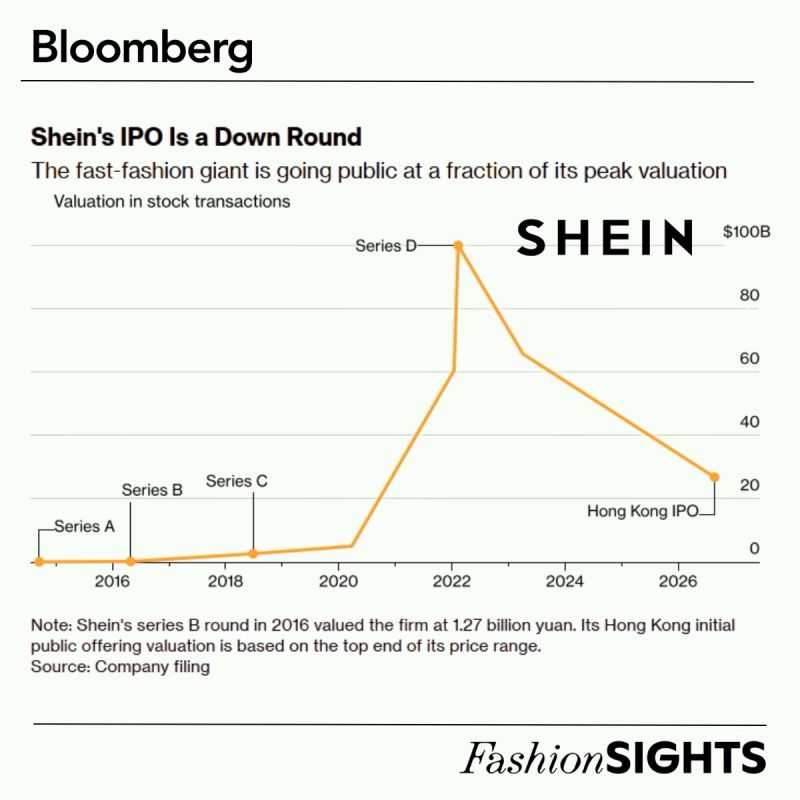
linkedin August 2026 How SHEIN's investors missed their exit window
SHEIN certainly doesn't need the cash. The company has almost $15 billion in reserves. The answer is that VC and PE funds are ultimately judged by realized returns, not paper valuations. Liquidity has likely become more important than maximizing the headline valuation. The business itself also deserves a more balanced assessment. The de minimis changes in the US, regulatory scrutiny in Europe and geopolitical tensions will undoubtedly make growth more difficult. But SHEIN created one of the very few genuine business model innovations our industry has seen over the past three decades. Inditex pioneered the push-pull model - SHEIN invented the manufacturer-to-customer model: digitally connecting consumer demand with a highly responsive manufacturing ecosystem. The result is lower inventories, faster product cycles, exceptional capital efficiency and an unprecedented level of scalability. What impressed while reading the IPO prospectus is their ambition to become the "AWS of fashion" as Bloomberg put it. Rather than simply selling more products, SHEIN increasingly wants to provide its supply chain, technology and manufacturing capabilities to other brands. Another point that is often overlooked is hashtag#profitability. Today's discussion is focused on slowing growth. But businesses of this scale have a choice between maximizing growth and maximizing earnings. Given its scale, tech platform and highly efficient operating model, SHEIN has significant untapped potential to improve its bottom line. The current margin may therefore understate the company's long-term earnings power. Ironically, that is precisely why the IPO could become an attractive investment opportunity. Many of today's risks are now well understood and are largely reflected in the valuation. Congrats to the Bloomberg team on another excellent piece and thanks for including my perspective.